

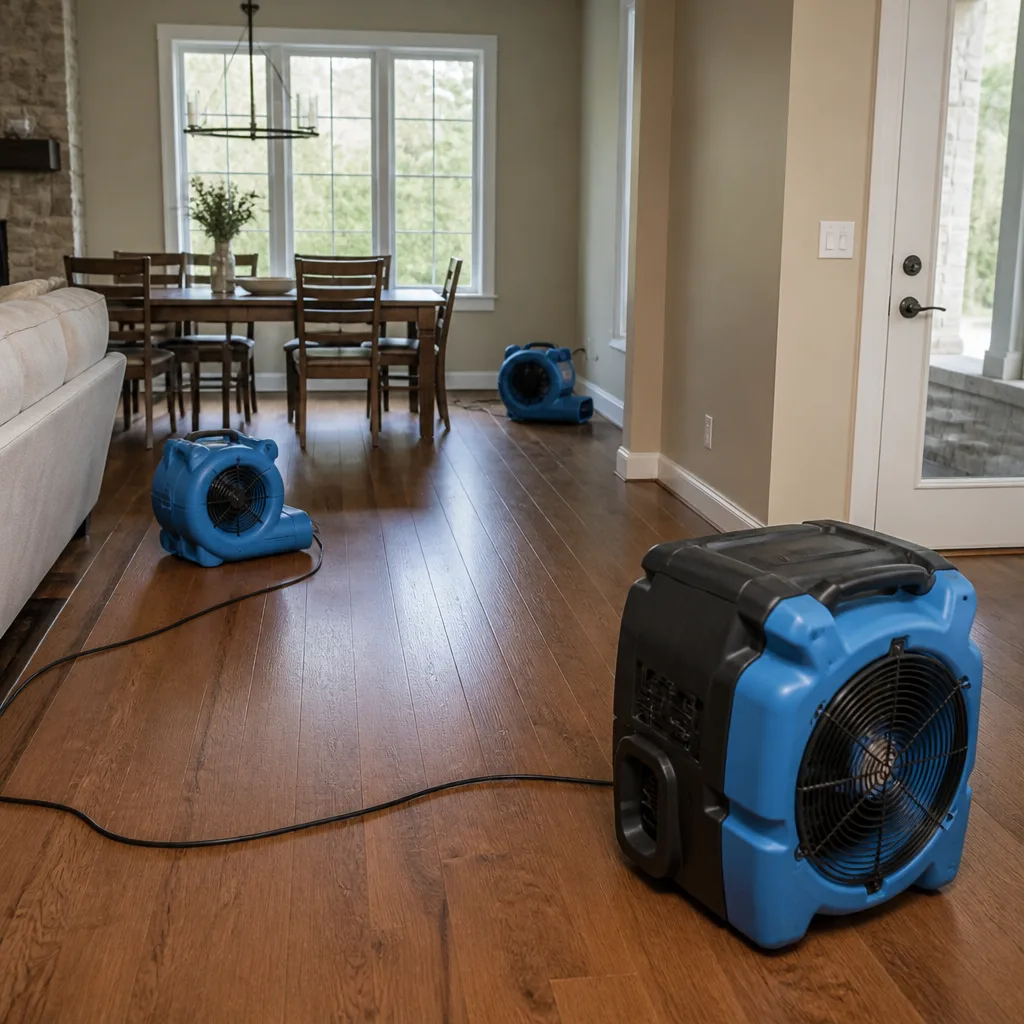
 Water damage drying
 Fire & smoke cleanup
 Mold remediation
 Storm response
 Sewage cleanup
 Reconstruction
Free visual inspection and a written scope of work before any mitigation begins - photos, moisture readings, and drying logs go in your claim file
The scope we write is the scope we bill. Anything new gets shown to you, in writing, before we touch it.
Get your free estimateFast, Reliable Mold Remediation Across San Joaquin Hills
Mold remediation in San Joaquin Hills typically costs $2,400 to $6,800 for a contained removal with drying and clearance, and for black mold inside wall cavities on hillside homes it runs toward the higher end because wind-driven leaks hide framing damage behind stucco. Most San Joaquin Hills calls start the same way: a musty lower-level room that traces back to a failed window flashing or balcony transition two floors up, not a burst pipe. We respond to San Joaquin Hills homes quickly, with commercial-grade equipment already loaded, because in ZIP 92657 the moisture source is almost always still active when the mold shows up. If you smell it or see staining, call (888) 508-8745 and we’ll get a technician to your canyon-edge or ocean-facing property to map the moisture before any drywall comes out.
Why Clean Slate Water Damage Is San Joaquin Hills’s Preferred Mold Remediation Company
In San Joaquin Hills, we’ve worked on the full range: gated estates above Newport Coast, contemporary builds on ridgelines, older custom Mediterraneans with original stucco and tile roofs. The homes here share a construction profile that shapes how mold actually behaves. Multi-level framing means water travels down and sideways inside wall cavities. Stucco exteriors hide wet sheathing until it blooms through the drywall. Ocean-facing slopes catch wind-driven rain that works past flashings that looked fine in September.
Our team runs proper containment and negative air on every San Joaquin Hills remediation, not just the black mold jobs. That matters when the affected wall shares air with a hallway that opens into a living room with 20-foot ceilings and custom millwork. We treat the framing, not just the visible surface. And because we handle Mold Remediation alongside water and fire work, we’re not walking away once the visible patch is gone. We chase the leak path, dry the cavity, and verify clearance so the same wall doesn’t bloom again next storm season. Noel Carrasco has built our process around verified pre-loss condition, and that standard gets tested hardest on hillside custom homes like yours.
Restoration work we handle
Black Mold Removal in San Joaquin Hills
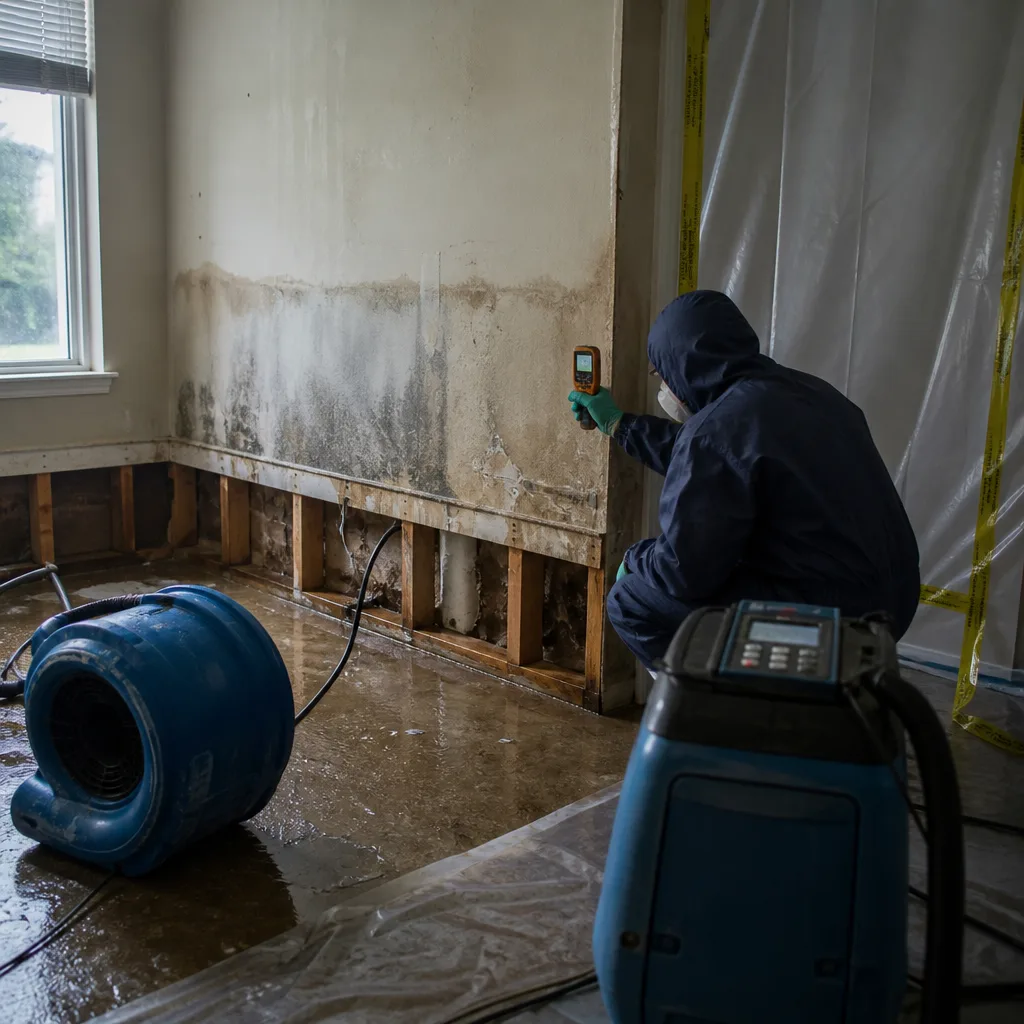
Black Mold Removal in San Joaquin Hills is the service we’re called for most often when a homeowner finally cuts into a stained lower-level wall and finds the back of the drywall black across a two-foot span. The mold itself is usually the result of a wind-driven storm leak that saturated the cavity months earlier, then sat in the dark behind stucco at exactly the temperature range mold likes. Removal here means full containment, HEPA-filtered negative air, and removal of the affected drywall and any wet insulation. We then inspect the framing, treat it with an antimicrobial, and dry the cavity with Dri-Eaz dehumidification until moisture readings match the surrounding structure.
What It Costs in San Joaquin Hills
A contained black mold removal in San Joaquin Hills where one wall cavity is involved runs $3,000 to $5,500. When the same leak path has fed two rooms or a lower-level hallway, that climbs to $6,000 to $9,000 with the additional drywall, containment runs, and drying time. The cost difference from a flatland suburb is real: hillside homes here have multi-level construction, and the leak source is often a window or balcony two floors above the visible mold. You’re paying for the chase, not just the patch.
Why Wall Cavity Mold Returns
It returns because the wind-driven leak at the window flashing above was never found. We see this pattern in San Joaquin Hills after every big atmospheric-river storm: a homeowner treats the mold in the lower-level bedroom, repaints, and the next winter the same wall smells again. The moisture source up high is still active. Our job is to find that source before we close the wall. If we don’t map the full path, we’re just repackaging the problem.
Mold Removal Contractor in San Joaquin Hills
A Mold Removal Contractor in San Joaquin Hills has to understand slope drainage and wind exposure, because most of the mold calls here are not plumbing failures. Our work starts with a moisture investigation across the full elevation of the wall, not just the stained area. We check window flashings, balcony transitions, stucco cracks, and deck scuppers above the affected room. Then we set containment, establish negative air, and remove the damaged material. After drying and treatment, we verify clearance with third-party testing when requested, and we document the whole scope in writing before any work starts. That written scope is yours; no one opens a wall in a high-value custom home without a clear line-item plan.
Non-Invasive Drying For Stucco Homes
On stucco exteriors over multi-level framing, Injectidry gives us a way to dry wall cavities without tearing out every exterior panel. We force dry air directly into the cavity through small access points and monitor moisture until the framing reads dry. That means less demolition, less stucco repair, and a faster return to pre-loss condition. It’s the difference between cutting a four-foot square of drywall and gutting an entire wall.
Documentation For Insurance
When you file a claim for storm-driven intrusion in San Joaquin Hills, your adjuster wants a moisture map, drying logs, and a clear scope of work, not a handshake. We photograph everything, we log readings at each inspection, and we can coordinate directly with your adjuster. For homeowners in 92657 dealing with water that started above the ceiling line, that documentation is often what moves the claim from “surface stain” to “hidden wall cavity damage.”
Trusted Brands We Service in San Joaquin Hills
We stock parts and supplies that match the equipment we run on San Joaquin Hills jobs: Dri-Eaz dehumidifiers and air movers, Phoenix drying systems, and Injectidry panels for cavity drying. Because we’re aligned with IICRC standards and maintain RIA and IFA memberships, the way we deploy that equipment follows an auditable process, not whatever a technician felt like doing that day. For San Joaquin Hills homeowners, that means the drying plan gets written down, the readings get logged, and the equipment stays on the wall until the numbers match the target, not until the schedule says it’s time to leave. Fast turnaround matters, but verified dryness matters more.
See the difference
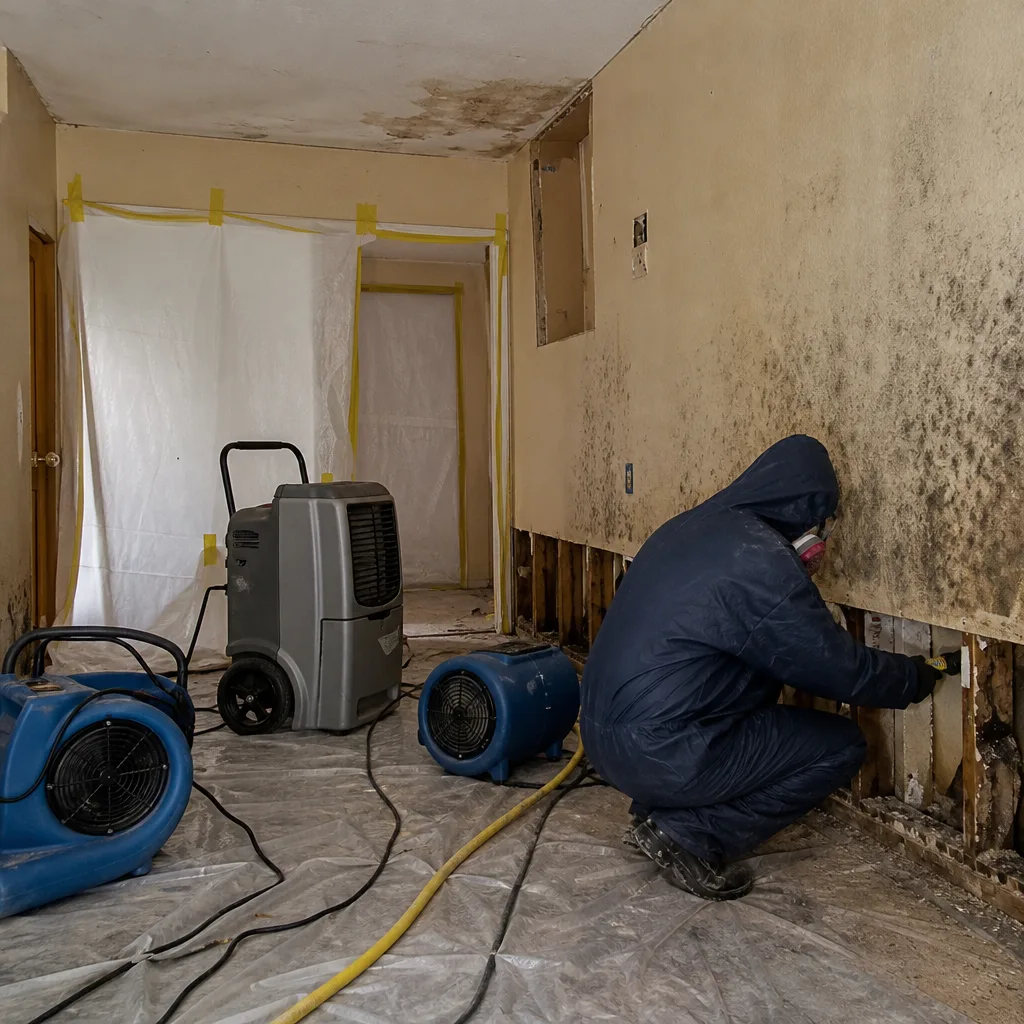 Before
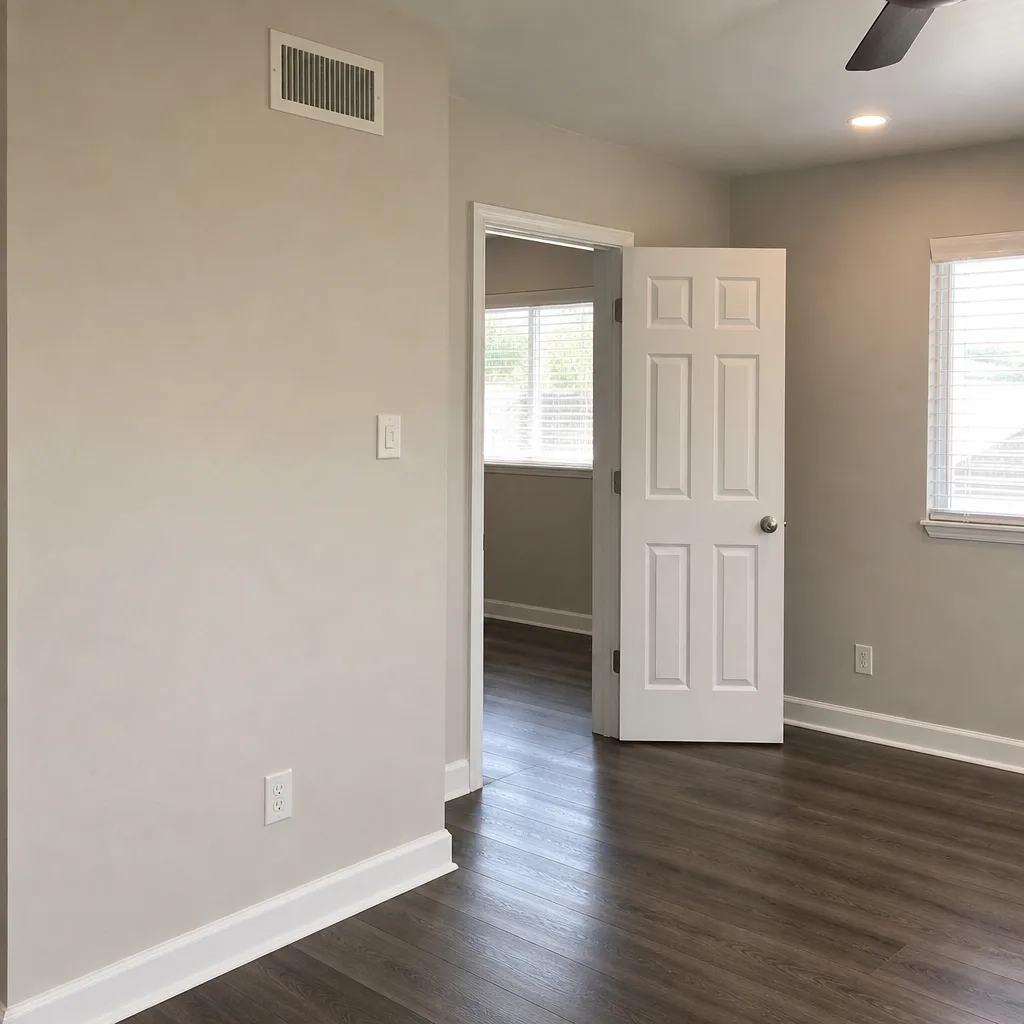 After
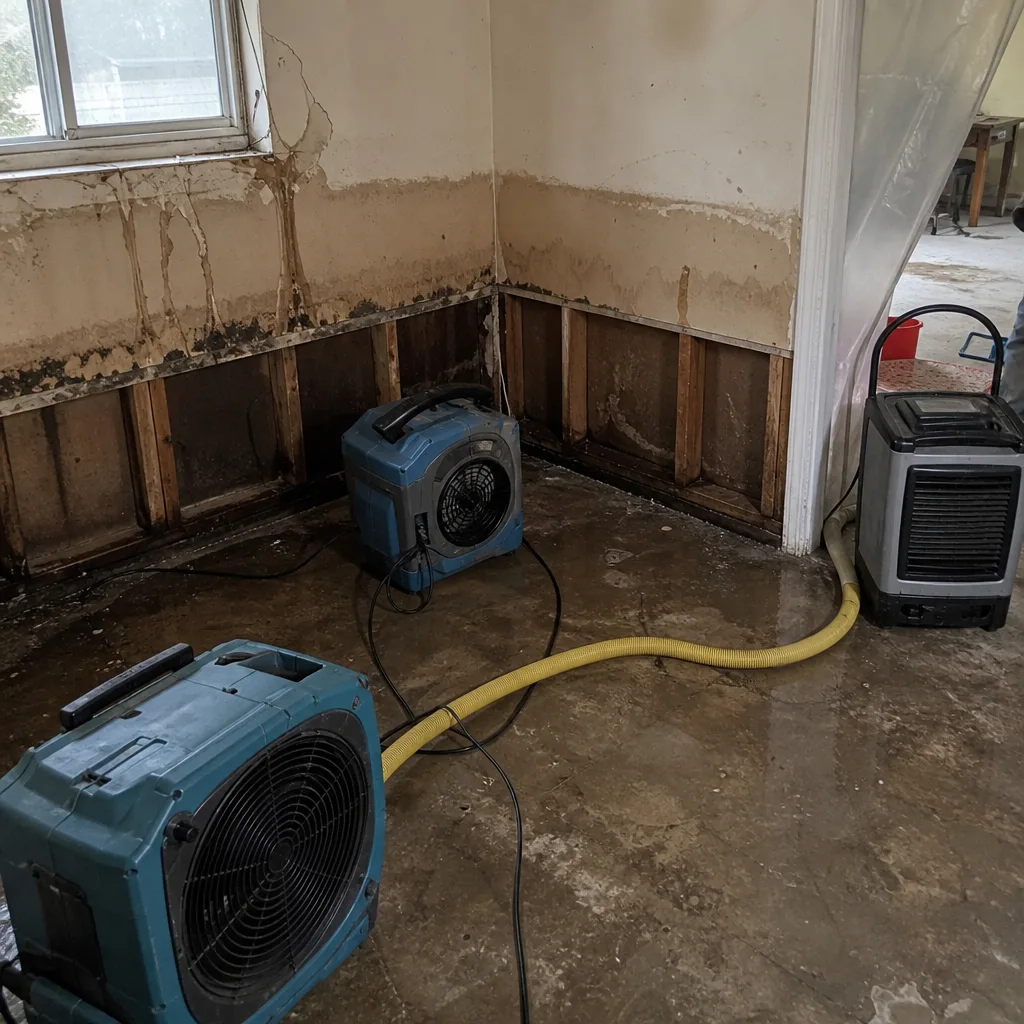 Before
 After
 Before
 After
Common Mold Remediation Problems We See in San Joaquin Hills Homes
Here’s what we actually find in San Joaquin Hills, ZIP 92657, when we open up a wall:
- The leak is two floors above the mold. A failed window flashing on the ocean-facing side lets wind-driven rain inside the wall, and the water travels down through framing until it pools above a lower-level ceiling. You see the stain downstairs; the problem is upstairs.
- Stucco hides wet framing until it’s too late. Stucco exteriors don’t show internal moisture the way wood or vinyl siding does. By the time a bubble appears, the sheathing behind it has often been wet for months. That’s why we run moisture mapping even when the surface reads dry.
- Patio drains and pool-deck scuppers get overwhelmed. Canyon-edge lots catch runoff from undeveloped hillside above the home. When storm water sheets off the slope, it can overtop drains and push under stucco at the foundation line, feeding lower-level spaces from below.
- Containment gets skipped, and spores spread. Running air movers without containment in a home with open floor plans and high ceilings spreads mold spores into rooms that were never affected. We always contain the work area, because in a home built for open-air living, one contaminated cavity can reach a lot of finished space fast.
Pricing for Mold Remediation in San Joaquin Hills, CA
We Also Serve Cities Near San Joaquin Hills
Our team works throughout the hillside and coastal communities around San Joaquin Hills, including Aliso Viejo, Newport Beach, Laguna Beach, and Irvine. If you own a home on a canyon edge or ocean-facing slope in any of these areas, the same moisture patterns apply, and the same equipment comes with us. One number, one team, full restoration.
Serving San Joaquin Hills, CA — Our Local Coverage Area
We’re based in the San Joaquin Hills area and know this community well. Use the map below to see our service coverage — if you’re nearby, we can almost certainly help.
FAQs About Mold Remediation in San Joaquin Hills
Because wind-driven rain works its way past aging window flashings and stucco cracks on ocean-facing slopes, then channels down inside wall cavities to lower-level rooms. The stain you see is rarely the source; the source is usually a wind-blown leak high on the wall. That’s why our first step in San Joaquin Hills is always moisture mapping across the full elevation, not just the visible stain. Call (888) 508-8745 if you notice a musty smell after a storm; the sooner we trace it, the less wall we have to open.
You should act immediately, because in San Joaquin Hills the moisture source is usually still active and feeding the mold. Every week the cavity stays wet, the affected area spreads behind the drywall, and the remediation scope grows. A small stain found in February is often a full wall cavity by March. Call us the day you find it, and we’ll get a technician to your property quickly with moisture mapping equipment ready to locate the full extent.
Wind-driven rain that travels through stucco, framing, and insulation before reaching the drywall has picked up contaminants along the way and is treated as category 2, sometimes category 3 if soil runoff is involved from the hillside above. That means the affected drywall and insulation come out, the framing gets antimicrobial treatment, and the cavity is dried and tested. This is not a drying-only job.
We start with a visual inspection of the full elevation: window flashings, balcony transitions, stucco cracks, and deck drains above the affected room. Then we run moisture readings across the wall surface and inside the cavity through small access points. We map the moisture spread on a floor plan, show you where the water is and how far it traveled, and write a scope of work from that map. Nothing gets opened until you’ve seen the map and approved the plan in writing.
No, because the next storm will push more water through the same failed flashing or stucco crack and extend the damage further into the framing. Waiting until May means the same wall that needed a four-foot drywall patch in January now needs full cavity remediation up two floors. The rainy season is exactly when you should address it, because the leak is active and traceable. Call (888) 508-8745 before the next storm hits, and we’ll trace and stop the source while it’s still visible.
Written by Noel Carrasco, Owner at Clean Slate Water Damage, serving San Joaquin Hills and the surrounding hillside communities with water, mold, and fire restoration.