 Water damage drying
 Fire & smoke cleanup
 Mold remediation
 Storm response
 Sewage cleanup
 Reconstruction
Free visual inspection and a written scope of work before any mitigation begins - photos, moisture readings, and drying logs go in your claim file
The scope we write is the scope we bill. Anything new gets shown to you, in writing, before we touch it.
Get your free estimateFast, Reliable Water Damage Restoration Across Corona
When a supply line lets go on the second floor of a 92881 tract home or a water heater floods a garage off Lincoln Avenue, waiting isn’t an option. Clean Slate Water Damage runs crews into Corona from our Pomona base on a 24-7 dispatch, and we’re usually on-site within 60 to 90 minutes for emergency extraction. We know the streets here: the gated communities off Green River Road, the townhome alleys along Stagecoach, the older blocks near downtown where original 1960s plumbing still runs under slab. Call (888) 508-8745 the moment you see water. Every hour it sits, it’s moving deeper into drywall, subfloor, and shared walls.
Why Clean Slate Water Damage Is Corona’s Preferred Water Damage Restoration Company
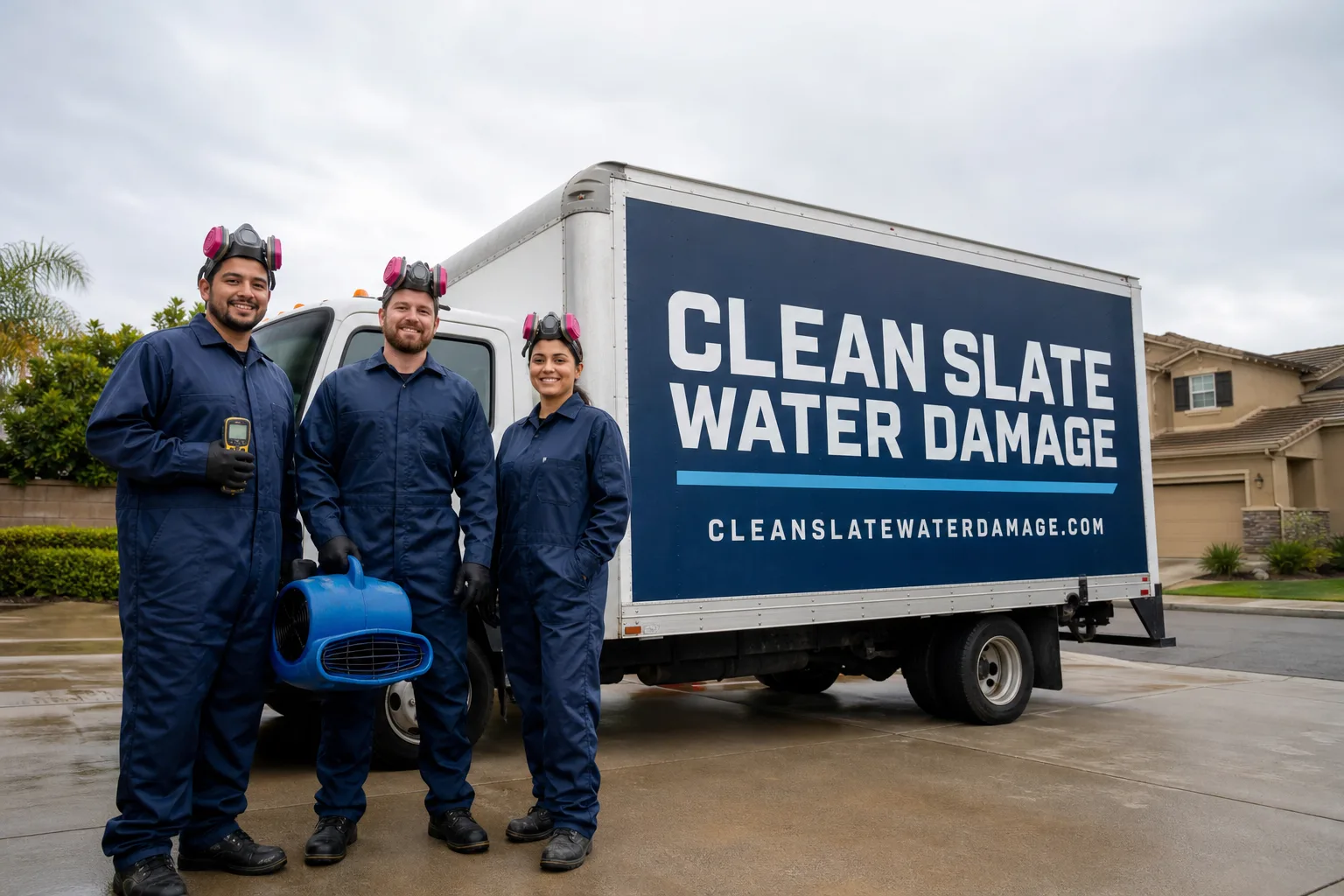
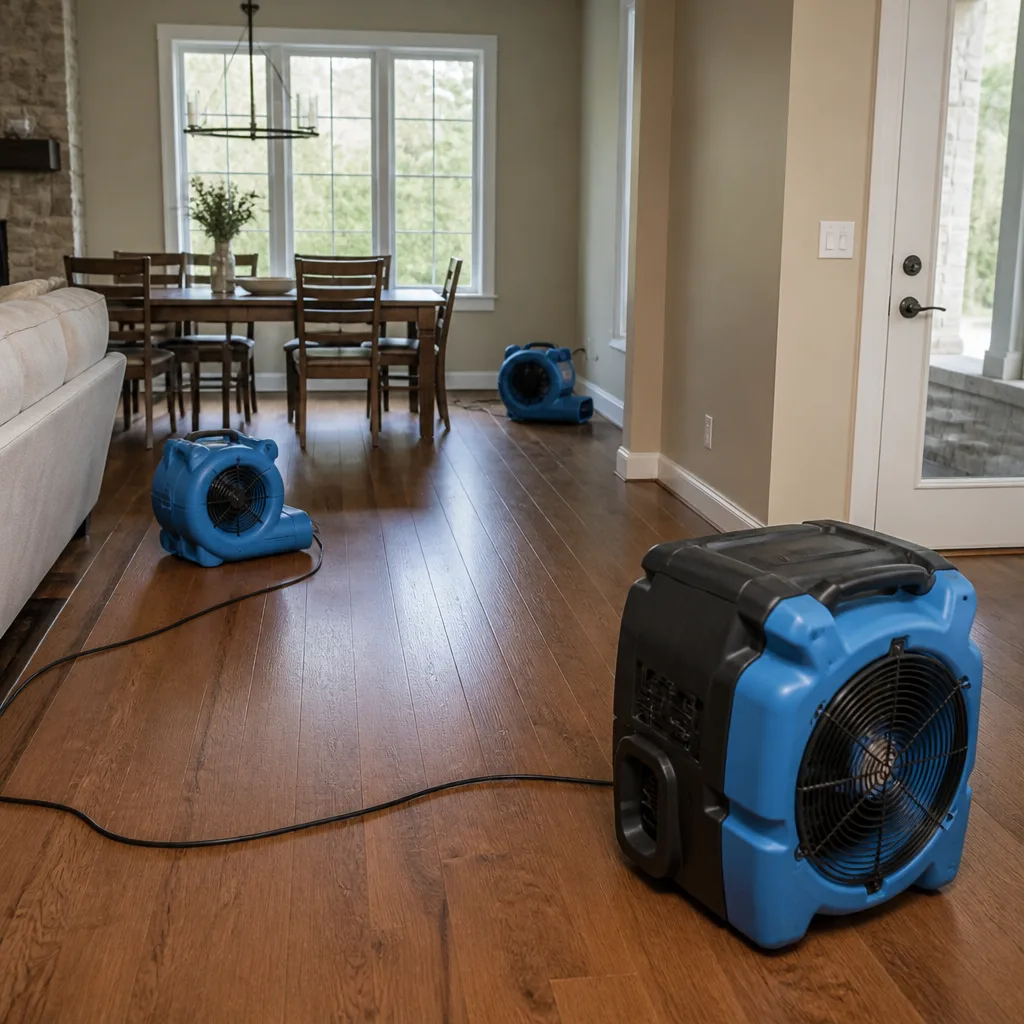
Corona property owners call us because we arrive with commercial drying systems, not hardware-store fans. Our equipment roster includes Dri-Eaz and Phoenix units, the same machines top restoration firms run on commercial losses, and we deploy them with moisture mapping before we start, not after. Noel Carrasco, who leads our teams, built our process around one goal: a verified return to pre-loss condition, documented with drying logs and photo records.
The work is performed in alignment with IICRC standards, and our RIA and IFA affiliations keep us accountable to third-party benchmarks, not self-declared claims. For insurance claims, we document everything, coordinate directly with adjusters, and hand you a clear scope before we start. No vague promises, no open-ended work orders.
And we understand what Corona actually throws at homes. A Dri-Eaz dehumidifier in a 1950s South Corona bungalow with original windows works differently than in a sealed 2004 stucco box in Sierra del Oro. Our techs read the room, the framing, the slab type. That’s the difference between a house that dries and a house that quietly molds.
Restoration work we handle
Water Mitigation in Corona
Water Mitigation in Corona means stopping active water, removing what’s already pooled, and setting the structure on a drying path before mold gets a foothold. In our experience, a townhome in 92880 with a hidden slab leak needs a different playbook than a single-story 1978 rancher near the 91 with a roof drain backup. Both need fast extraction. The difference is in how the water moved and where it’s hiding.
Extraction and Containment
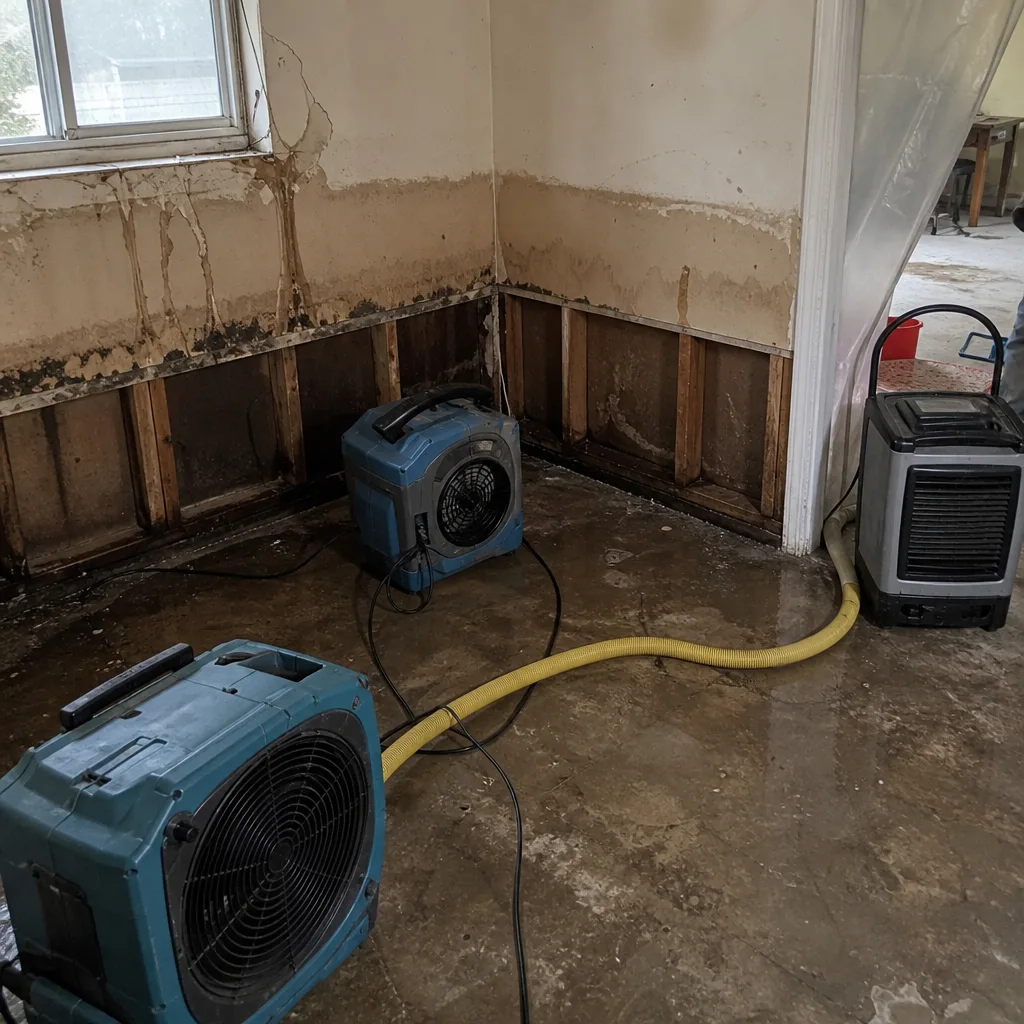
We start with truck-mounted and portable extraction, then set airflow boundaries so moisture doesn’t chase into dry rooms. On a recent Stagecoach Drive townhome, a supply-line failure behind an upstairs vanity wicked into the shared wall. We set containment along the tight stairwell, extracted category 2 water, and ran Phoenix air movers and a Dri-Eaz dehumidifier with moisture mapping from the hall into the neighbor’s common wall. The drying logs showed the OSB stabilized in three days without cutting into the adjacent unit’s closet. That’s what proper mitigation looks like: aggressive, documented, contained.
Structural Drying Without Demo
Our Injectidry system forces dry air directly into wall cavities and subfloors. In Corona’s older homes, that means original hardwood or tile stays in place while the space behind it dries. We only open walls when the material is unsalvageable or contaminated. Less demolition, lower rebuild cost, faster return to your routine. Typical water mitigation in Corona runs $1,200 to $3,500 depending on the affected square footage and how long water sat before discovery.
Flooded Basement in Corona
A Flooded Basement in Corona is less common than in other parts of Southern California, but when it happens, it’s usually a slab leak, a failed water heater, or a heavy storm pushing water through a hillside foundation in the Foothill Ranch areas near 92883. Basements and split-levels built into the slope catch runoff from the Santa Ana Mountain foothills when winter rains hit.
Getting Water Out Fast
Standing water in a below-grade space can damage foundation walls, wick up into framing, and create the dark, cool conditions mold loves. We pump and extract first, then evaluate what the water touched. If it’s clean supply-line water, drying may be enough. If it’s storm water or sewage-tinged flood water, we treat it as contamination and adjust the protocol. Flooded basement mitigation in Corona typically runs $2,000 to $5,500 for a standard finished or semi-finished space.
What We Check After the Pump-Out
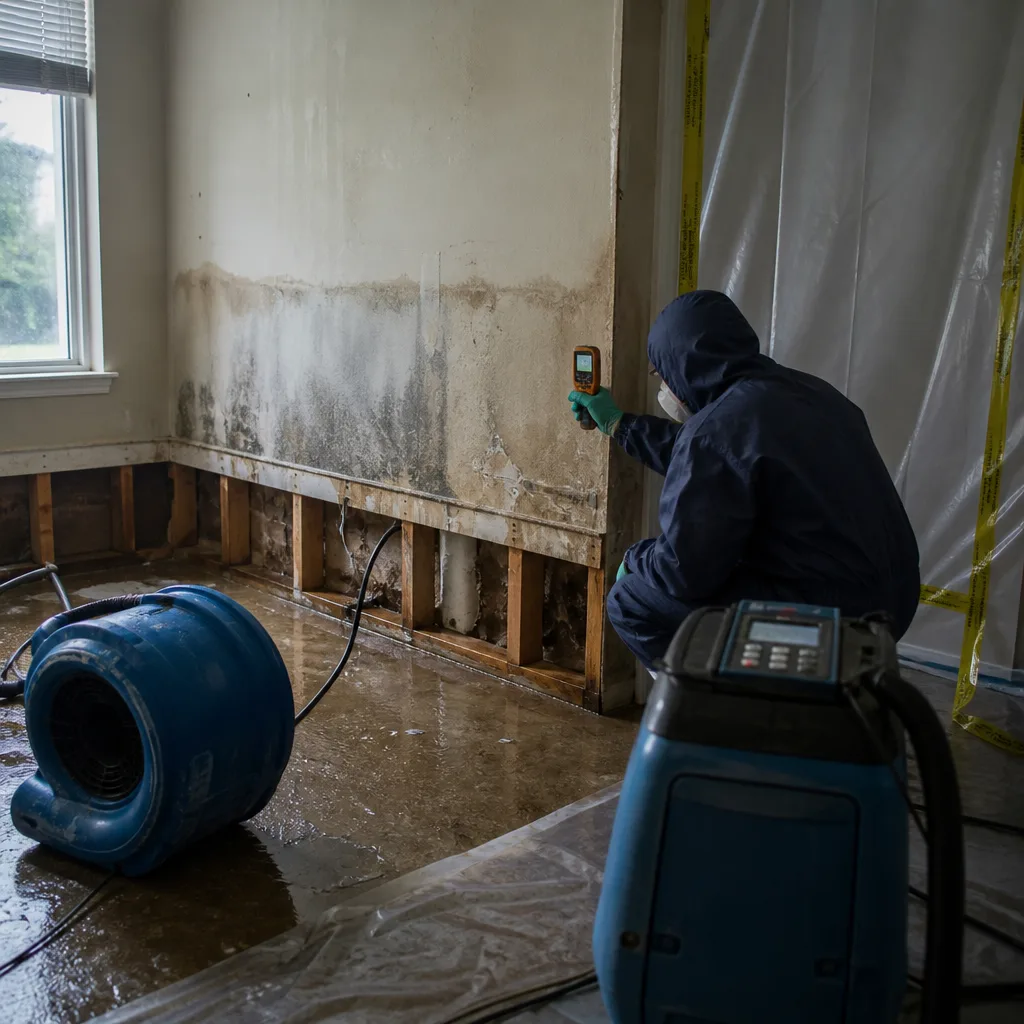
We probe the slab edge, test the baseboards with a penetrating moisture meter, and pull air samples if there’s any odor. Many Corona basement floods are caused by a pinhole in a copper line under the slab, and the water travels along the vapor barrier before it shows up in the finished room. We find the source, not just the symptom.
Trusted Brands We Service in Corona
Corona homes run the full range of appliances and plumbing fixtures, and we service damage from all of them: Rheem and Bradford White water heaters common in newer 92880 builds, Moen and Delta supply lines in master-bath vanities, Whirlpool and LG laundry supply failures in upstairs utility rooms, and old galvanized pipe still running under the 1960s South Corona slabs. Because we’re running equipment into Corona multiple times a week, our trucks carry common fittings, couplers, and extraction accessories for the plumbing systems we see most, which means less time chasing parts and more time pulling water out.
Common Water Damage Restoration Problems We See in Corona Homes
- Hidden PEX slab leaks in 2000s tract homes. Corona’s east and south subdivisions in 92880 and 92881 were built fast with PEX loops under slab. Pinhole leaks surface as a water-bill spike or warped laminate days or weeks before visible pooling. By then, the subfloor is often saturated across half a room. We find these with thermal imaging and moisture mapping before we tear anything open.
- Supply-line failures above garages in newer two-stories. Upstairs laundry and vanity supply lines fail in walls, water runs down the stack and into the garage ceiling or the room below. The damage shows up as a sagging seam or a drip from a light fixture. We cut open only what we must, extract, and dry the cavity with Injectidry to avoid pulling the whole ceiling.
- Original plumbing in 1950s-70s South Corona homes. Galvanized steel and original cast iron in 92879 and the blocks near downtown are past their lifespan. Pinhole corrosion, joint failure, and root intrusion into old clay drains under slab send water into flooring and walls. Homeowners often mistake the early signs for a slab crack. We trace the actual source.
- Monsoon-season roof and stucco leaks at the foothill edge. After a strong winter storm or a monsoon push up the Santa Ana River corridor, homes along the 92883 foothills take wind-driven rain through attic vents and cracked stucco. A leak that starts as a ceiling stain can become a mold colony in the insulation within days in Corona’s heat, even in winter.
See the difference
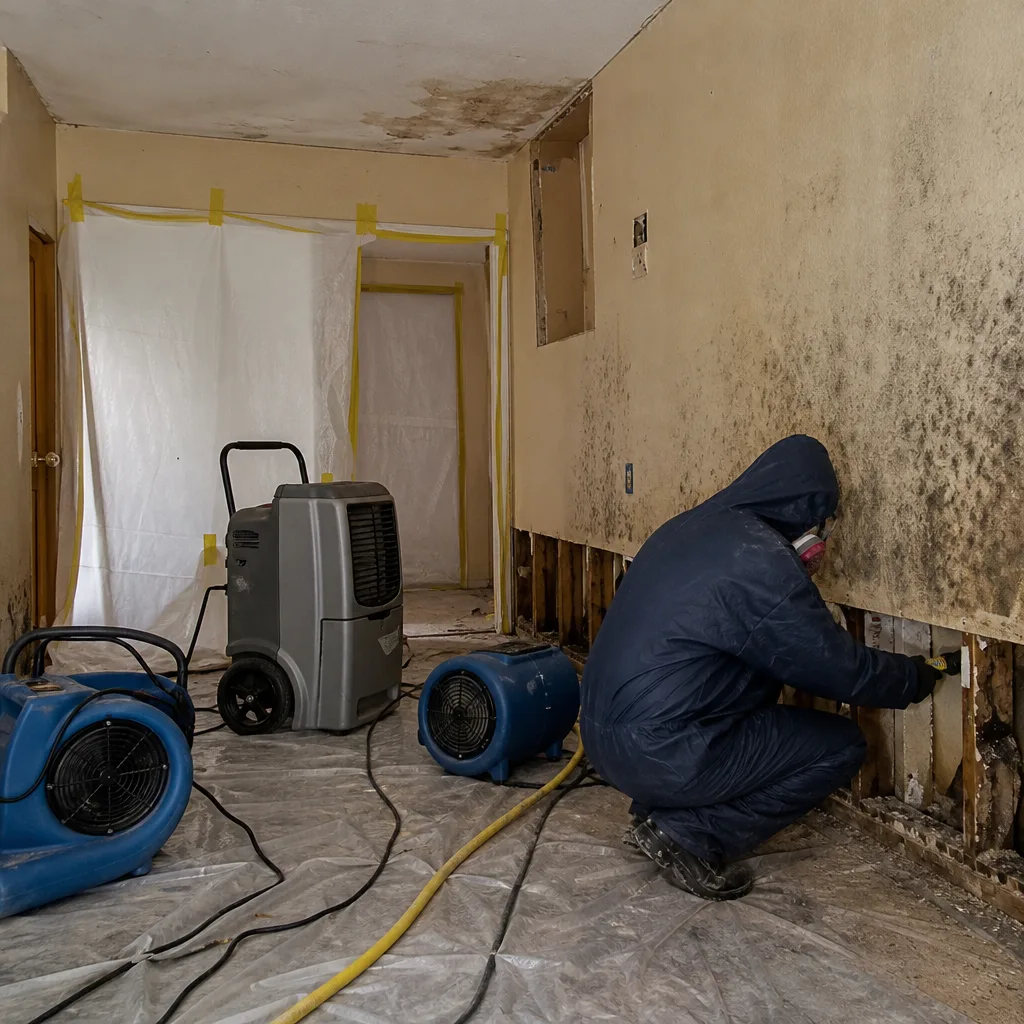 Before
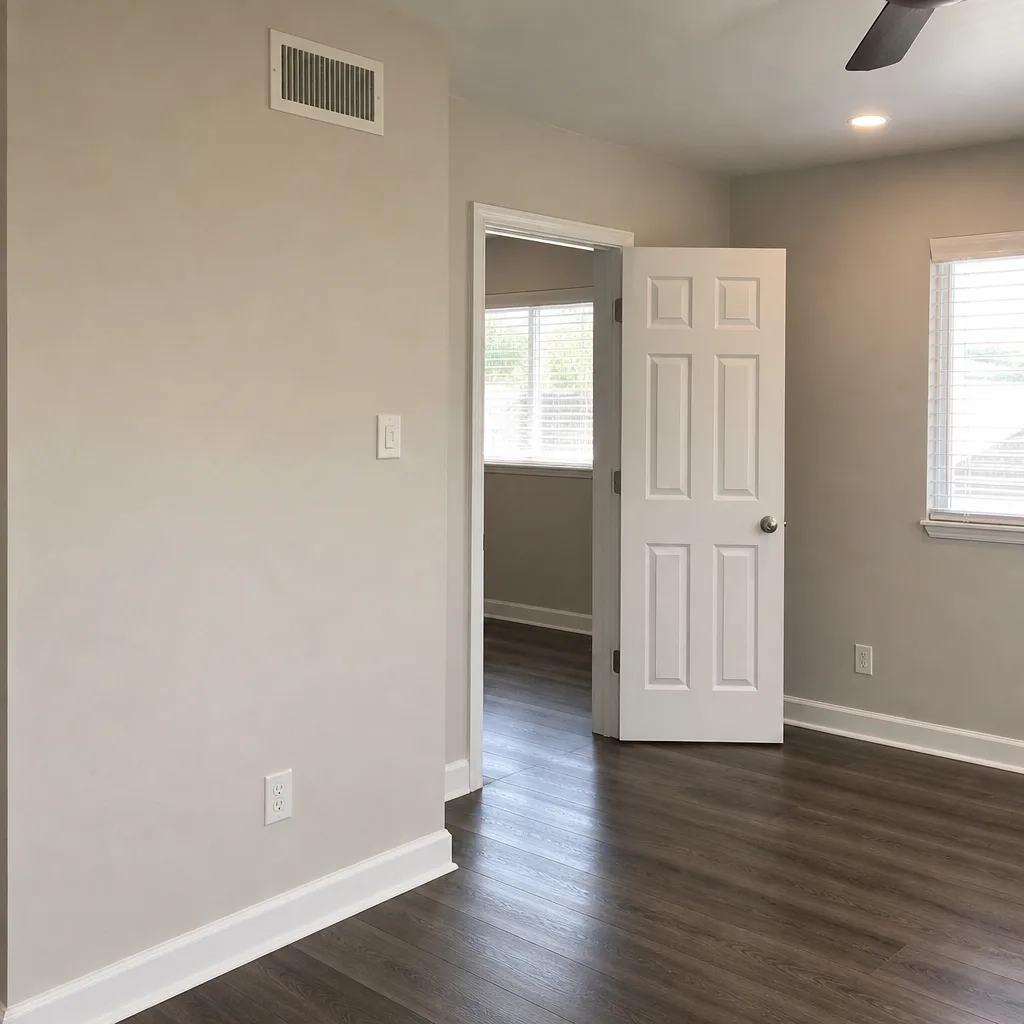 After
 Before
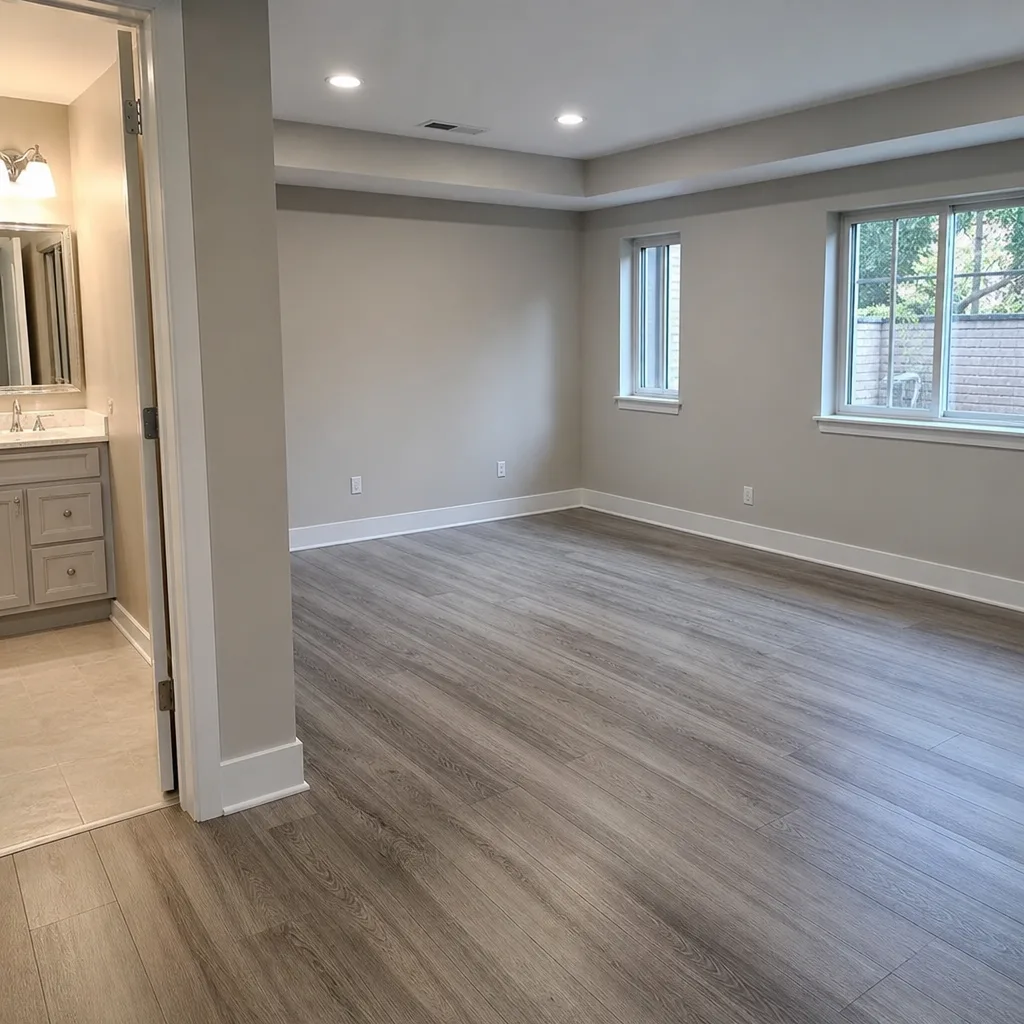 After
 Before
 After
Pricing for Water Damage Restoration in Corona, CA
Corona water damage jobs fall into predictable bands once we see the affected space. Small extraction and drying, like a kitchen sink overflow that stayed on tile, runs $800 to $1,800. A standard supply-line failure across a room with drywall and flooring contact runs $2,500 to $5,000. A whole-floor flood or storm intrusion affecting multiple rooms and a subfloor runs $5,000 to $12,000. What moves the number: whether water touched walls, what flooring material is down, how long it sat, and whether contamination is category 1 or category 3. We write a line-item scope before we start and you approve it first. Call (888) 508-8745 for a free estimate, and we’ll come take a look, no obligation.
We Also Serve Cities Near Corona
Our crews cover more than just Corona proper. We regularly run Water Damage Restoration calls in Home Gardens and El Cerrito Corona, over to Eastvale and Norco, and into the surrounding Riverside County neighborhoods. If your property is anywhere along the 91, 15, or 71 corridors near Corona, we can usually get a truck to you fast. Our full page on Water Damage Restoration in Corona covers those areas in more detail.
Serving Corona, CA — Our Local Coverage Area
We’re based in the Corona area and know this community well. Use the map below to see our service coverage — if you’re nearby, we can almost certainly help.
FAQs About Water Damage Restoration in Corona
Our standard response into Corona neighborhoods with alley-loaded garages and gated entries is 60 to 90 minutes. Our project leads pre-plan parking and access when they see a 92880 or 92881 address, because we know a truck-mount trailer can’t always pull up to the unit’s front door. We stage equipment at the closest accessible point and hand-carry extraction and drying gear into the unit. Delaying is the real risk: the longer water sits in a shared wall or subfloor, the more material it ruins and the more drying time it adds.
Shut off the main water valve at the meter or the whole-house shutoff, then call (888) 508-8745. If water is dripping through a light fixture, cut power to that circuit at the breaker first. We’ll come out, extract the standing water, remove only the wet drywall in the ceiling, and set drying equipment against the affected framing. We’ll moisture-map the cavity and the floor below to see how far the water migrated. Most 92881 homes with PEX supply lines respond well to Injectidry drying without opening the entire ceiling.
Yes. In fact, we run a lot of calls in 92879 and the blocks west of Main Street where the original galvanized and cast-iron plumbing is failing. The failure mode is different from a new PEX tract home: often a pinhole leak that’s been weeping behind a wall for weeks, feeding mold before the first visible stain. We trace the actual source, not just the visible damage. That matters when you’re deciding whether to file an insurance claim or just dry the room.
Category 1 is clean water from a supply line or a sink overflow; it just needs extraction and drying. Category 3 is grossly contaminated water, like sewage backup or storm surge with soil and bacteria; it requires containment, removal of all porous materials it touched, and antimicrobial application. If your condo shares a wall with a neighbor’s leak, the source water category determines whether we need to open the wall and replace insulation or can dry it in place. We’ll tell you the category, show you the IICRC-aligned protocol, and write it into the scope before we start work.
We get the subfloor dry within 48 to 72 hours. That’s the window that matters. After a slab leak, water migrates along the vapor barrier and soaks the underside of tile, laminate, or engineered wood. If it stays wet longer than three days, mold starts in the dark, humid cavity. We set Dri-Eaz dehumidifiers and Phoenix air movers with sensors in the wet zone, check moisture levels daily, and don’t pull equipment until the moisture content is back to normal for that material. The drying log is your proof. Call us at (888) 508-8745 if you see warping floors or a rising water bill before visible damage appears.
Written by Noel Carrasco, Owner at Clean Slate Water Damage, serving Corona from our Pomona base with IICRC-aligned water, mold, and fire restoration.
Need Water Damage Help in Corona? Call Now.
If water is spreading through your Corona home right now, don’t wait for a call-back. Call (888) 508-8745 and talk to a live dispatcher. We’ll get a truck rolling toward your neighborhood, walk you through the first steps, and give you a straight answer on what the next 24 hours look like. Estimates are free. The damage isn’t.