
 Water damage drying
 Fire & smoke cleanup
 Mold remediation
 Storm response
 Sewage cleanup
 Reconstruction
Free visual inspection and a written scope of work before any mitigation begins - photos, moisture readings, and drying logs go in your claim file
The scope we write is the scope we bill. Anything new gets shown to you, in writing, before we touch it.
Get your free estimateFast, Reliable Water Damage Restoration Across Orange
Water damage restoration in Orange, CA typically runs between $2,800 and $7,500 for a full mitigation and dryout, with emergency water extraction alone landing between $600 and $1,800. Response time to most Orange neighborhoods is under 90 minutes from our dispatch. If you’re standing in water right now in Old Towne, off East Chapman, or anywhere in a 92862 or 92869 tract home, call (888) 508-8745 and we’ll have a crew rolling while you read this. Noel Carrasco leads our Orange response team, and every job starts with the same thing: a written scope before a single piece of equipment comes off the truck.
Orange isn’t one kind of city when it comes to water damage. It’s two. The homes around the Plaza are plaster-and-lath, raised-foundation, 1920s-era structures that behave completely differently under water than a 1975 slab tract house near Santiago Canyon Road. We plan for both. That split is why a page like this exists, and why your restoration can’t follow a same-as-everywhere template.
Why Clean Slate Water Damage Is Orange’s Preferred Water Damage Restoration Company
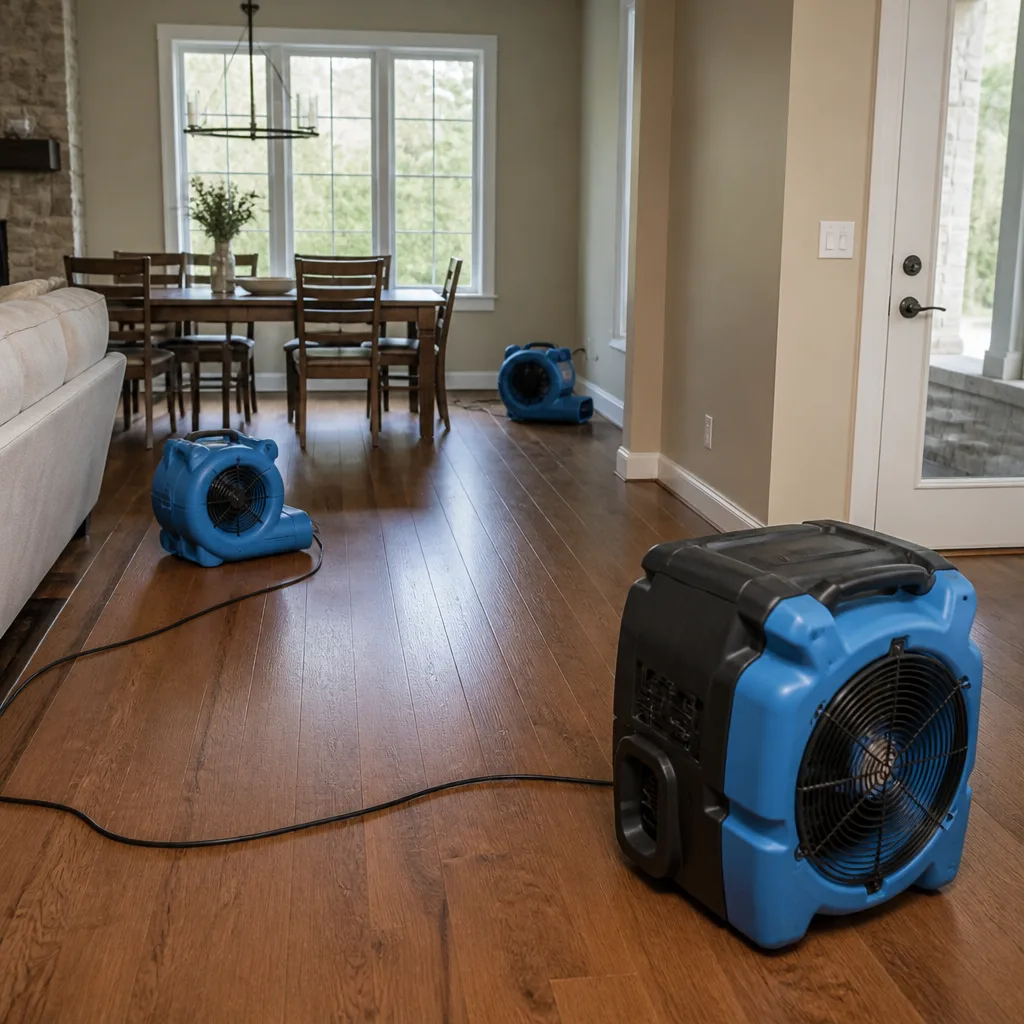
We run professional-grade equipment in Orange: Dri-Eaz LGR dehumidifiers, Phoenix axial air movers, and an Injectidry system that dries wall cavities and subfloors without demolition. Our work follows IICRC standards, and we carry RIA and IFA affiliations, which matters more in Orange than most cities because a historic district demands auditable process. Noel Carrasco has walked dozens of Old Towne properties through water losses where the difference between saving original plaster and gutting a room came down to drying technique, not effort.
Orange homeowners call us because we don’t treat a 1926 bungalow and a 1985 condominium off East Katella the same way. We moisture-map, document, and dry to pre-loss condition. Not surface-dry. Pre-loss. That means verified readings with equipment logs, photos for your adjuster, and a clear path from emergency extraction to the day we hand you a dry, clean, stabilized structure.
Response time matters. We dispatch from Pomona, and our typical Orange arrival window is 60 to 90 minutes depending on whether you’re in Old Towne, down near 92859, or up in the hills above Villa Park Road. Storms hit Orange in fast winter bursts, and every hour of standing water expands the damage zone. We know the street patterns here, and we know which homes on any given block are slab versus raised foundation before we arrive. That’s the local part that shortcuts hours off your drying plan.
Restoration work we handle
Water Extraction in Orange
Water extraction in Orange means removing standing water fast enough that flooring, baseboards, and wall cavities don’t reach saturation that forces replacement. Most Orange jobs fall between $600 and $1,800 for extraction alone when the source is a burst supply line or appliance failure. In Old Towne, you’re usually dealing with wood subfloor over a raised foundation; in the 92862 tracts, you’re looking at slab with carpet and padding holding water against concrete, which changes how we set up containment and airflow from the first hour.
Subsurface and Cavity Extraction
Standing water you can see is the easy part. The water inside wall cavities under the plaster keys is what destroys a room. We use truck-mounted and portable extraction units to pull surface water, then shift to cavity drying with Injectidry panels pushing dry air through the plaster-and-lath assemblies without prying the walls open.
In a slab home, extraction includes lifting wet carpet, padding, and vinyl, then pulling moisture from the concrete itself. Concrete reads dry at the surface long before it’s actually dry. We map it. That’s what stops the musty smell returning four months later.
Extraction Timing and Material Saturation
The first 48 hours decide whether your Orange flooring and trim survive. Drywall wicks water upward fast; hardwood cups within 36 hours. When we arrive under 90 minutes, most materials can be dried in place. When a leak has run all weekend in an empty 1970s tract house, extraction is the first step in a longer process that often includes selective removal of soaked padding and baseboards.
Emergency Water Removal in Orange
Emergency water removal in Orange typically costs $800 to $2,200 when you need a crew out within the hour for a burst pipe, failed water heater, or an overflowing washing machine that has dumped water across two rooms overnight. This is not the time to rent a shop vac. Category 1 water, clean supply water, becomes Category 2 within 24 hours as it picks up contaminants from flooring, adhesives, and dust. If it reaches a raised foundation crawlspace with decades of accumulated soil and rodent activity, it can shift toward Category 3 conditions faster than most people expect.
After-Hours and Storm Response
Orange’s winter rainy season is short but intense. We staff emergency coverage during storm events because roof leaks and gutter failures tend to strike at 2 a.m. when the atmospheric river finally overwhelms an aging clay tile roof in Old Towne or a flat roof on a mid-century commercial building. Same crew, same equipment, same written scope, just a sleepless hour.
Category 1 vs. Category 3 Response
The difference matters in Orange because of what’s under the street. A root-blocked clay lateral backing sewage into a 1920s bungalow off East Chapman is not the same water event as a supply line split in a 1965 tract home. The bungalow needs containment, antimicrobial treatment, and removal of porous materials. The tract home might survive with extraction plus structural drying. We identify the water source and class before we unroll a single air mover.
Trusted Brands We Service in Orange
Orange has a lot of older equipment and piping still in service. We stock parts and drying accessories locally for common installations across the city, and we service equipment from every major manufacturer you’ll find in homes here. Dri-Eaz and Phoenix are our primary drying platforms, and we keep Injectidry panels stocked for the plaster cavity work Old Towne properties need. That means a hot week of Santa Ana weather doesn’t delay your dryout waiting on a component from a warehouse in Missouri. We know what breaks here and we carry it.
See the difference
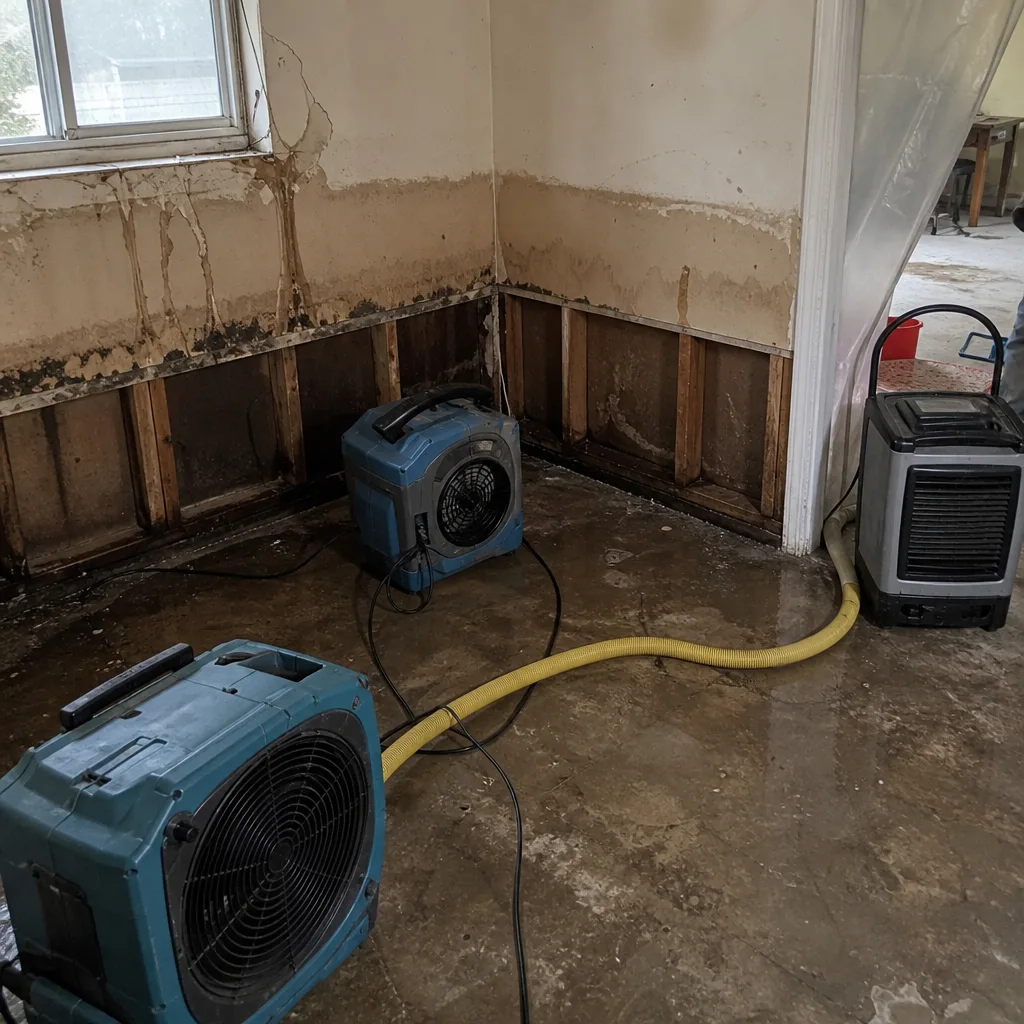
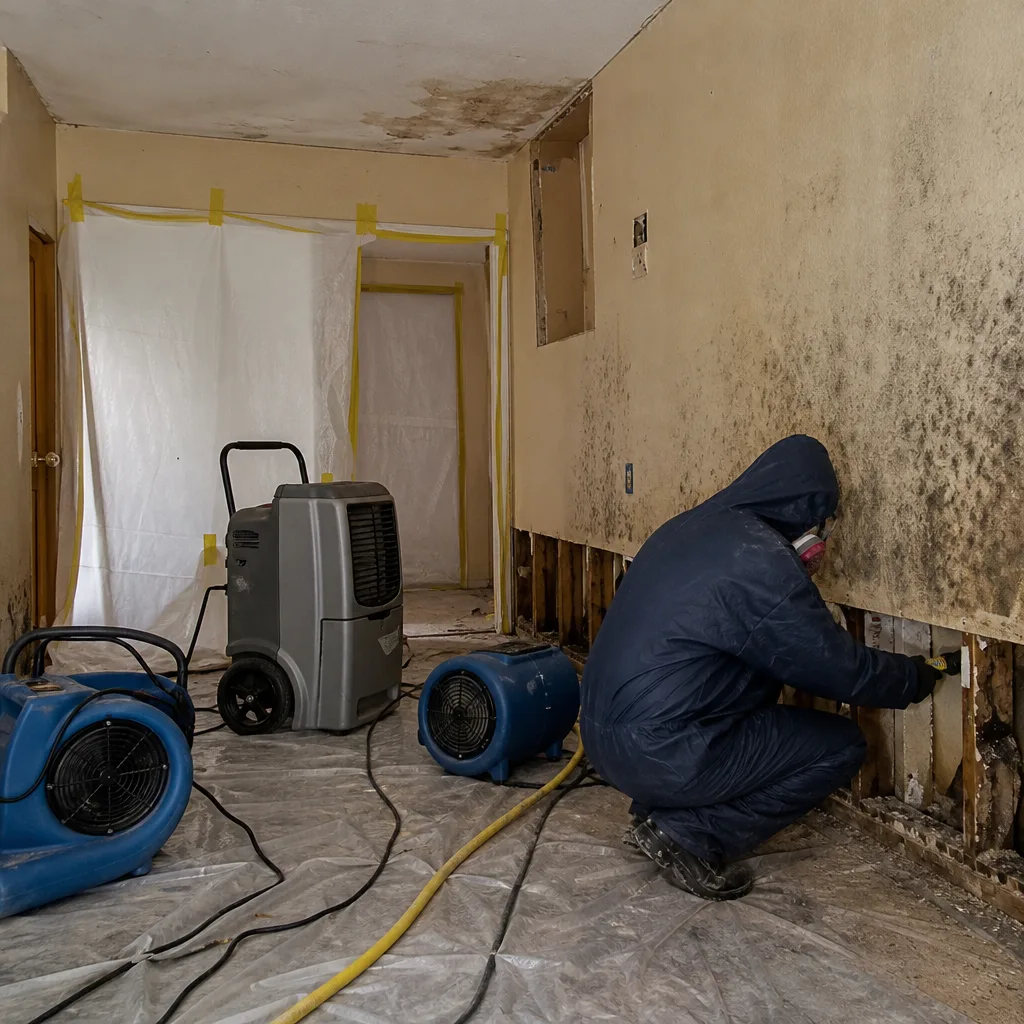 Before
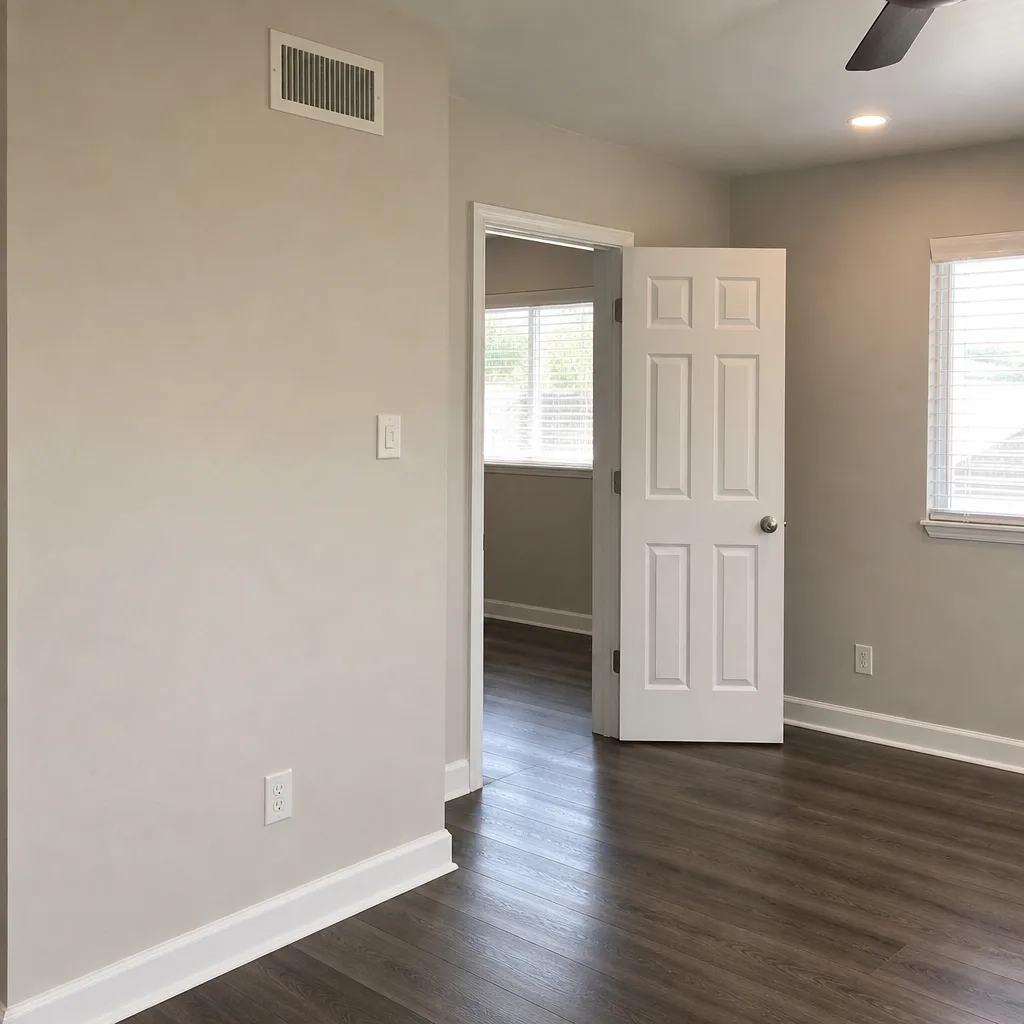 After
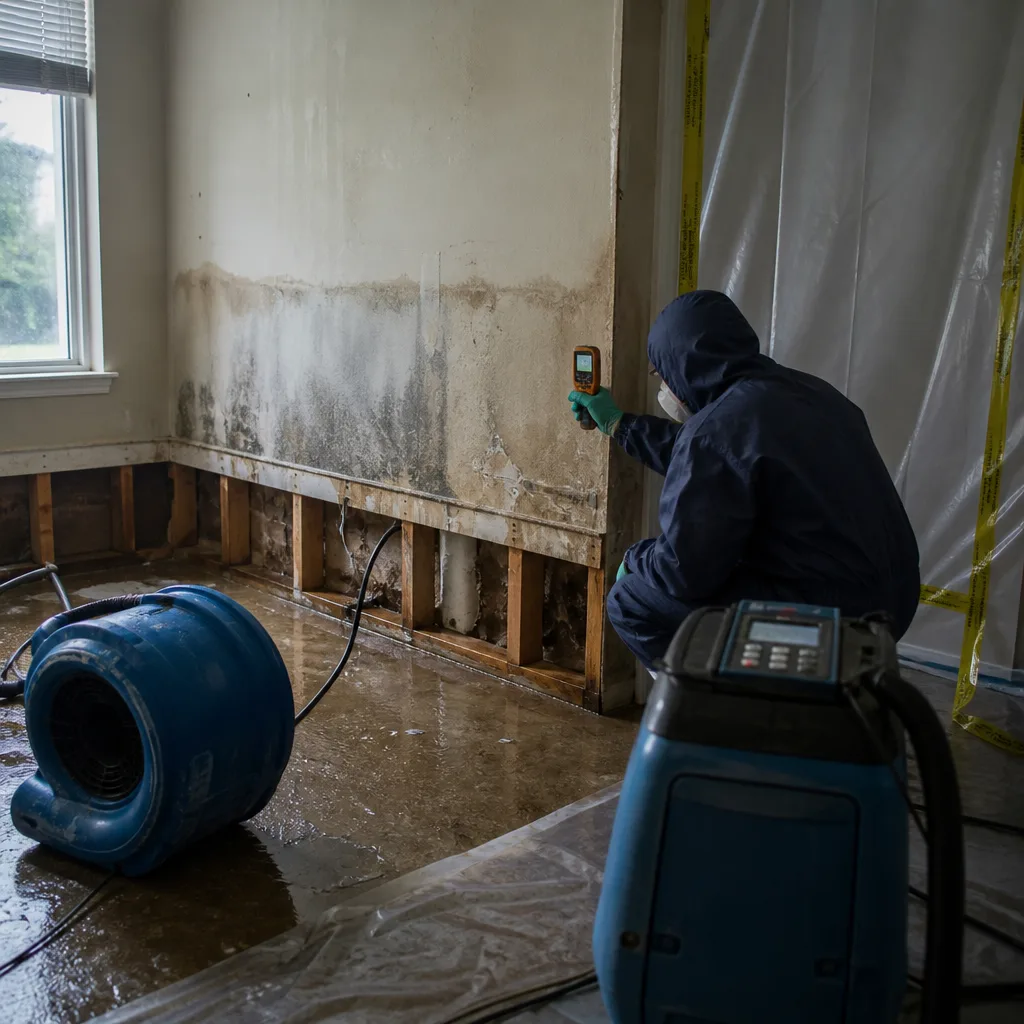
 Before
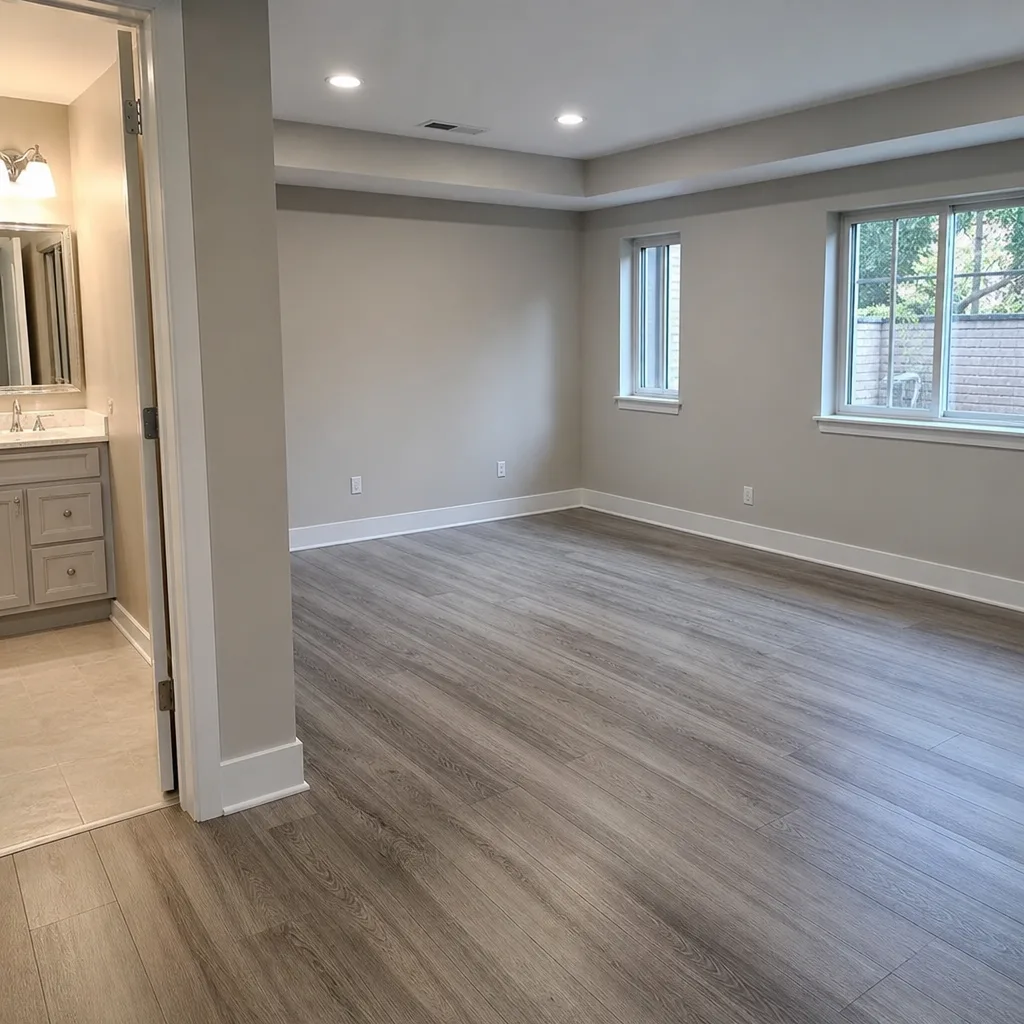 After
 Before
 After
Common Water Damage Restoration Problems We See in Orange Homes
- Root-clogged clay laterals in Old Towne. The mature camphor and citrus-era trees lining streets around the Plaza send roots into century-old clay sewer lines constantly. When those laterals back up, the sewage saturates flooring and plaster-and-lath walls in a Category 3 event that newer tract neighborhoods simply never face.
- Hidden slab leaks in 1960s and 1970s tract homes. Copper supply lines under concrete slabs corrode and weep for weeks before you notice damp carpet or a rising water bill. Surface moisture readings look fine while the slab itself holds gallons of water that will eventually telegraph through the flooring.
- Plaster wall failure from over-aggressive drying. If a restoration crew runs high-velocity air movers on 1920s plaster-and-lath without Injectidry cavity drying, the plaster cracks or the moisture stays trapped behind the keys. Months later, mold shows up inside the closed wall. We see the aftermath of this regularly in Orange’s older housing stock.
- Roof leak damage during Santa Ana-driven rain events. Orange sits inland with hot, dry Santa Anas most of the year, but winter storms hitting aging clay tile and wood shake roofs create sudden interior leaks. The water travels along rafters and drops into ceilings far from the actual breach, making the damage pattern confusing until you map it correctly.
Pricing for Water Damage Restoration in Orange, CA
Here’s what Orange homeowners can expect. Emergency water extraction starts around $600 and runs to $1,800 depending on square footage and water class. Full structural drying with dehumidification and air movement typically lands between $2,000 and $5,000. A complete mitigation including Category 3 contamination, selective removal, antimicrobial treatment, and rebuild-ready delivery runs $4,500 to $12,000 and up for a large Old Towne property with plaster walls. What moves the number: water classification, how long water sat before we arrived, whether we’re drying a raised foundation with full access or fighting moisture inside closed cavities, and whether historic-district documentation is required. Our estimates are free, written, and broken down by line item before work starts. Call (888) 508-8745 and we’ll give you exact numbers for your house, not a range off the internet.
We Also Serve Cities Near Orange
Beyond Orange, we respond daily to water damage in Villa Park, North Tustin, Tustin, and Anaheim. Same crew, same Injectidry capability, same written scope. If your property sits anywhere in that North Orange County arc, from a hillside custom home above Villa Park Road to a 1960s tract off Lincoln Avenue, our Orange team covers it.
Speaking of coverage: our broader Water Damage Restoration team handles everything from single-room extraction to whole-structure dryout, and the process was built around IICRC-aligned methodology rather than guesswork. When you call, you get a plan that says exactly what we’ll do, in what order, and what it costs.
Serving Orange, CA — Our Local Coverage Area
We’re based in the Orange area and know this community well. Use the map below to see our service coverage — if you’re nearby, we can almost certainly help.
FAQs About Water Damage Restoration in Orange
Because what’s coming out of a root-clogged clay lateral is Category 3 water, not tap water. It carries soil, sewage, and whatever else lives in those century-old pipes. A wet-vac lifts the standing water but leaves contaminants saturated into drywall, baseboards, plaster, and subfloor. Those porous materials need antimicrobial treatment or removal, not just drying. Orange’s mature tree canopy makes this a recurring Old Towne problem, and treating it like Category 1 water is how homes end up with hidden mold inside restored walls. Call (888) 508-8745 and we’ll classify the water correctly before anyone touches a fan.
Yes, in most cases. We use Injectidry panels that push dry air directly into the wall cavities between the plaster keys, drying the structure from the inside without opening the wall. That approach preserves original plaster and keeps you out of the Plaza Historic District’s design-review process for a rebuild. Aggressive surface drying cracks plaster and traps moisture behind the keys. Injectidry avoids both. It’s slower than demo-and-replace but it keeps a 100-year-old wall original, which is the entire point in Old Towne.
Mold starts colonizing wet organic materials within 24 to 48 hours in Orange’s inland climate, faster in warm months when indoor temperatures stay high. Drywall, carpet padding, and unpainted wood are the first to go. That’s why extraction within the first day matters so much. If you’ve had a leak running over a weekend, assume mold growth is already underway and call (888) 508-8745 for extraction and dehumidification before it spreads into framing.
A slab leak weeps water under the concrete and telegraphs upward through cracks and gaps, saturating carpet, padding, and framing while the surface looks deceptively dry. A raised-foundation leak dumps water into the crawlspace where airflow can dry it, but the moisture also rises into the subfloor and flooring above. Different water paths, different drying setups, different moisture mapping strategies. We adjust the plan based on foundation type because treating both the same way leaves water trapped somewhere. Orange’s split housing stock means we switch between these two playbooks on the same day.
Yes. For Old Towne properties subject to the Plaza Historic District’s design-review requirements, we document moisture readings, drying logs, and pre-loss condition before any material removal happens. That documentation supports whatever permit or review process follows. The goal is always to dry in place and avoid triggering design review entirely. If removal is unavoidable, you’ll have the records showing why it was necessary. It’s a standard part of working on Orange’s older homes, and we treat it as mandatory, not optional.
Written by Noel Carrasco, Owner at Clean Slate Water Damage, serving Orange, CA with water damage restoration, mold remediation, and fire damage restoration.