

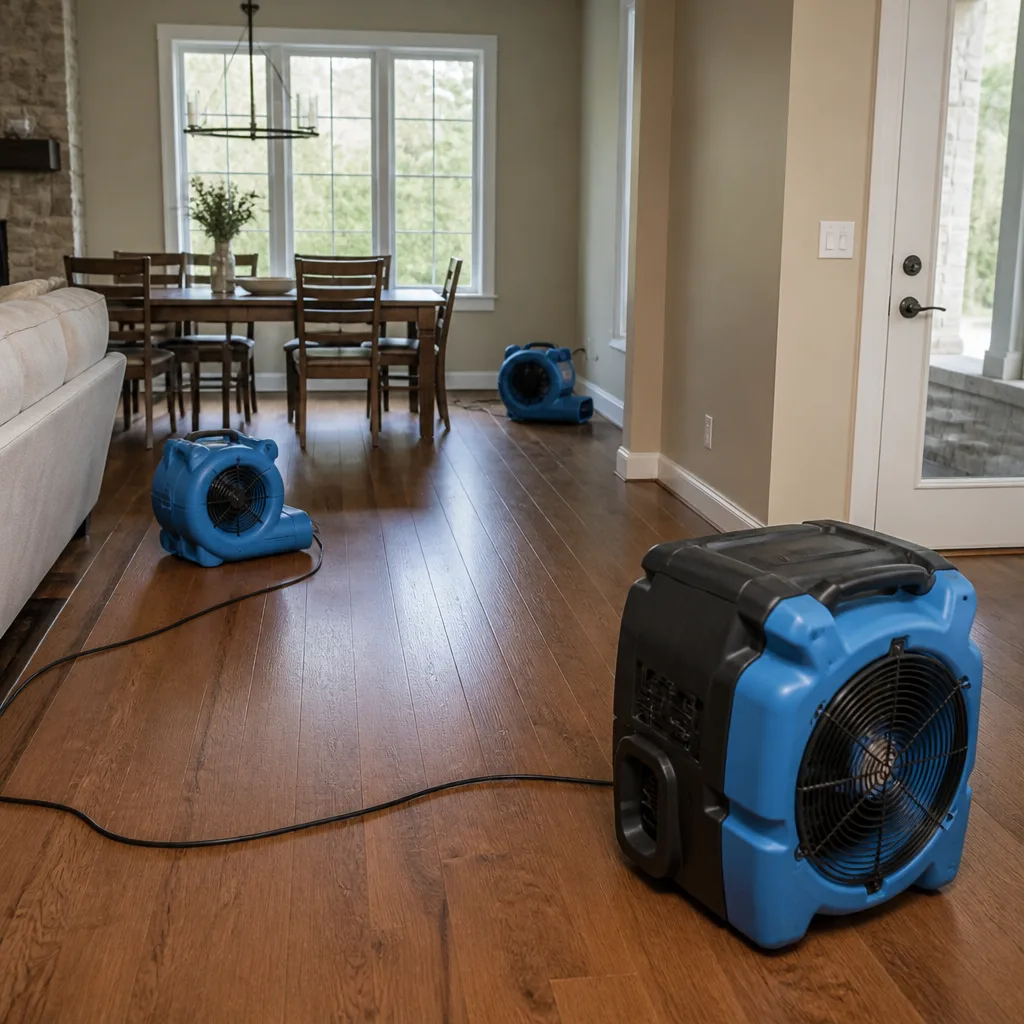
 Water damage drying
 Fire & smoke cleanup
 Mold remediation
 Storm response
 Sewage cleanup
 Reconstruction
Free visual inspection and a written scope of work before any mitigation begins - photos, moisture readings, and drying logs go in your claim file
The scope we write is the scope we bill. Anything new gets shown to you, in writing, before we touch it.
Get your free estimateFast, Reliable Mold Remediation Across Claremont
Mold remediation in Claremont typically costs between $1,800 and $6,500 for a contained room-scale job, and $4,000 to $18,000+ when moisture has spread through wall cavities, framing, or crawl spaces. We reach most Claremont homes within 60 to 90 minutes from our Pomona base, because we know the 210 and Base Line Road corridors. If you have visible mold, a musty smell that won’t go away, or water damage you suspect has been sitting, call (888) 508-8745. We will tell you what you are actually dealing with, in plain terms, before any work is scoped.
Claremont is different from the surrounding Inland Empire cities. The housing stock around the Village and the Claremont Colleges wasn’t built in a decade with a single frame style. It spans custom 1920s wood-frame homes, mid-century stucco boxes, and a few 1960s and 70s tract pockets south of Foothill. That mix changes how mold grows, where it hides, and what it takes to actually fix it. We have worked enough Claremont homes to know the difference between a surface stain from a window leak and a wall cavity colonized behind stucco after a tile-roof failure. That distinction is the difference between a cleaning and a real remediation.
When you call Clean Slate, you are not getting a franchise tech reading a script. You get a crew that runs containment, moisture mapping, and drying logs on homes the same age as the ones we work on in Claremont every month. And every job, before a single wall is opened, gets a written scope of work. No surprises, no upsell after the fact, no work you didn’t approve.
Why Clean Slate Water Damage Is Claremont’s Preferred Mold Remediation Company
We have earned our reputation in Claremont on jobs other contractors walked away from. An older home off Indian Hill Boulevard with mold behind original lath-and-plaster walls. A crawl space under a 1940s house near Memorial Park where the framing had been wet for years. A Village-adjacent property where the owner had already been told the only fix was gutting the room. In each case, the work came down to the same things: find the actual moisture source, contain the affected area, remove the damaged material, dry what can be saved, and treat what remains. We don’t cut corners, and we don’t guess.
Claremont homeowners regularly tell us the same thing: we showed up when we said we would, we explained the findings in terms they understood, and we worked directly with their insurance carrier on documentation. That matters when the adjuster is asking why the wall has to come open. We provide photo-documented moisture readings, containment setup, and drying logs for exactly that reason. You are not left building a case on your own.
Our teams arrive with commercial-grade equipment that most general contractors do not own: Dri-Eaz dehumidifiers and air movers, Phoenix axial fans, and moisture mapping tools that read hidden wetness behind stucco and under flooring. We are not renting equipment from a hardware store for your job. The difference shows in how fast the drying gets done and whether the mold stays gone.
We also carry IICRC-aligned process discipline on every project. That means our containment protocols, our antimicrobial treatments, and our clearance standards follow the same reference points used by the restoration industry’s certifying bodies. Noel Carrasco built Clean Slate around that standard. When you call and ask for Claremont mold removal, you are getting a team that works to those standards, not to whatever is convenient that afternoon.
Restoration work we handle
Black Mold Removal in Claremont
Black mold removal in Claremont most often starts with a homeowner noticing dark staining on a ceiling, behind furniture near an exterior wall, or along baseboards in an older room that never quite dries out. The color alone does not tell you the species, and we do not pretend otherwise. What matters is that dark-pigmented mold in a Claremont home usually means moisture has been present for weeks or months, not days. That is the real problem, and that is what we address.
A typical contained black mold removal in a Claremont bedroom or bathroom runs $1,800 to $4,200 when the affected area is under roughly 100 square feet and the moisture source is identified and stopped. When the mold has colonized a wall cavity behind stucco, spread into a crawl space, or follows a slow leak from a tile roof, the scope expands and the cost moves into the $5,000 to $12,000 range. We will give you that range in writing before we start, and explain exactly why your job falls where it does.
We should be honest about something: black mold is a marketing term more than a scientific one. Contractors throw it around because it scares people. At Clean Slate, we refer to mold by what we actually find under the microscope and by the moisture reading on the wall. If you have dark mold, we treat it seriously. But we will not tell you your house is a biohazard until we have actually tested it, because most of the time it is not.
Containment and Handling Inside the Home
When we open a wall or ceiling with active mold growth in a Claremont home, the living space is isolated first. We run negative air pressure in the work area, seal doorways with containment barriers, and keep the HVAC system shut down or filtered so spores don’t get pushed through the rest of the house. This is standard IICRC practice, and it is the difference between a remediation that clears and one that spreads mold into clean rooms.
Every black mold job ends with a post-remediation assessment. The surfaces get HEPA-vacuumed, treated with antimicrobial products, and dried to a target moisture content. Then we verify with moisture meters and air sampling if the scope called for it. You get clearance documentation you can show an insurance adjuster or a future buyer.
Old Homes, Hidden Mold
In Claremont there is a pattern we see over and over: a 1930s wood-frame home near the Village gets a water stain on a bedroom ceiling after a storm. The homeowner patches the paint. Six months later the same stain is back, and the room smells musty. The leak was never actually stopped, and mold grew inside the wall while the surface dried out. By the time we are called, the framing behind the stucco is colonized and the fix is much larger than a drywall patch.
That is why we always ask about the history of the stain before we touch anything. A recurring stain in an older Claremont home is almost never a one-time event. It is a signal that moisture is still getting in somewhere, usually at a roof-to-wall junction or an original window flashing detail. Mold Remediation that ignores that question will fail within a year. Ours does not.
Mold Removal Contractor in Claremont
Hiring a mold removal contractor in Claremont means choosing between a company that dries and disinfects the visible surface and one that treats the structural cause. If you are in a 1920s or 1950s home around the Claremont Colleges, we strongly recommend the second option. Older framing, original windows, and tile roofs create leak paths that newer tract construction simply does not have. You need a contractor who knows what those paths look like and how to chase them.
Claremont mold removal contractor pricing runs from about $1,500 for an isolated bathroom or closet remediation up to $15,000 or more for whole-room structural drying, framing treatment, and rebuilding of walls and finishes. The wide range is real, and we are upfront about why. A 1960s tract home with a clean plumbing leak and a 1920s custom home with a hidden roof-to-wall leak are not the same job. Quoting them as if they were is how people get burned.
We also handle the parts of the job that don’t fit neatly into a square-footage bid. Does the crawl space under your house need a vapor barrier replaced? Does the old cast-iron waste line have to be scoped? Is there dry rot in the framing that has to be cut out? These are real questions on Claremont jobs, and our estimators factor them into the written scope before work starts.
Moisture Mapping Before Opening Walls
We don’t trust visible mold as an indicator of the full affected area. Before we open a single square foot, we run moisture meters and thermal imaging across the suspect wall, floor, and ceiling. In older Claremont homes, the visible stain is often the smallest part of the problem. Water that entered at the roof travels down inside the wall, pools at the bottom plate, and spreads sideways under the flooring. A surface-only remediation leaves that wet wood in place. Moisture mapping finds it first.
This process takes time and it costs money, and it is the main reason our bids sometimes come in higher than a crew that just cuts out the stained drywall and sprays. It is also the main reason mold does not come back after our jobs. We would rather be more expensive up front than cheaper twice.
Antimicrobial Treatment and Drying
After the affected materials are removed, the remaining framing and adjacent surfaces get treated with an antimicrobial product applied under the same containment conditions as the demolition. Then the drying phase begins. Our teams place commercial dehumidifiers and air movers in a calculated layout, and we monitor moisture content daily until the wood is actually dry. This is where the Injectidry system comes in when wall cavities or subfloors are involved: we can force dry air directly into enclosed spaces without tearing out every surface. It saves framing, saves plaster, and saves you money.
We don’t close up a Claremont wall until the readings support it. If your contractor does not provide drying logs, you are gambling with your own house.
Trusted Brands We Service in Claremont
Our equipment roster is built around brands the restoration industry actually uses, not what is on sale at the local home center. On Claremont jobs you will see Dri-Eaz dehumidifiers and air movers, Phoenix fans and LGRs, and Injectidry panels when structural drying inside walls is required. We service our own equipment, maintain drying logs from calibrated meters, and keep enough backup units in our Pomona shop to swap out a failed machine on a Claremont job the same day. An atmospheric-river storm hits and every drying company in the Inland Empire is suddenly low on equipment. We plan our inventory around those weeks, and it shows.
Alignment with IICRC standards shapes how we use that equipment. The machines only matter if the protocol around them is right: containment first, drying the right surfaces in the right order, verifying before rebuild. Our techs are trained to that standard, and Noel Carrasco holds the work to it. It is not a badge on a website. It is the difference between a room that stays dry and a room that smells again in three months.
Common Mold Remediation Problems We See in Claremont Homes
- Tile-roof leak paths misdiagnosed as plumbing problems. Claremont’s older homes around the Village and college-adjacent blocks wear clay and concrete tile roofs that fail slowly. Water enters at a cracked tile or failed flashing and travels down inside the wall, often pooling near a bathroom or bedroom ceiling that looks like a supply-line burst. The surface dries, the framing stays wet, and mold recurs.
- Root-clogged cast-iron laterals turning a dry-out into a sewage backup. In the historic core, original clay and cast-iron sewer lines run under mature deodar cedar and oak canopies. When roots breach a lateral, a storm can turn what started as a roof-leak mitigation into a Category 3 water event. That changes the entire scope, and we handle it as part of the same call rather than referring you out.
- Santa Ana wind limb impacts creating hidden moisture pockets. A fallen limb from a mature street tree can crack a tile or lift flashing without leaving an obvious interior stain for weeks. Moisture sits in the decking and insulation. The surface feels dry. Mold grows anyway. Moisture mapping on these jobs often finds damage well beyond the visible stain.
- Historic window and door assemblies leaking behind original trim. Character homes near the Claremont Colleges were built with wood windows and exterior trim profiles that are not sealed like modern units. A wind-driven rain event pushes water behind the casing, soaks the framing, and shows up as bubbling paint or a musty smell near the sill. The fix involves opening the wall from the inside, not just caulking the outside.
See the difference
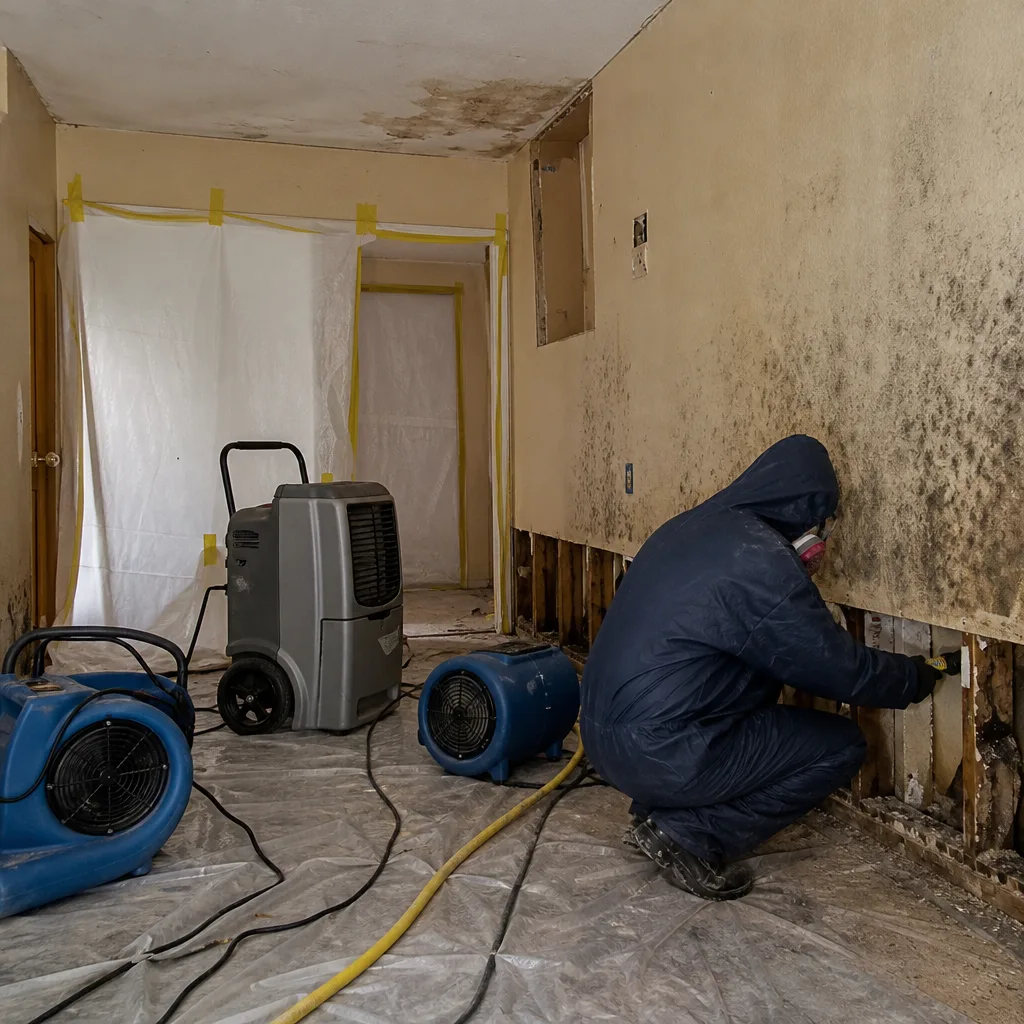 Before
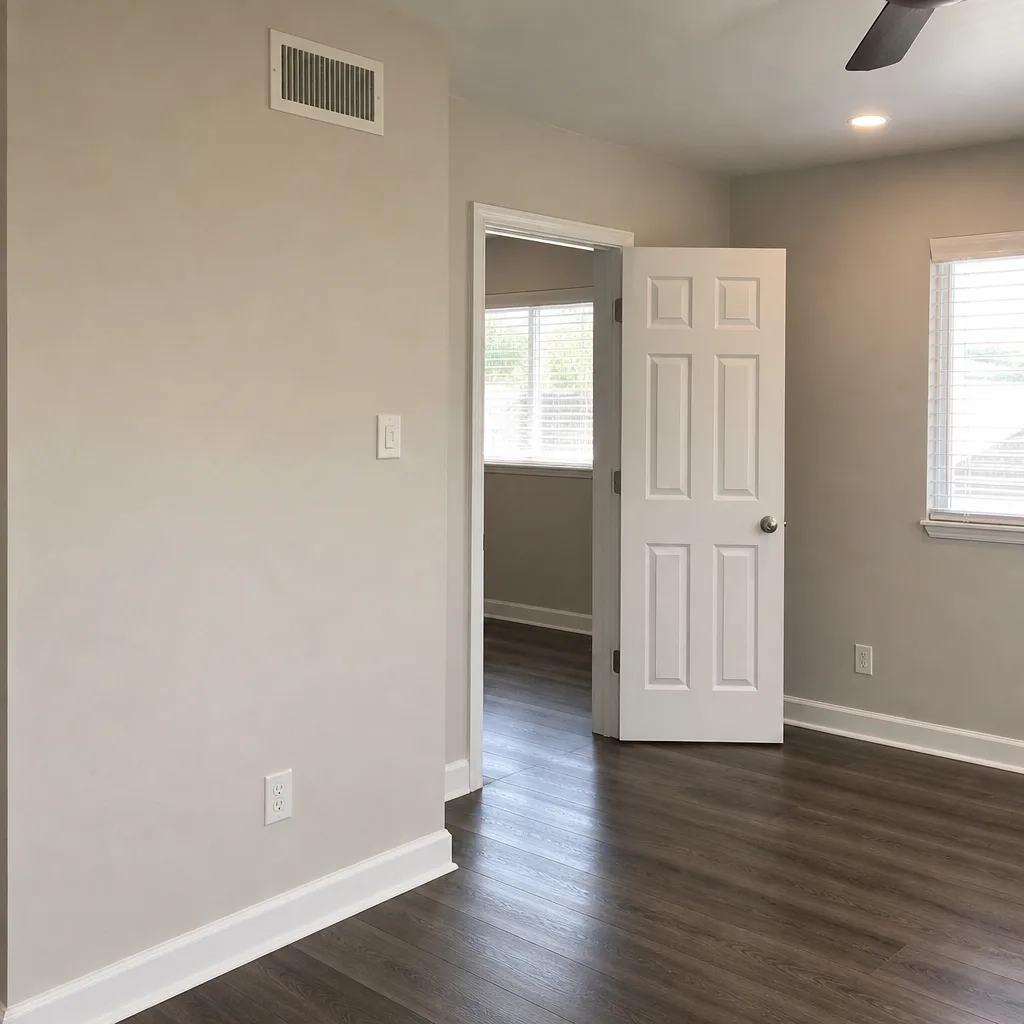 After
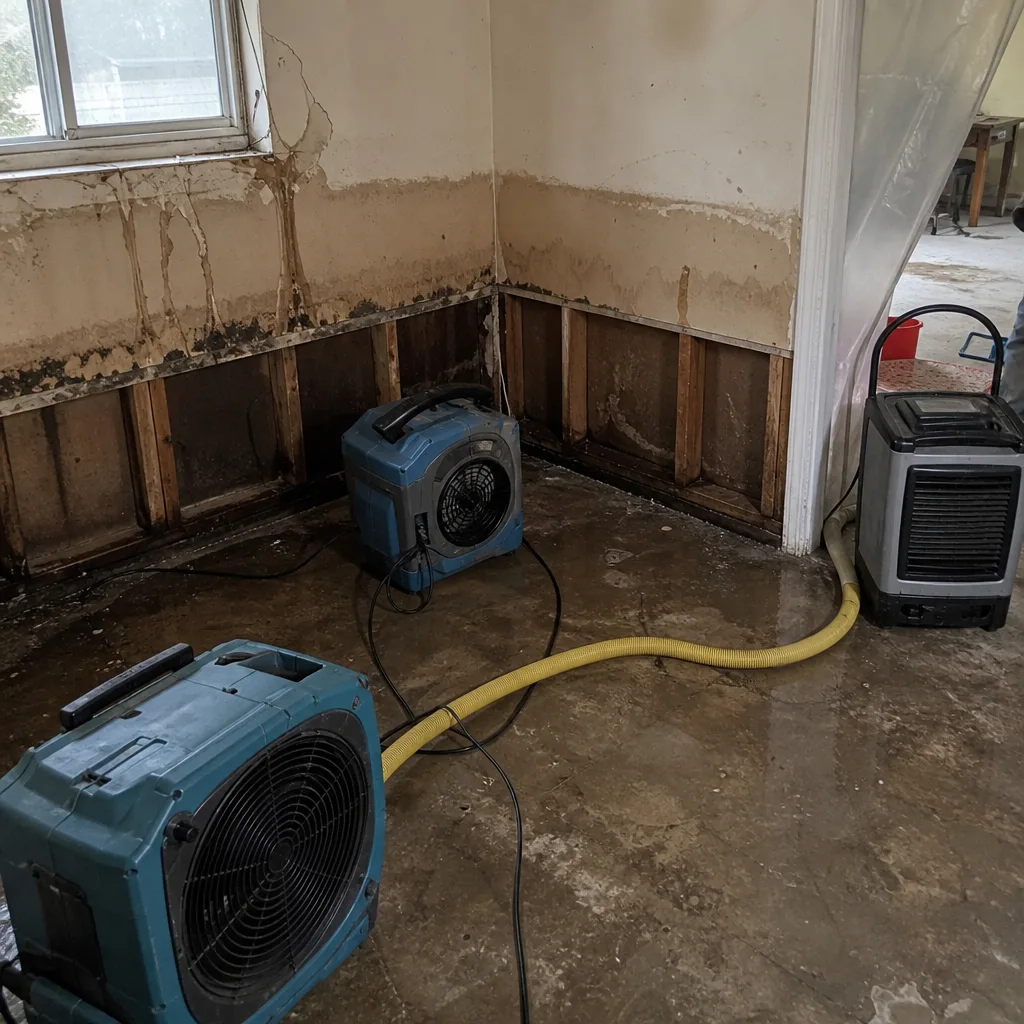 Before
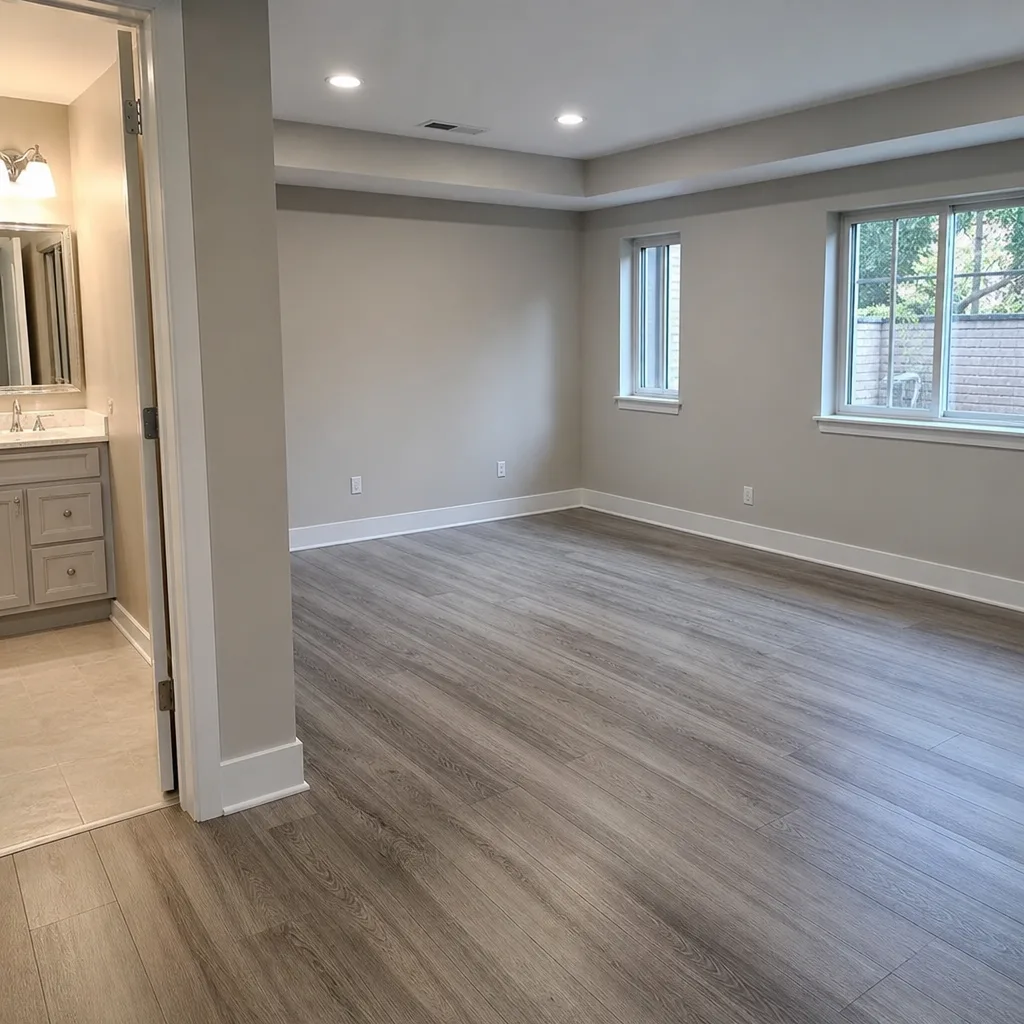 After
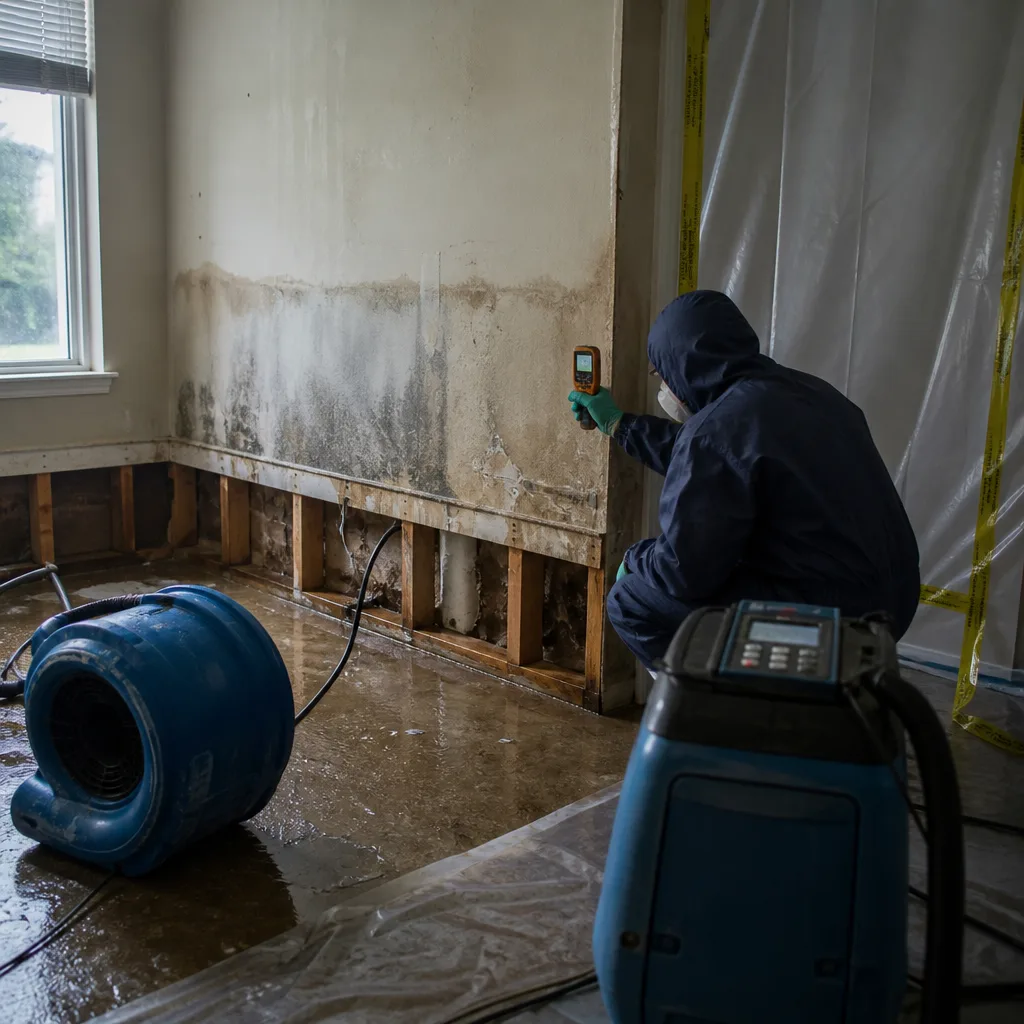 Before
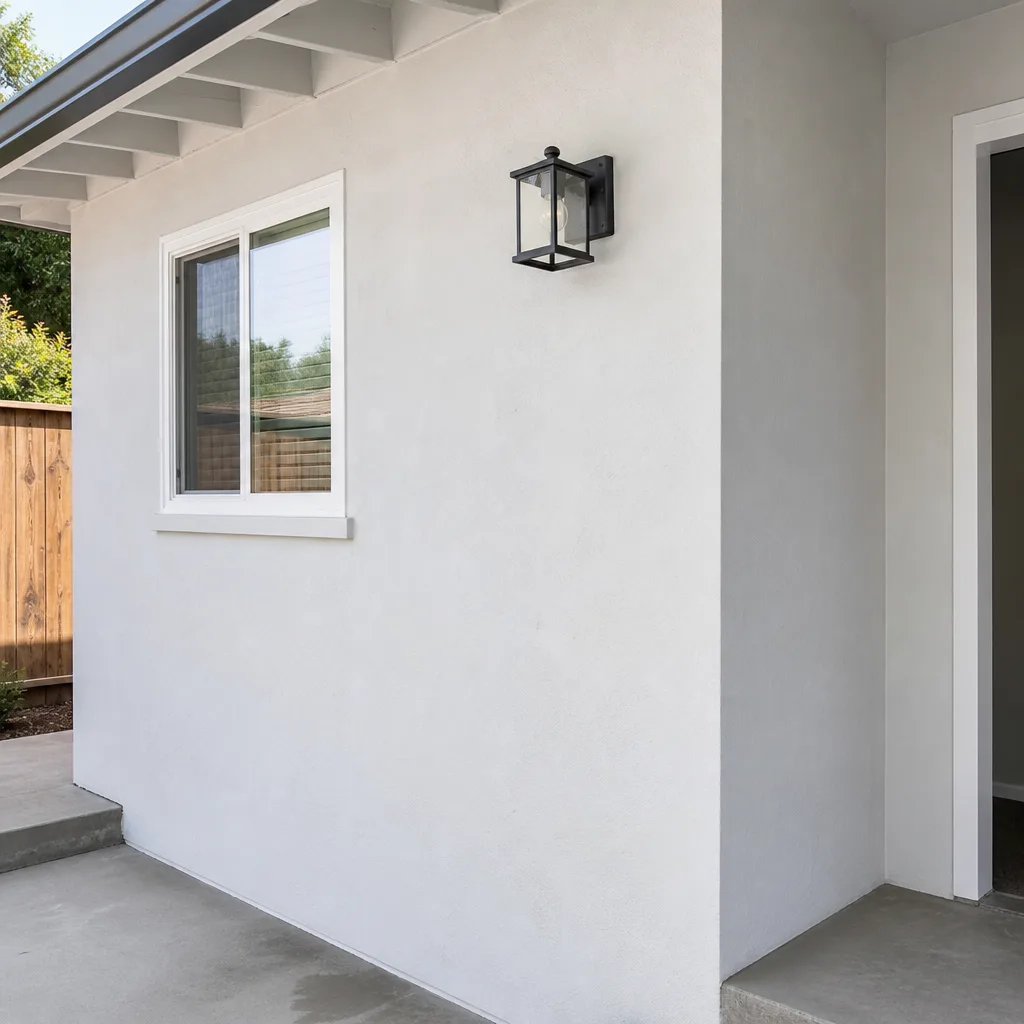 After
Pricing for Mold Remediation in Claremont, CA
Here are real ranges for Claremont, CA based on the jobs we are actually seeing in this market:
- Isolated surface mold cleaning (under 30 sq ft, no structural damage): $600 to $1,400
- Contained room-scale remediation (bathroom, closet, single wall): $1,800 to $4,200
- Black mold removal with wall-cavity colonization and framing treatment: $4,000 to $9,500
- Whole-room or crawl space remediation with structural drying and rebuild: $8,500 to $18,000+
- Post-remediation air sampling and clearance testing: $450 to $900
What pushes a Claremont job up the scale: the home’s age, whether stucco or original plaster has to be opened, the depth of the moisture damage in the framing, and whether a sewer lateral or roof repair has to happen before drying can finish. We give you a written scope with line items before work starts. Estimates are free. Call (888) 508-8745 and we will send someone out to map the damage, not just eyeball it.
We Also Serve Cities Near Claremont
Clean Slate Water Damage regularly works in Montclair, La Verne, Upland, and San Antonio Heights, and many of our Claremont jobs involve property owners who manage rentals across those neighboring cities. If you are looking for Mold Remediation in Claremont, you are also within our normal response zone for the surrounding communities. One call covers the whole area: (888) 508-8745.
Serving Claremont, CA — Our Local Coverage Area
We’re based in the Claremont area and know this community well. Use the map below to see our service coverage — if you’re nearby, we can almost certainly help.
FAQs About Mold Remediation in Claremont
Mold in Claremont often appears months after a storm because the moisture enters through slow leak paths in tile roofs, original window flashing, or cracked stucco, and the water stays inside the wall cavity long after the visible surface has dried. The warm, dry Claremont summers mask the wetness in old framing, then the first cool, damp week of the next season triggers visible growth. If you are seeing mold now, the moisture event probably happened months ago. Call (888) 508-8745 and we will trace it back to the source instead of just cleaning what you can see.
Yes. A tree-root backup in a Claremont home’s cast-iron or clay lateral changes the job from a standard mold scope to a Category 3 water event, which means the affected materials have to be removed, not just cleaned, and the containment and disinfecting protocols are stricter. The mature oaks and cedars in the Village and college-adjacent neighborhoods make this a recurring factor on our Claremont jobs. If a sewer backup is involved, we address the water loss and the mold under the same written scope.
We can preserve the original materials wherever the moisture mapping shows they are salvageable. That means using containment and non-invasive drying methods like Injectidry panels inside wall cavities, treating framing with antimicrobials rather than auto-replacing it, and opening only the sections that are actually wet or colonized. In some cases, original lath-and-plaster interiors can be saved and patched rather than gutted. We work to keep the character of the house intact, and the written scope will tell you exactly what has to come out and what we can dry in place.
We use moisture mapping and a process of elimination, and the pattern in the readings usually tells us the answer. A plumbing leak is typically concentrated and constant, often near a supply line or drain. A roof or window leak in a Claremont home tends to spike after storms, follows roof-to-wall intersections or window casings, and wets framing in a downward travel path. The difference matters because the repair to stop the source is completely different. If we can’t determine it from the mapping, we refer you to a trusted roofer or plumber before we start the mold work.
Structural drying behind stucco in Claremont involves opening the interior wall surface, removing the wet insulation and any damaged lath, treating the framing with antimicrobials, and running commercial equipment until the moisture content in the wood reads at or below target levels. Where the cavity is tight or the wall assembly is delicate, we use Injectidry panels to push dry air directly into the stud bays without removing additional material. The stucco itself can usually stay in place if the framing behind it can be accessed and dried from the inside.
Get Help Now
If you found mold in a Claremont home, or you suspect moisture has been sitting in a wall after a storm, don’t wait for the next rain to see how bad it gets. Call Clean Slate Water Damage at (888) 508-8745. We will schedule an assessment, map the affected area, and put a written scope in your hand before any work begins. Claremont homes need a contractor who understands how they fail, and that is work we do every week.
Written by Noel Carrasco, Owner at Clean Slate Water Damage, serving Claremont and the surrounding Inland Empire from our base in Pomona, CA.