
 Water damage drying
 Fire & smoke cleanup
 Mold remediation
 Storm response
 Sewage cleanup
 Reconstruction
Free visual inspection and a written scope of work before any mitigation begins - photos, moisture readings, and drying logs go in your claim file
The scope we write is the scope we bill. Anything new gets shown to you, in writing, before we touch it.
Get your free estimateFast, Reliable Mold Remediation Across Good Hope
Mold remediation in Good Hope typically runs $1,800 to $6,500 for a contained removal with source correction, and most jobs can be scoped within 24 to 48 hours of your call. If you’ve found visible growth in a 1970s tract house off Warren Road or a manufactured home near the San Jacinto Valley, the priority is stopping the moisture source before the colony expands. We work throughout the 92572 ZIP code and know the housing stock here: aging supply lines, original roof assemblies, and skirting failures on mobile homes that hide moisture for weeks. Call (888) 508-8745 for a free assessment. Our Mold Remediation team mobilizes quickly because in unincorporated Good Hope, documentation matters as much as drying speed.
The climate here isn’t what most people assume. Good Hope sits in a hot, dry valley, but the summer heat does something specific: it cooks old roof membranes until they crack, then the rare winter storm drives water straight into the decking. That’s when homeowners discover growth that’s been brewing behind a wall for months. We see it every season.
Why Clean Slate Water Damage Is Good Hope’s Preferred Mold Remediation Company
Good Hope is unincorporated Riverside County. That single fact changes how mold remediation gets done here. There’s no city building department to walk into, no local permit counter. Every documentation trail routes through county offices 40-plus miles away, and a remediation that turns into a rebuild can stall for weeks if the paperwork wasn’t built for a distant jurisdiction from day one. We document pre-loss condition and scope of work as if a county inspector is already watching, because in Good Hope, someone eventually will be.
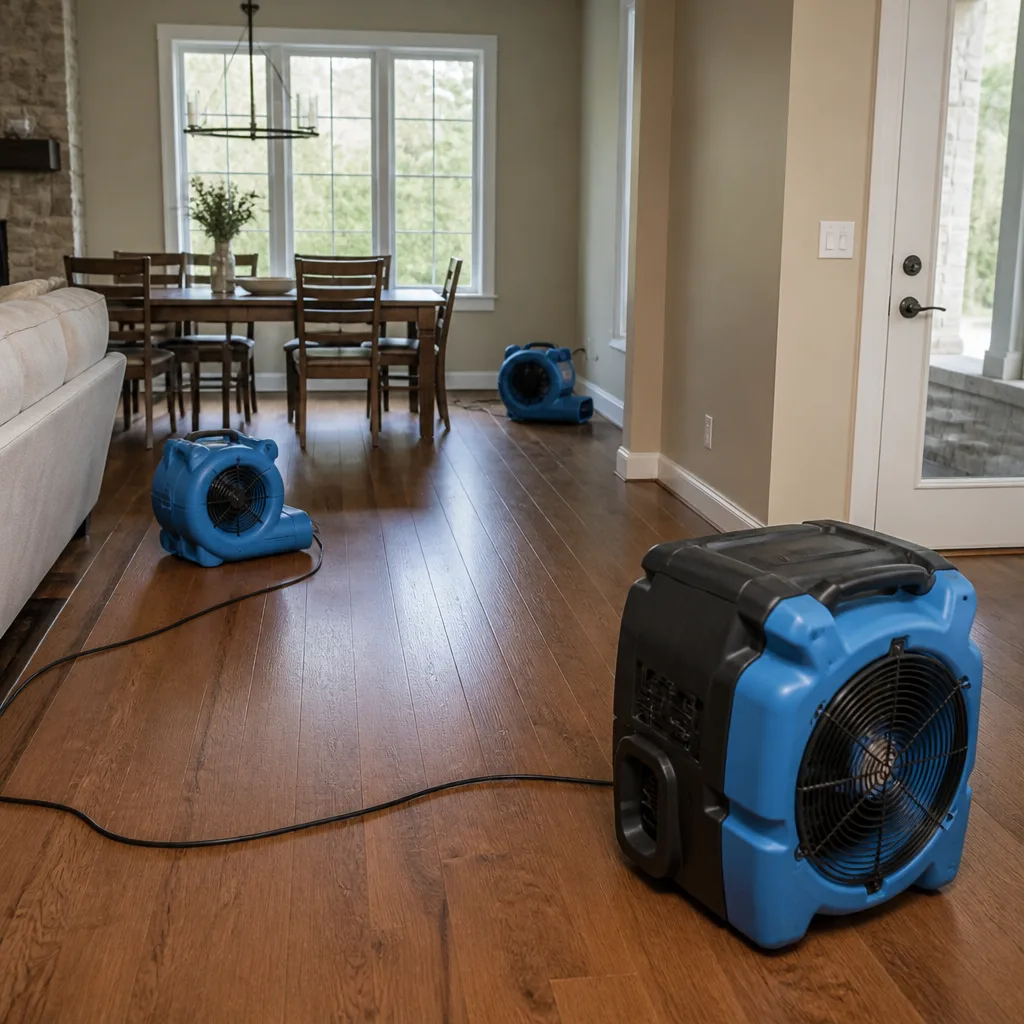
Noel Carrasco leads our team with a straight-line approach: find the moisture source, verify it’s stopped, contain the colony, remove it, dry the structure, and deliver a clearance documentation packet that holds up to Riverside County review. We run Dri-Eaz and Phoenix equipment, including the Injectidry system that forces dry air into wall cavities and subfloors without unnecessary demolition. For a 1970s house off Warren Road, that means we can often dry the framing in place rather than tearing out drywall that’s still structurally sound.
Our work aligns with IICRC standards, and we carry RIA and IFA affiliations as ongoing accountability. Homeowners in Good Hope call us because they’ve heard from neighbors that we don’t just wipe down visible mold and walk away. We map moisture, log drying data, and leave a record that stands up to scrutiny. That matters here more than almost anywhere else in the region.
Restoration work we handle
Black Mold Removal in Good Hope
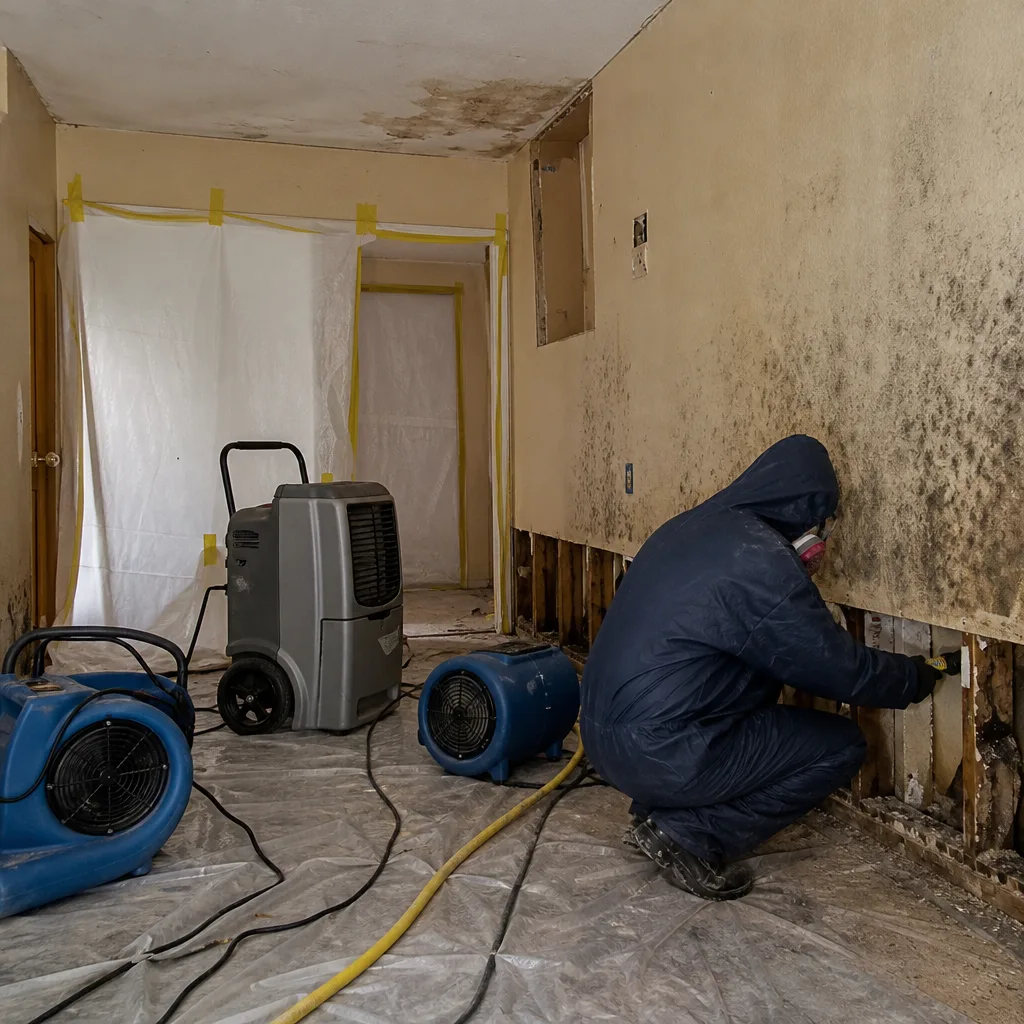
Black Mold Removal in Good Hope means dealing with Stachybotrys chartarum and other toxigenic species that thrive in the dark, damp wall cavities of aging 1970s and 1980s tract houses where a slow leak has gone undetected. A 1970s tract house off the Warren Road corridor in 92572 came to us after a pinhole in a brittle copper supply line fed a slow leak under the kitchen for weeks; when we pulled the vinyl we found visible growth on the cabinet toe-kick and the wall cavity. We set containment with negative air, ran an Injectidry panel to dry the framing, mapped moisture readings across the whole floor plate, and logged each day’s drying data so the Riverside County paperwork matched the physical job. The failure wasn’t the mold; it was that a mid-century house here had never had its plumbing scoped, so the owner discovered the leak only after the cabinet swelled.
Black mold removal in Good Hope typically runs $2,200 to $6,500 depending on colony size and whether the growth has penetrated porous materials. When framing is involved, the price climbs. When it’s surface growth on tile or non-porous surfaces, it sits at the lower end.
Containment and Air Filtration
We set up negative air pressure and HEPA filtration before disturbing any colony. That keeps spores from spreading into living areas while we remove affected drywall, insulation, or cabinetry. In Good Hope homes, where floor plans are often compact and ductwork is aging, containment is the difference between a one-room job and a whole-house problem.
Source Correction First
If we don’t fix the water source, the mold comes back. In Good Hope, that source is usually a roof assembly past its service life, a window seal that’s dried and cracked, or a copper supply line with a pinhole. We coordinate the repair or scope it clearly so the remediation isn’t a temporary fix.
Mold Removal Contractor in Good Hope
A Mold Removal Contractor in Good Hope has to understand something most Riverside County contractors don’t: this is an unincorporated community, so every job carries a documentation burden that city-based crews skip. When we remove mold from a Good Hope home, we’re building a file that might be reviewed by a county inspector if the job expands into a rebuild. That changes how we photograph, how we log, and how we write scopes.
Mold removal contractor pricing in Good Hope runs $1,800 to $4,200 for a typical single-room source with contained removal and drying. Larger colonies, multiple rooms, or rebuild-adjacent work climb toward $8,000. The number that matters most is the one we give you in writing before work starts.
Scoped, Written, and Signed
No surprises. Before we start, you get a written scope that says exactly what we’re removing, how we’re containing it, and what the moisture source is. In unincorporated Good Hope, that scope is also the foundation for any county paperwork that follows. City-based mold crews rarely build documentation this way.
Drying Logs and Clearance
We log moisture readings daily during drying and keep those logs with the job file. When we’re done, you get a clearance summary that shows pre-loss condition, what was removed, and final moisture numbers. That’s the standard Riverside County work requires, and it’s the standard we hold regardless of job size.
Trusted Brands We Service in Good Hope
We run Dri-Eaz dehumidifiers and air movers, Phoenix drying systems, and the Injectidry panel system on Good Hope jobs. The Injectidry unit matters here because it lets us dry wall cavities and subfloors without gutting a 1970s house down to studs. For homeowners in 92572, that means less demolition, lower rebuild costs, and a faster return to pre-loss condition. We keep drying equipment staged for rapid deployment to Good Hope, Sun City, and Mead Valley, so we’re not waiting on a rental yard when your walls are wet. The tools are the same ones used by the top restoration firms nationwide, and that equipment standard is non-negotiable for us.
Common Mold Remediation Problems We See in Good Hope Homes
- Hidden growth behind original 1970s – 80s roof assemblies. The San Jacinto Valley’s hot, dry summers bake roof membranes until they crack. The rare winter storm pushes water through those cracks into decking, and by the time a homeowner sees a ceiling stain, the colony behind the drywall has been feeding for weeks.
- Pinhole copper supply line leaks in mid-century plumbing. Good Hope’s aging tract houses still have original copper that’s turned brittle. A pinhole behind a kitchen cabinet can drip for a month before swelling or odor gives it away, and by then the wall cavity is a mold habitat.
- Manufactured and mobile home skirting leaks miscategorized as clean water. In 92572, a belly-board leak that soaks insulation is often treated as a simple Category 1 drying job. If it’s gone undetected for 24 to 48 hours, it’s not clean water anymore. It’s a tear-out. We categorize correctly on day one.
- Crews that remove visible mold but skip the source. In Good Hope’s older housing stock, the source is almost never the mold itself. It’s a failed roof, a cracked window seal, or a plumbing fitting. If the source isn’t addressed, the colony returns within months, and the homeowner pays twice.
See the difference
 Before
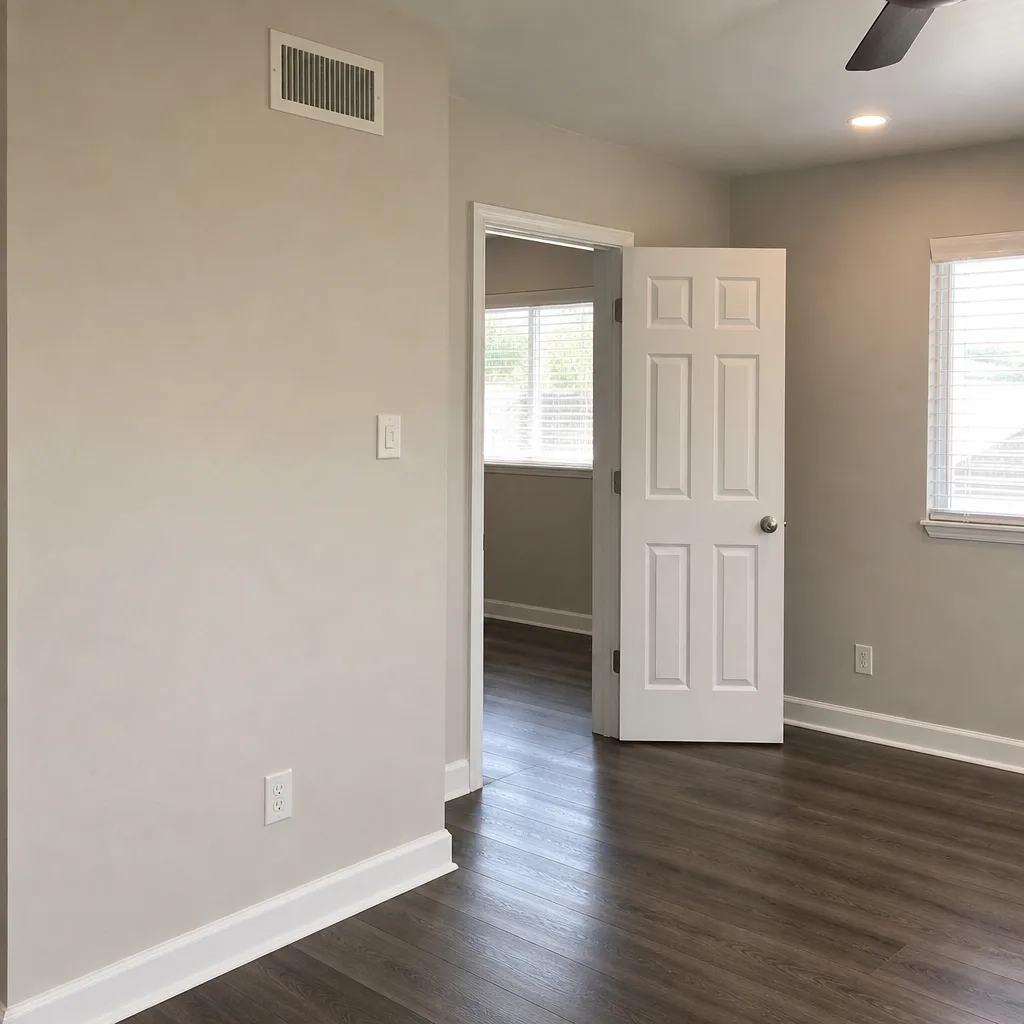 After
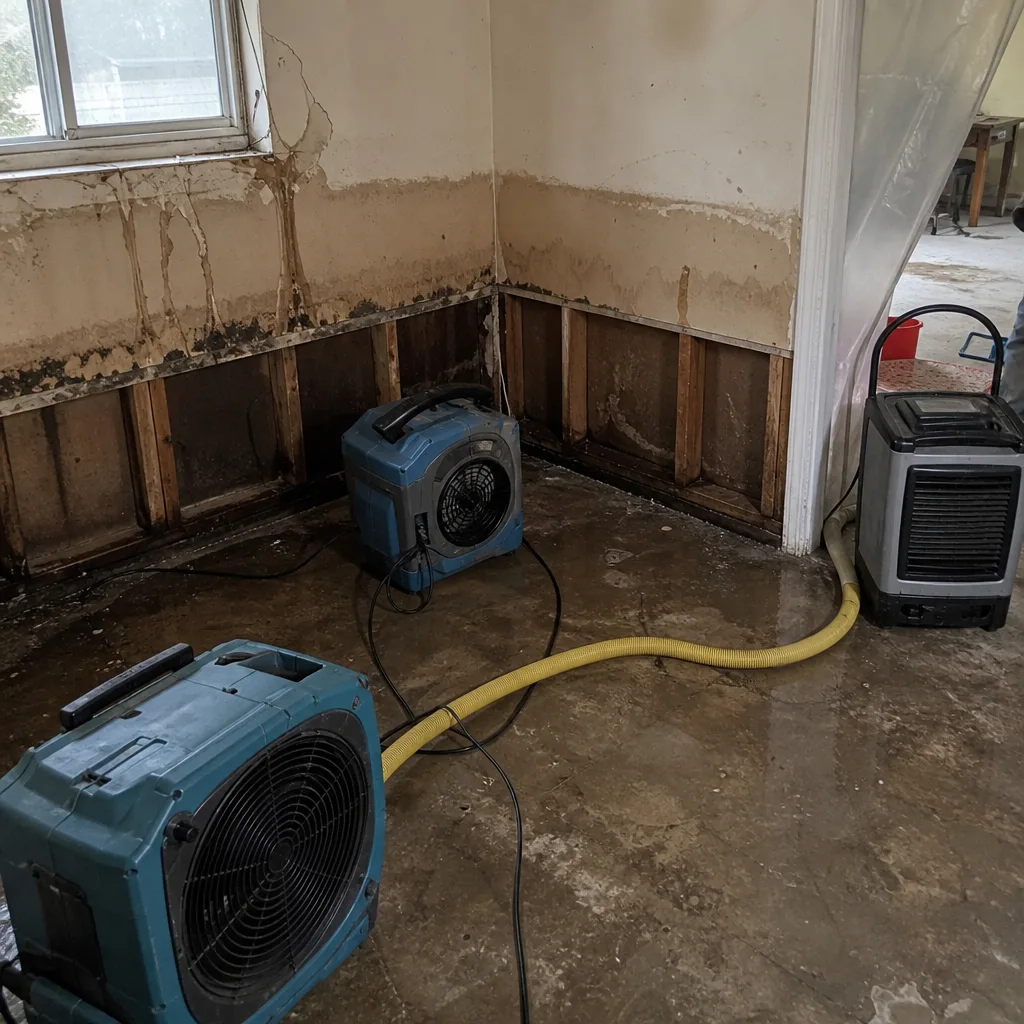 Before
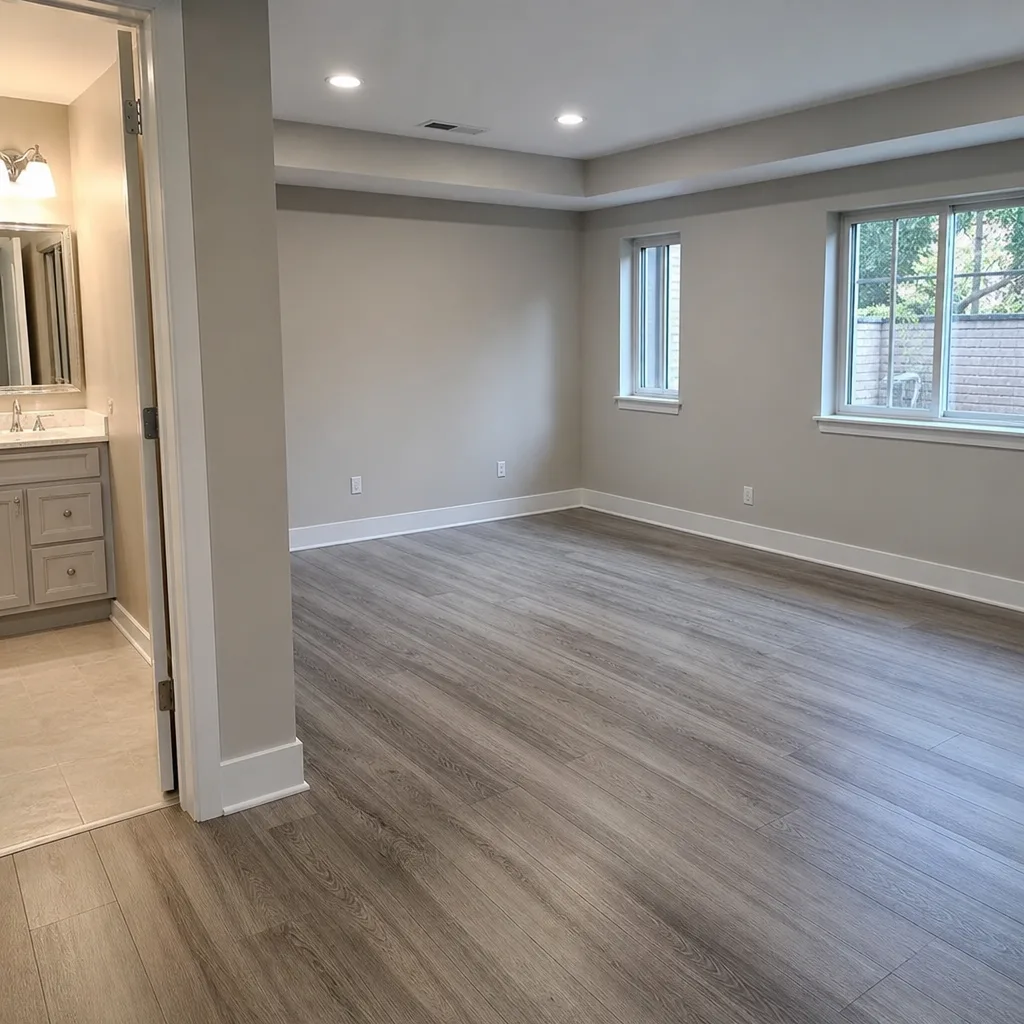 After
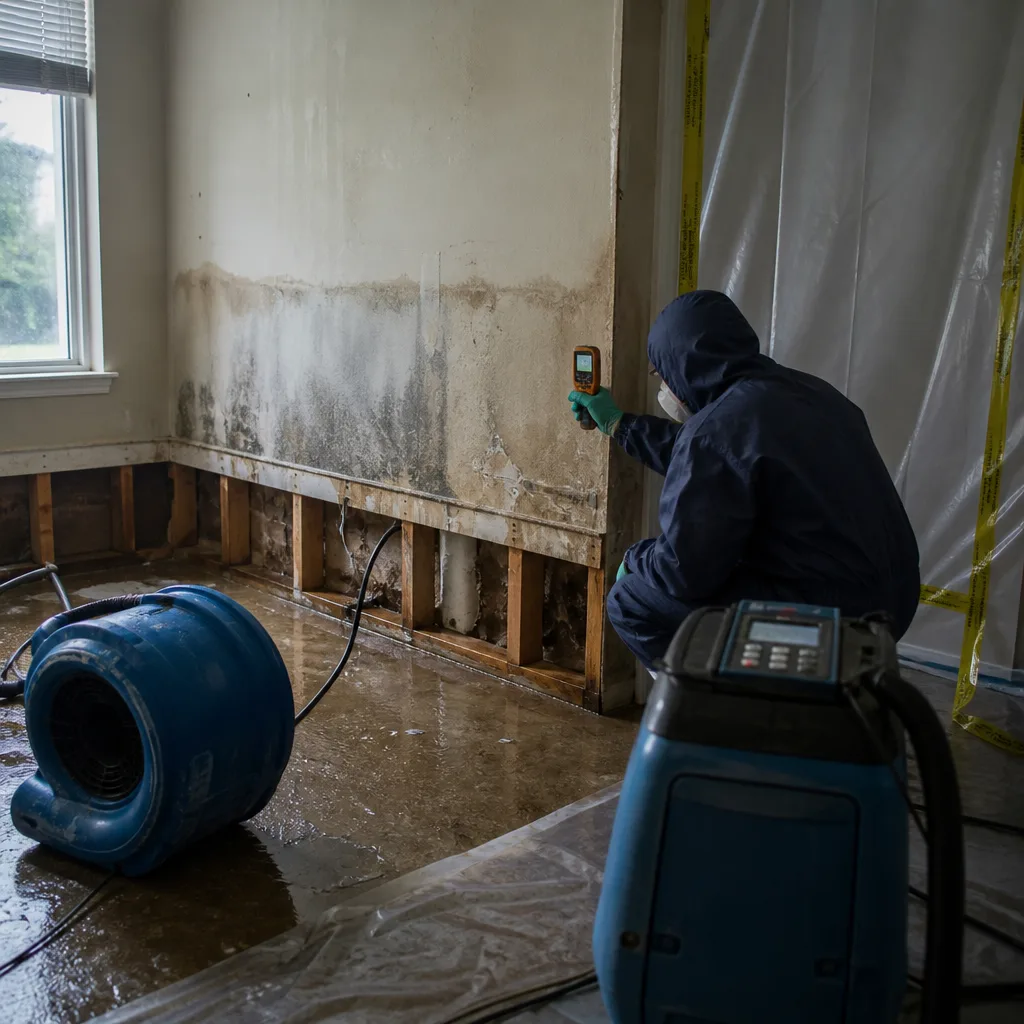 Before
 After
Pricing for Mold Remediation in Good Hope, CA
We Also Serve Cities Near Good Hope
If you’re in Perris, Romoland, Sun City, or Mead Valley and dealing with mold growth in a home from the same era, our service area covers you. We bring the same documentation discipline and equipment standard to Good Hope and every surrounding community, so the job gets done right whether you’re inside city limits or under county jurisdiction.
Serving Good Hope, CA — Our Local Coverage Area
We’re based in the Good Hope area and know this community well. Use the map below to see our service coverage — if you’re nearby, we can almost certainly help.
FAQs About Mold Remediation in Good Hope
Does a mold remediation in Good Hope 92572 require a county permit, and who issues it?
A mold remediation itself typically does not require a permit, but if the job expands into a rebuild, that work routes through Riverside County departments, not a local city counter. We document pre-loss condition and scope of work as if a county inspector is reviewing it from day one, so you’re never stuck mid-rebuild waiting on paperwork. Call (888) 508-8745 if you’re unsure whether your situation crosses into rebuild territory.
A 1970s house near the San Jacinto Valley had a roof leak – how fast does mold actually start?
Mold colonization can begin within 24 to 48 hours of moisture contact on porous materials like drywall paper and insulation. In Good Hope’s aging tract houses, a roof leak that soaks ceiling drywall for a week has almost always established a colony by the time the stain appears. The visual stain lags the actual growth. If you’ve had a roof leak, don’t wait.
My mobile home in 92572 smells musty after a small leak – can you dry it or does it need removal?
It depends on how long the moisture has been in the belly board or insulation. If it’s been wet for 24 to 48 hours, it’s almost certainly beyond drying and needs removal. We’ll pull a section of skirting and inspect the cavity with moisture meters before recommending anything. Call (888) 508-8745 and we’ll tell you straight what you’re dealing with.
How do you keep a Good Hope mold job from stalling when it expands into a rebuild?
By documenting everything from the first day as if a Riverside County inspector is already assigned. Pre-loss photos, daily drying logs, moisture maps, and a written scope that matches the physical work. Most city-based mold crews never build documentation for a distant jurisdiction, and that’s exactly when Good Hope projects stall. We don’t let that happen.
Do the hot, dry San Jacinto Valley summers make mold less of a concern in Good Hope?
No, and in some ways the opposite. The heat bakes roof membranes and window seals until they fail, then the first winter storm drives water into those cracks. The dry summer hides the moisture behind walls, where a colony grows quietly for months. Good Hope’s climate doesn’t prevent mold; it sets the stage for delayed discovery.
Call Clean Slate Water Damage for Mold Remediation in Good Hope
If you’ve found visible growth, smelled a musty odor that won’t clear, or just discovered a leak that’s been running longer than you know, call (888) 508-8745 today. We’ll send a team to Good Hope, map the moisture, and give you a written scope before any work begins. You don’t need to guess whether you’re facing a cleanup or a rebuild. We’ll document it, dry it, remove it, and leave you with a record that stands up to Riverside County review. That’s how mold remediation in Good Hope should work.
Written by Noel Carrasco, Owner at Clean Slate Water Damage, serving Good Hope and the surrounding San Jacinto Valley.