

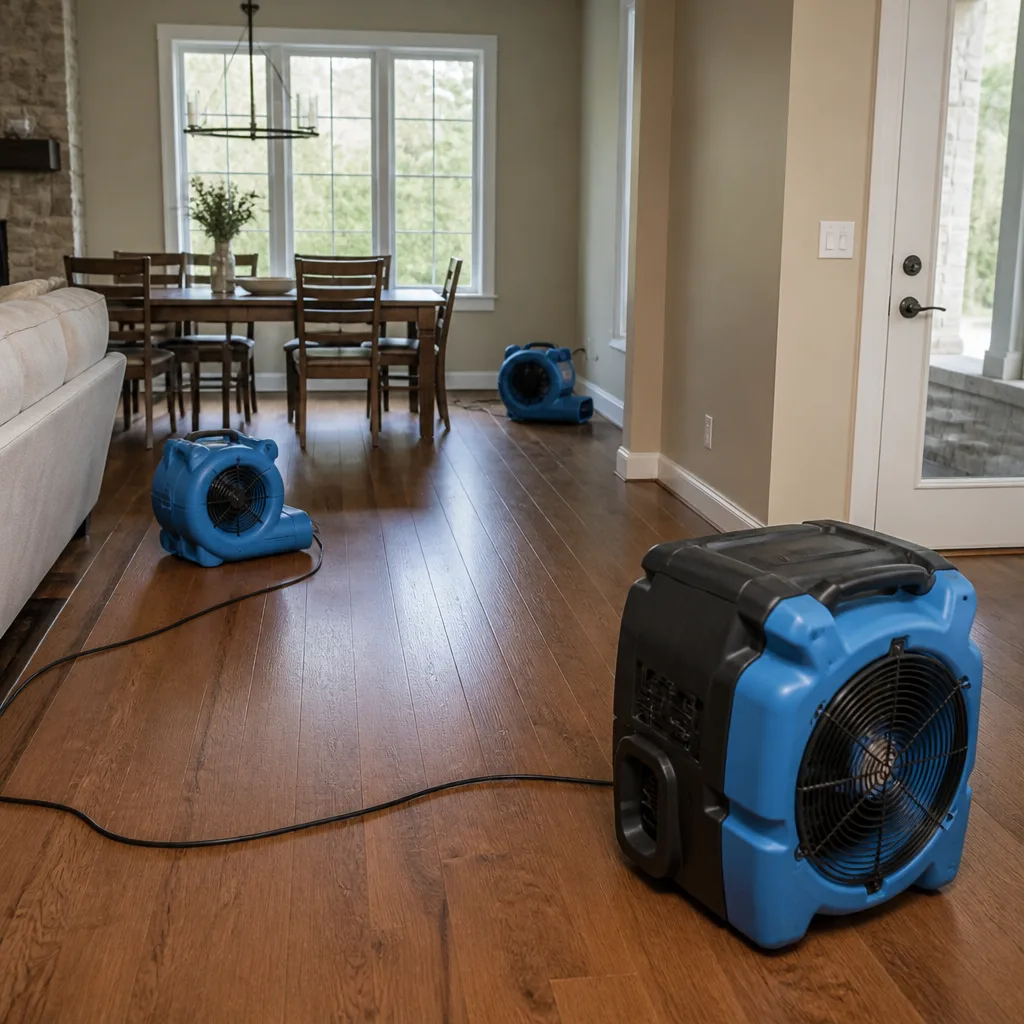
 Water damage drying
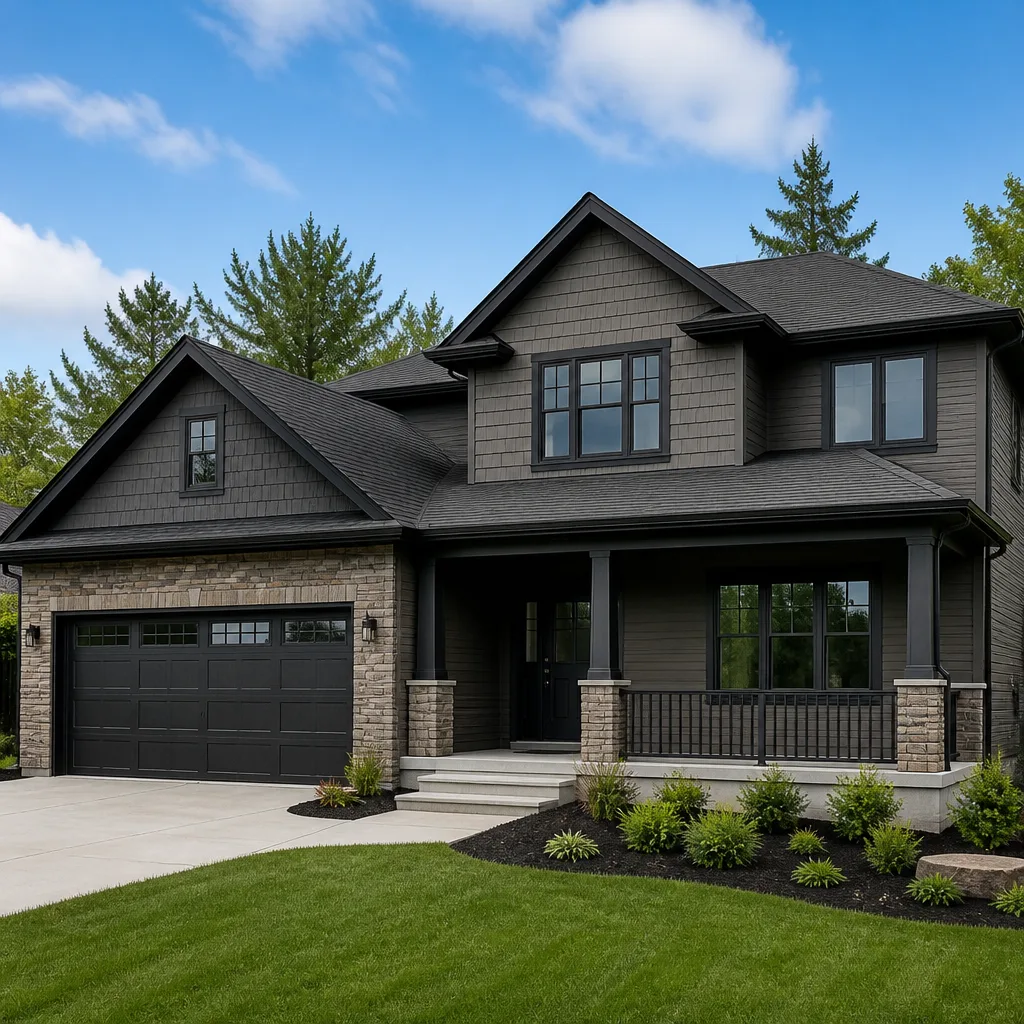 Fire & smoke cleanup
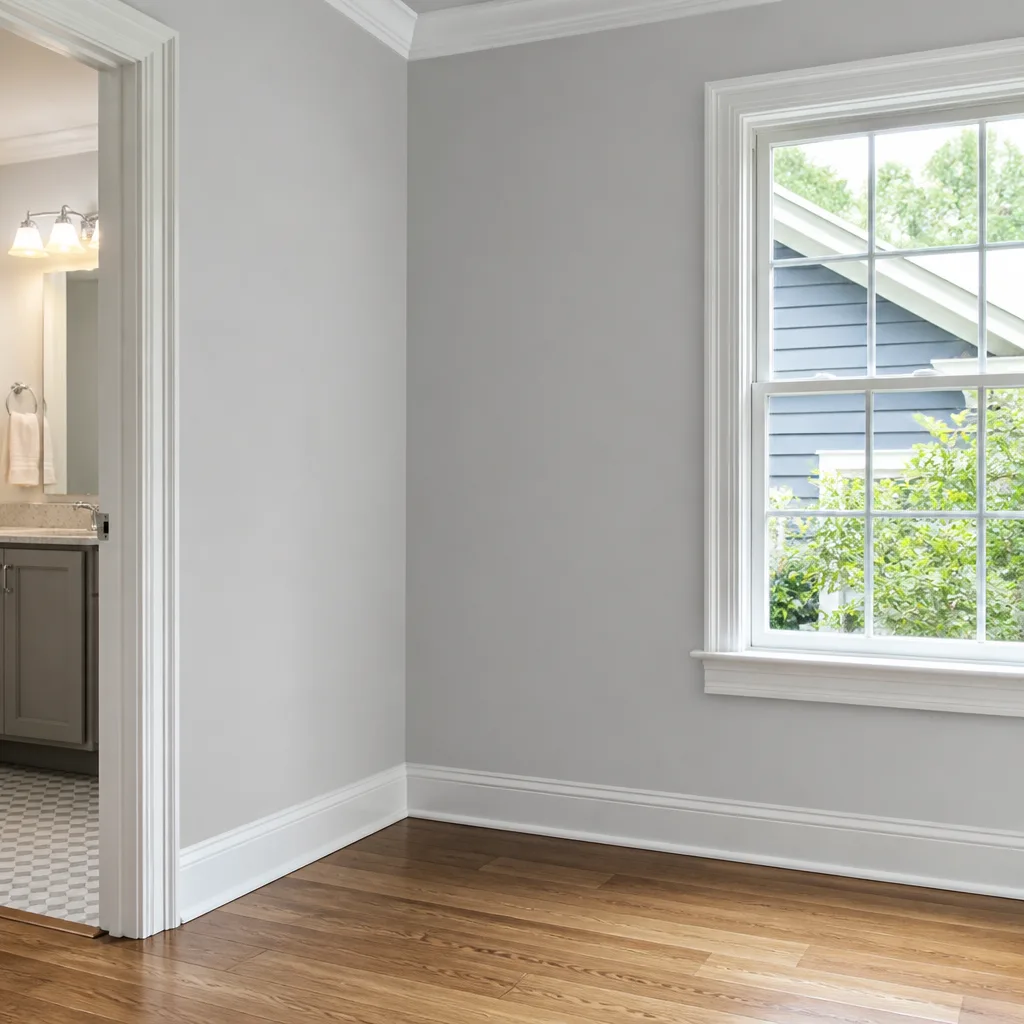 Mold remediation
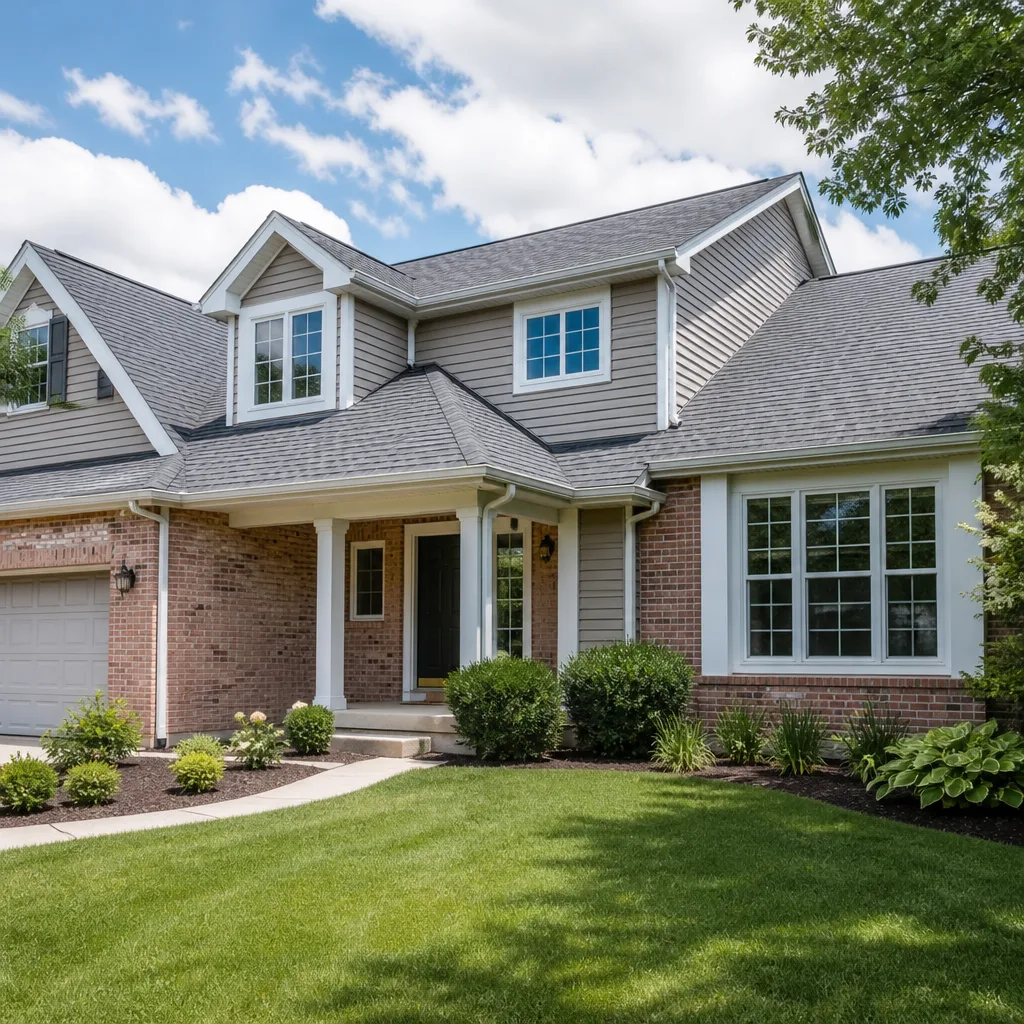 Storm response
 Sewage cleanup
 Reconstruction
Free visual inspection and a written scope of work before any mitigation begins - photos, moisture readings, and drying logs go in your claim file
The scope we write is the scope we bill. Anything new gets shown to you, in writing, before we touch it.
Get your free estimateFast, Reliable Mold Remediation Across March Air Force Base
Mold remediation in March Air Force Base typically costs between $1,200 and $4,500 depending on the square footage affected and whether hidden moisture sources are involved. Most jobs in the 92551 ZIP code take 2 to 5 days from initial assessment to final clearance. We respond to March Air Force Base calls within hours, not days, because we know mold colonies double every 24 to 48 hours once moisture is present. If you’re seeing dark patches on drywall, smelling musty odors near base housing, or dealing with a recent pipe leak, call (888) 508-8745 and we’ll walk you through what happens next.
March Air Force Base presents a specific challenge for mold work. This isn’t a standard civilian neighborhood where a plumber shows up and the problem ends. Housing here includes aging structures with original galvanized plumbing, flat roofs, and building envelopes that have been patched over decades. That means the mold you see is often not the mold you have. We approach every job in this area with moisture mapping and documentation protocols that meet military housing office requirements. Our team knows the access procedures, the paperwork expectations, and the timeline pressures that come with base-adjacent properties.
Why Clean Slate Water Damage Is March Air Force Base’s Preferred Mold Remediation Company
Our Mold Remediation team has worked extensively throughout March Air Force Base and understands what this community requires. Property owners here aren’t just asking for mold removal. They’re asking for documentation, verification, and a defensible process that satisfies housing office coordinators, insurance adjusters, and base contractors. We deliver that as standard practice, not as an add-on.
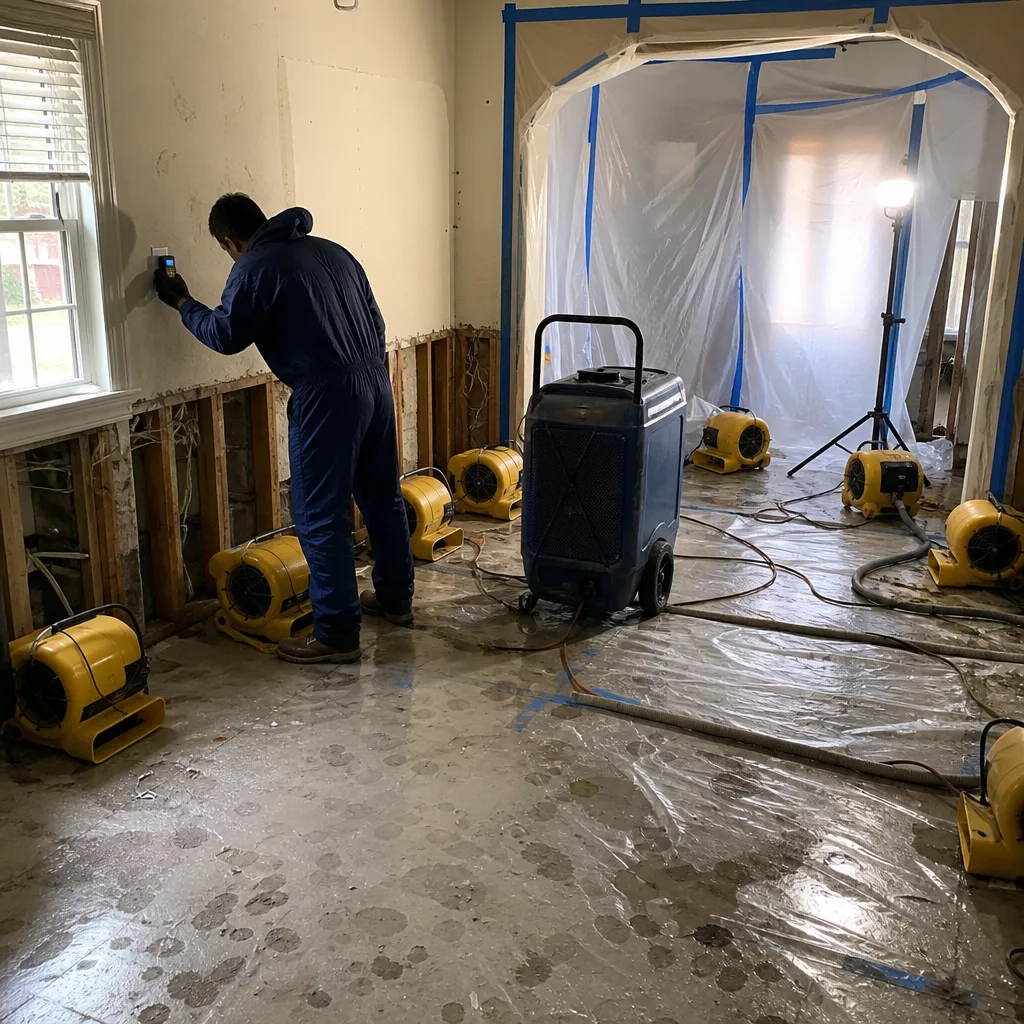
Noel Carrasco leads our restoration operations, and he’s built our processes around one principle: every job ends with objective proof that moisture levels returned to normal and mold spore counts cleared. That matters on base. Housing offices want drying logs. Contractors want before-and-after moisture readings. We provide both on every single job. Our equipment roster includes Dri-Eaz dehumidifiers and air movers, the same professional-grade systems used by top restoration firms, not rental counter units. This equipment runs continuously once set, and we monitor the data daily.
Response time to March Air Force Base is a core part of our service. Mold does not wait for scheduling software. When a property owner calls us from 92551 at 7 a.m., they get a live person and a dispatch commitment, not a voicemail tree. We maintain enough equipment and crew capacity to handle simultaneous jobs across Moreno Valley, Woodcrest, and Perris while keeping March Air Force Base response times tight.
Restoration work we handle
Mold Remediation Services in March Air Force Base
Mold Remediation Services in March Air Force Base require a different playbook than what a general handyman or cleaning crew offers. Remediation isn’t wiping down visible mold and spraying bleach. It’s a structured process: identify every moisture source, contain the affected area, remove contaminated materials, dry the structure completely, treat remaining surfaces, and verify clearance with moisture readings and air sampling. In 92551, homeowners should expect to pay $1,200 to $2,800 for a typical bathroom or closet remediation, $2,500 to $4,500 for crawl space or multi-room work, and potentially more when structural drying inside wall cavities is required.
Skipping steps in this process and calling it remediation actually spreads the problem. Disturbed mold releases spores that settle in new areas and start new colonies. That’s why containment with negative air pressure is the first physical step we take, not an optional extra.
Containment and Source Elimination
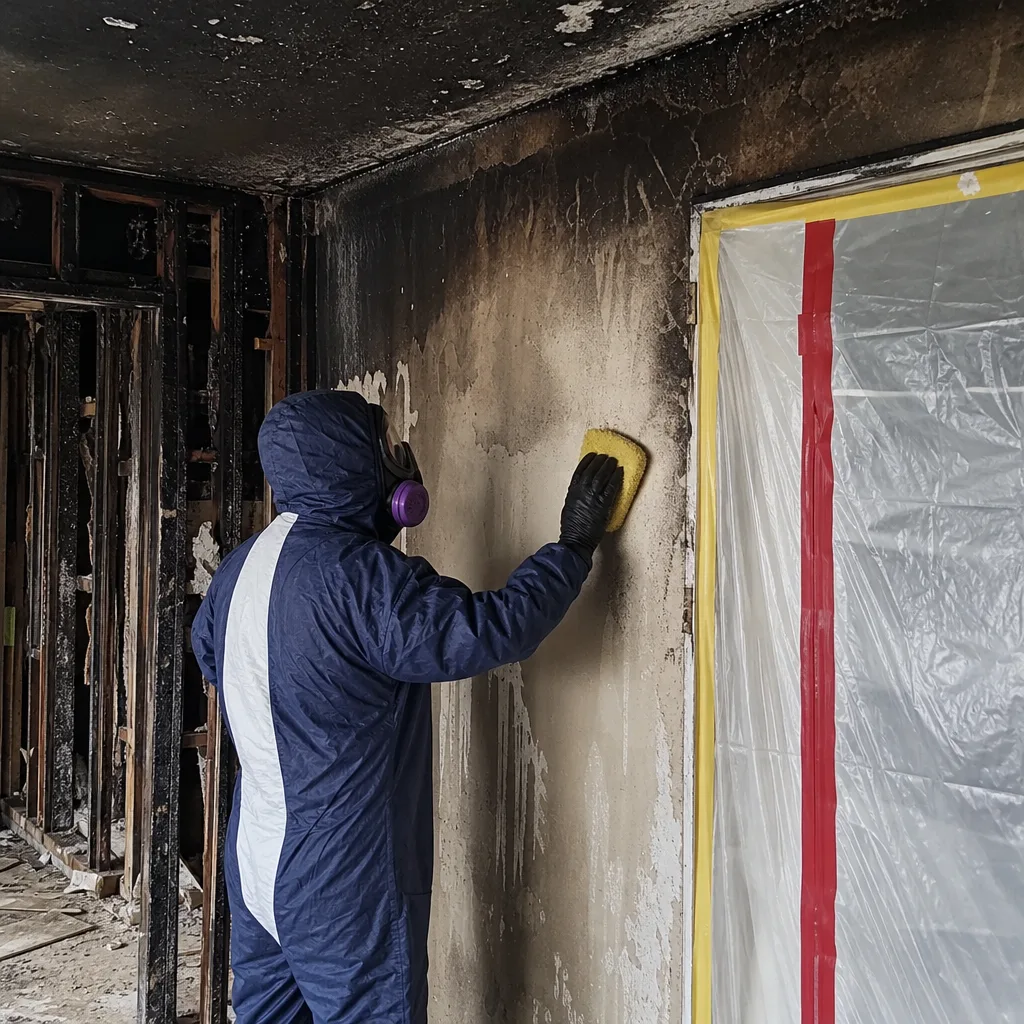
Before any drywall comes down, we isolate the work area. Negative air machines pull air outward through HEPA filters so spores can’t migrate into living spaces. Then we trace the moisture to its origin. In March Air Force Base housing, that origin is frequently a pinhole leak in original galvanized pipe or a flat roof penetration that’s been silently saturating insulation for months.
Structural Drying and Clearance Testing
Once contaminated materials are removed, we dry the framing and cavities to IICRC-aligned standards. Moisture meters document every reading. Final air samples confirm spore counts returned to normal background levels. That documentation is what housing offices and insurers need to close the file.
What happens when you call
- 1
A real person answersNo phone trees — you reach a local pro.
- 2
You get an upfront price rangeHonest numbers before anyone is dispatched.
- 3
A background-checked tech heads outLicensed & insured, dispatched right away.
- 4
You approve before work beginsNothing starts until you say go.
Professional Mold Removal in March Air Force Base
Professional Mold Removal in March Air Force Base is for property owners who have confirmed mold growth and need it physically removed, not just treated. Removal means cutting out and discarding contaminated drywall, insulation, carpet, or cabinetry, then treating the exposed framing with antimicrobial solutions. Typical removal-only jobs in 92551 run $800 to $2,500 for small sections of drywall or baseboards, while full-room removal with wall cavity access can reach $4,000 or more depending on how far the colony extends behind finished surfaces.
Some homeowners ask whether they can just paint over it. No. Mold continues growing behind the paint and releases spores through micro-cracks. Any contractor who suggests covering mold without first addressing moisture is creating a liability, not a solution. In former military housing, where multiple layers of renovation may have covered older water damage, we frequently find mold sandwiched between eras of drywall.
HEPA Filtration During Removal
Every removal job runs with HEPA-filtered air scrubbers running from the moment containment is sealed until final clearance. This captures airborne spores that get kicked up when contaminated material is disturbed. Without it, you’re trading a visible mold problem for an invisible airborne one.
Post-Removal Antimicrobial Treatment
After all contaminated material is out and framing is dry, we apply an antimicrobial to remaining surfaces. This doesn’t replace moisture control, but it prevents residual spores from recolonizing before reconstruction begins. We document every application so you have a complete chain of evidence for your records.
Trusted Brands We Service in March Air Force Base
Mold remediation equipment quality determines whether the job actually works. We run Dri-Eaz LGR dehumidifiers and HEPA air scrubbers on every project in March Air Force Base because these units pull moisture and spores out of the air at rates that rental-store machines simply can’t match. Our work also aligns with IICRC standards for mold remediation, which means the process follows an auditable protocol, not whatever the technician feels like doing that day. RIA and IFA affiliations keep us accountable to ongoing professional development and industry best practices. For property owners in 92551, that translates to a defensible, documented remediation rather than a cosmetic cleanup. We keep replacement filters and antimicrobial supplies stocked specifically for jobs in this area, so there’s no waiting on parts from a regional warehouse.
See the difference
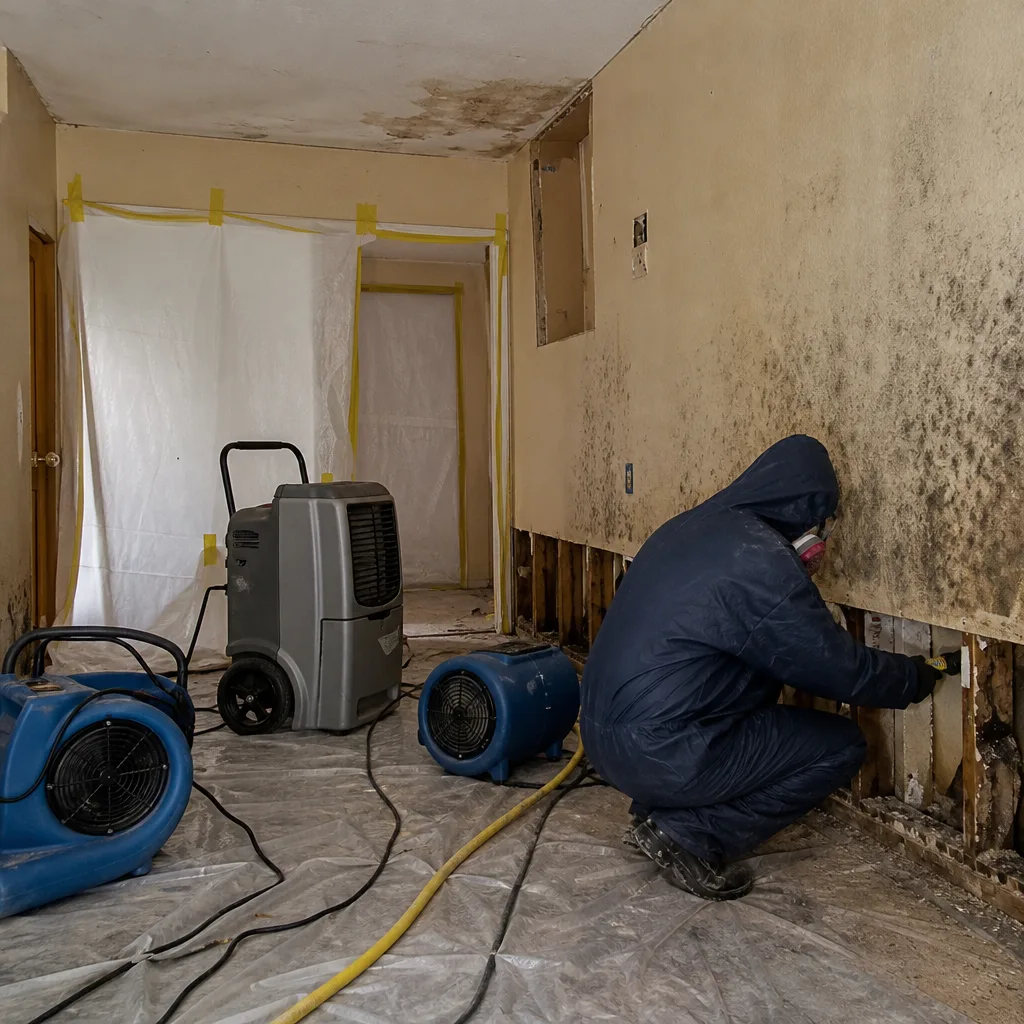 Before
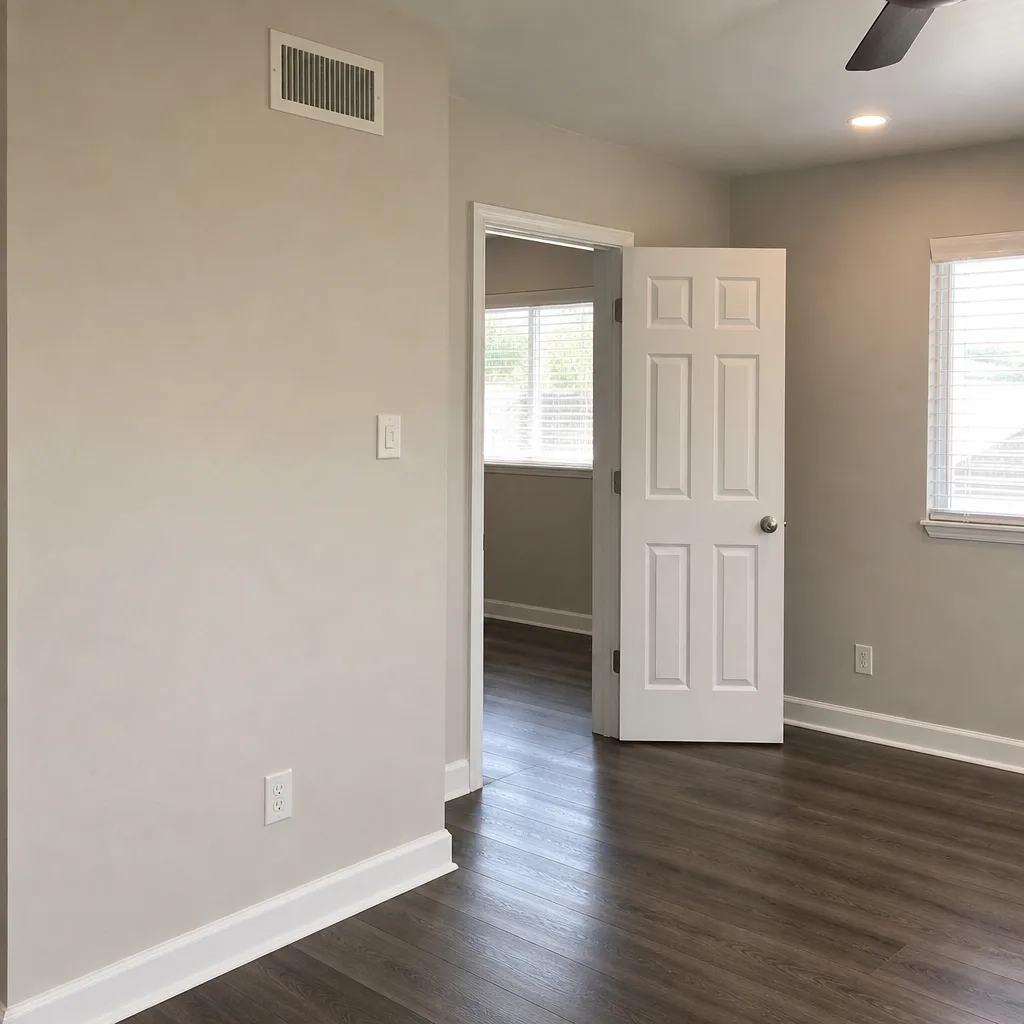 After
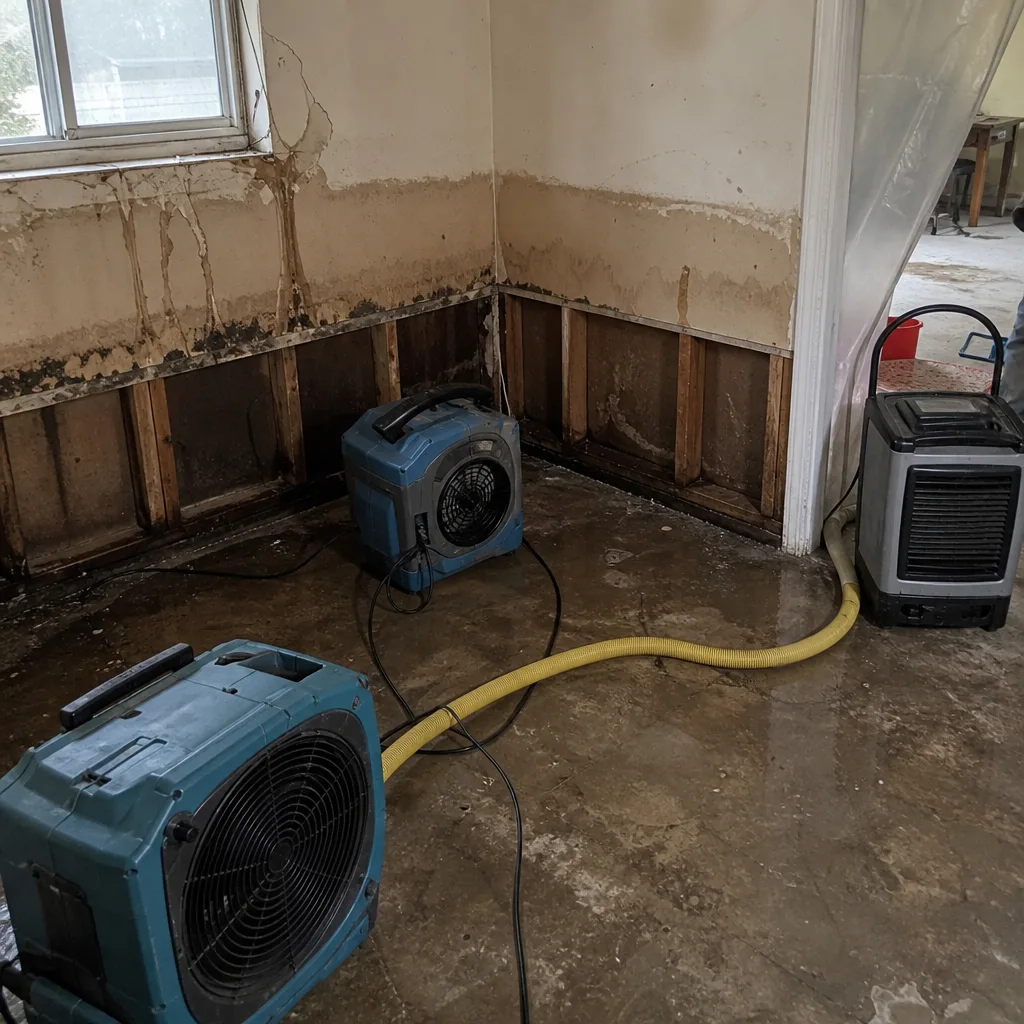 Before
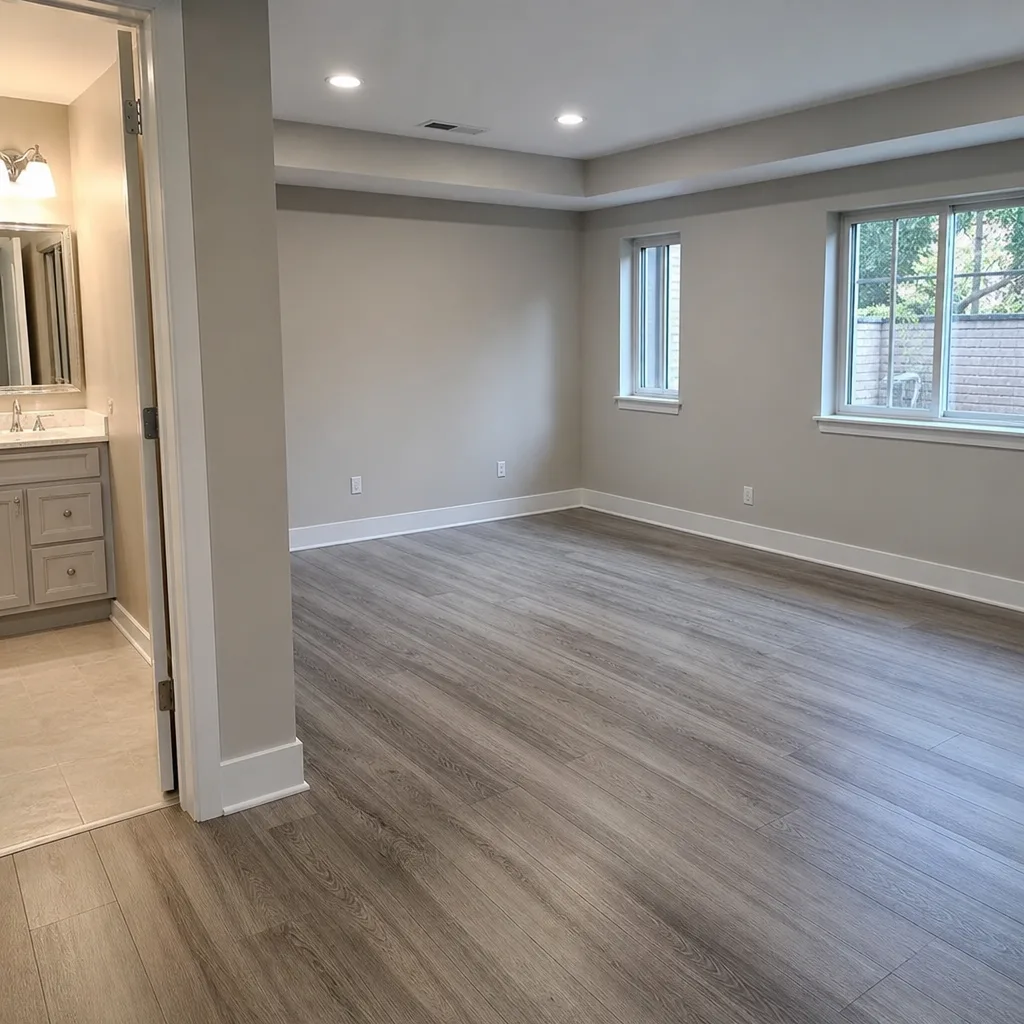 After
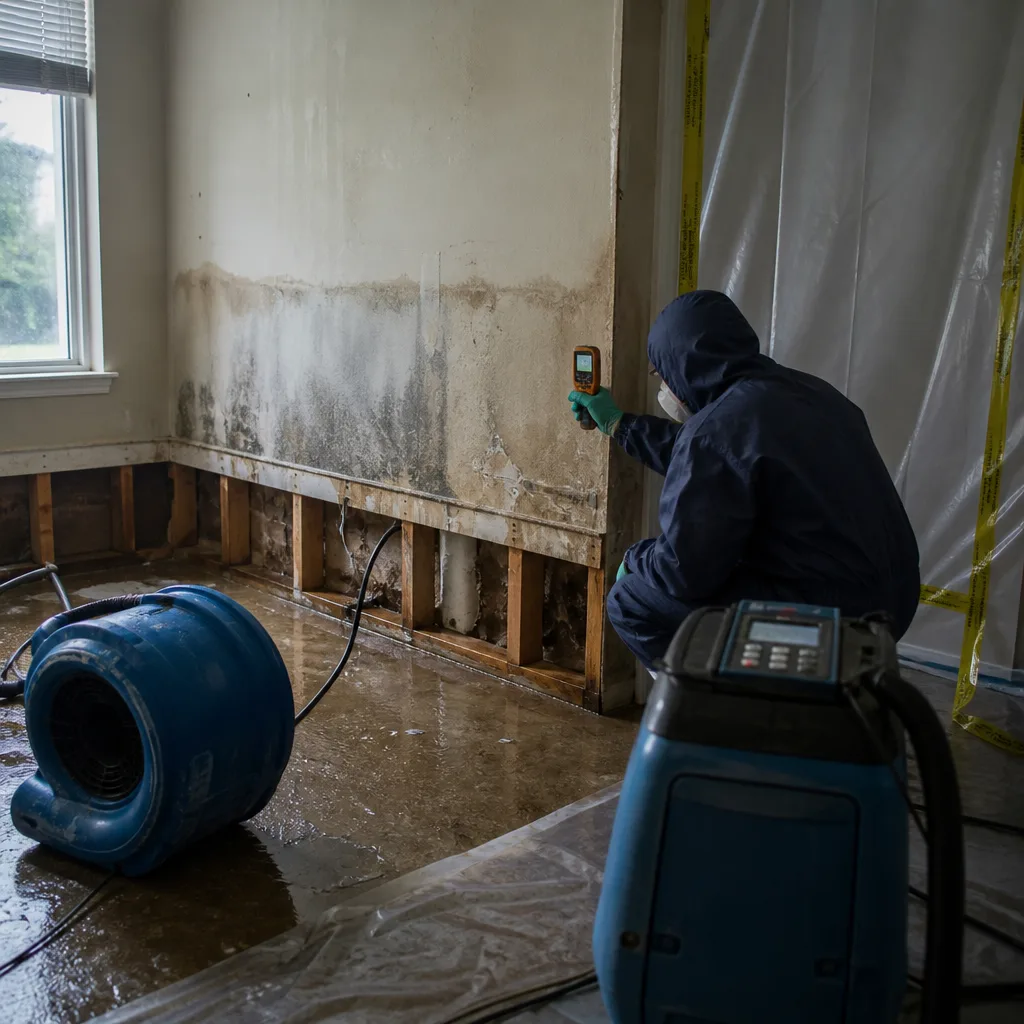 Before
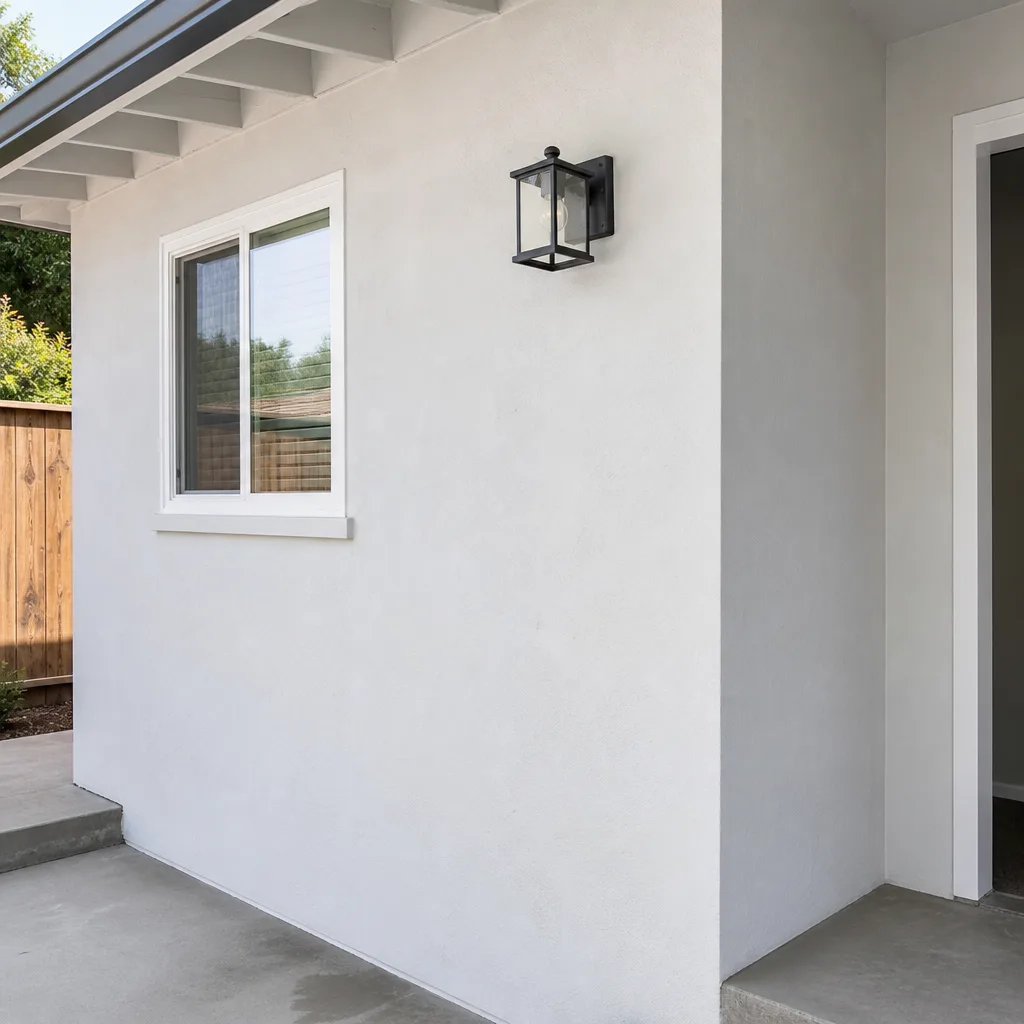 After
Common Mold Remediation Problems We See in March Air Force Base Homes
- Hidden moisture behind original galvanized pipes. Homes built in the 1950s through 1980s across 92551 still have steel supply lines that corrode from the inside out. A slow pinhole leak can saturate a wall cavity for months before any visible mold appears on the surface.
- Flat roof leaks saturating ceiling cavities. Many of the older base housing structures and nearby tract homes have low-slope or flat roofs. When roofing membrane fails after decades of Inland Empire sun exposure, water pools in the ceiling cavity and mold grows in insulation long before a stain shows on the ceiling.
- Military housing office coordination delays. Access to some properties requires scheduling through base housing offices or contractors. Window’s between approval and entry can stretch, and every day of delay on wet drywall is another 24 to 48 hours of mold colony expansion. We build these timelines into our scopes from the start.
- Cross-contamination from small-scale DIY attempts. We regularly see homes near the March Air Force Base main gate where a resident tried to scrub mold from a bathroom wall. Within weeks, the problem appeared in adjacent rooms because spores were released without containment and found new moisture sources.
Pricing for Mold Remediation in March Air Force Base, CA
Here’s what property owners in March Air Force Base can expect to budget for mold remediation work:
- Small bathroom or closet remediation: $1,200 to $2,800
- Multi-room or crawl space remediation: $2,500 to $4,500
- Mold removal only (drywall, baseboards): $800 to $2,500
- Full-room removal with wall cavity access: $3,000 to $5,000+
- Moisture mapping and assessment: $200 to $450, credited toward remediation if you proceed
What moves the number is square footage, how much drywall or insulation gets removed, whether structural drying inside wall cavities is needed, and documentation requirements from housing offices or insurers. We provide a written scope before any work starts, so you know exactly what’s included and what it costs. Call (888) 508-8745 for a free estimate on your specific situation.
We Also Serve Cities Near March Air Force Base
Our crews are on the road daily between Moreno Valley, Woodcrest, Perris, and Good Hope, so scheduling a job in the 92551 ZIP code doesn’t require waiting for a far-off team to arrive. If you own property in March Air Force Base or manage units across the surrounding communities, one phone call covers it all.
Serving March Air Force Base, CA — Our Local Coverage Area
We’re based in the March Air Force Base area and know this community well. Use the map below to see our service coverage — if you’re nearby, we can almost certainly help.
FAQs About Mold Remediation in March Air Force Base
Mold can begin growing within 24 to 48 hours of water intrusion in March Air Force Base homes, especially during the warm months when indoor temperatures in 92551 stay high enough to accelerate spore germination. The Inland Empire’s hot, dry summers actually make this worse indoors, because evaporating moisture from a hidden leak creates a humid microclimate inside wall cavities even when the outside air is dry. Under those conditions, visible mold can appear on drywall within a week. The faster you get a moisture assessment, the less material gets removed. Call (888) 508-8745 as soon as you suspect a leak or see discoloration.
Yes. We regularly coordinate with military housing offices and base contractors for mold remediation on and around March Air Force Base, including access scheduling, pre-loss condition documentation, and final clearance reporting. Housing offices typically require moisture readings before and after remediation, drying logs, and air sampling results. We provide all of that as standard deliverables, not extras. If your housing office has specific forms or reporting formats, we’ll work within those requirements.
The most common mold sources in March Air Force Base homes are slow, hidden leaks from original galvanized plumbing, flat roof failures, and failed water heater pans. These aren’t dramatic floods, they’re persistent low-volume leaks that saturate framing and insulation over weeks or months. That’s why we run moisture mapping before any containment is set, and why we don’t just treat the visible patch. A quick visual inspection misses what’s behind the drywall.
We locate the leak first using moisture meters and thermal imaging, then open the wall cavity, remove contaminated drywall and insulation, dry the framing to IICRC-aligned moisture targets, and apply antimicrobial treatment before reconstruction. In the older base housing stock, we typically find the leak source is a corroded pinhole in steel supply lines that’s been leaking for months. The key is documenting everything so the housing office or insurer has a complete record. Call (888) 508-8745 and we’ll start with a moisture assessment.
We run Dri-Eaz LGR dehumidifiers and HEPA air scrubbers on mold remediation jobs in March Air Force Base, along with professional-grade air movers and moisture meters from the brands restoration professionals rely on nationwide. These aren’t hardware-store rentals. LGR dehumidifiers pull moisture at a rate that keeps wall cavities drying within days instead of weeks, and HEPA scrubbers capture airborne spores during removal. Equipment quality directly affects whether the structure actually returns to pre-loss condition, which is the standard we work to on every job.
Mold in your March Air Force Base home or property doesn’t wait for a convenient time. Call Clean Slate Water Damage at (888) 508-8745 for a free estimate. We’ll schedule a moisture assessment, explain what we found in plain language, and give you a written scope before any work begins.
Written by Noel Carrasco, Owner at Clean Slate Water Damage, serving March Air Force Base and the surrounding Inland Empire.