

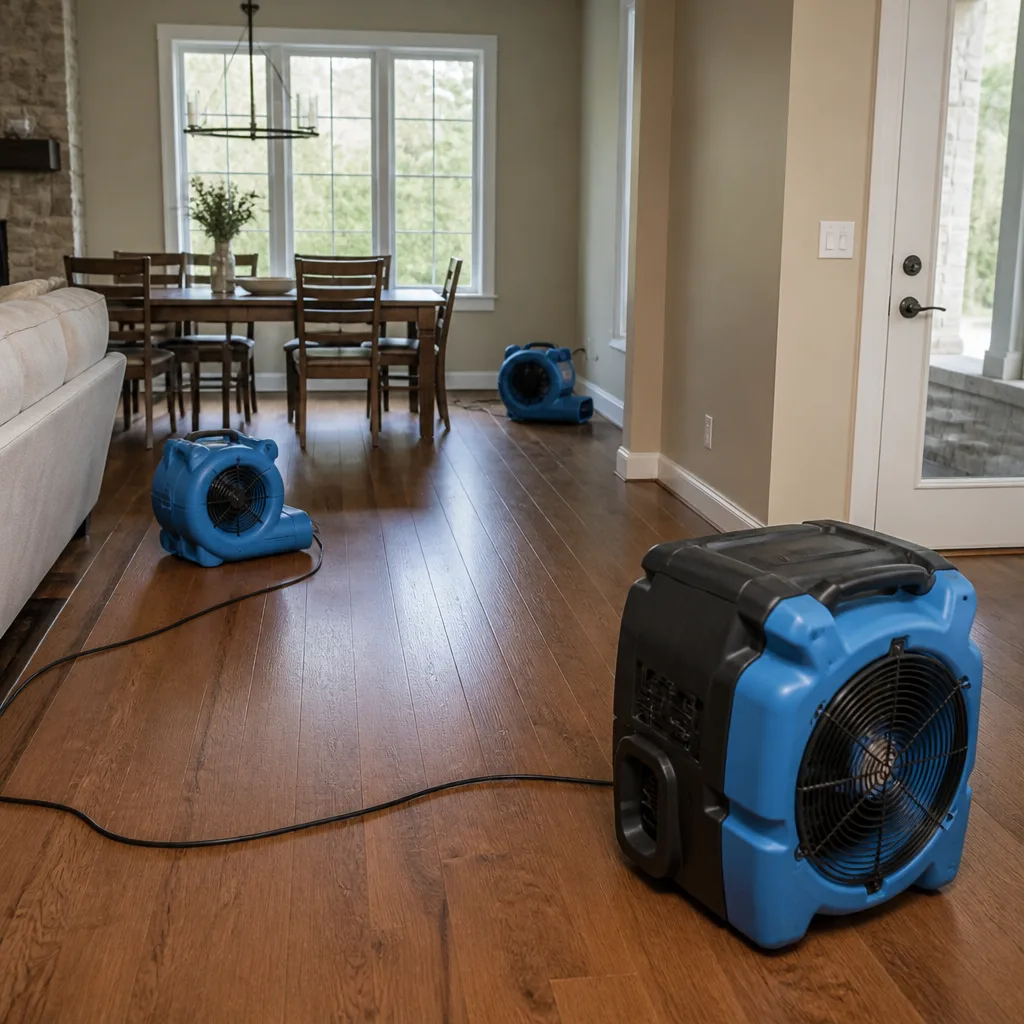
 Water damage drying
 Fire & smoke cleanup
 Mold remediation
 Storm response
 Sewage cleanup
 Reconstruction
Free visual inspection and a written scope of work before any mitigation begins - photos, moisture readings, and drying logs go in your claim file
The scope we write is the scope we bill. Anything new gets shown to you, in writing, before we touch it.
Get your free estimateFast, Reliable Mold Remediation Across Orange
Mold remediation in Orange typically costs between $1,800 and $6,500 depending on the square footage affected, whether the growth is behind walls or in crawl spaces, and how long the moisture source has been active. We get calls from Orange homeowners in Old Towne, the Santiago Creek area, and the tracts off Tustin Avenue who found dark spotting along a garage wall or a musty smell that won’t fade. Our crews know the difference between a 1920s plaster-and-lath bungalow near the Plaza and a 1970s slab-on-grade tract house off Chapman Avenue, because the remediation scope is not close to the same. Call (888) 508-8745 and we’ll have someone out to Orange the same day to assess it.
Why Clean Slate Water Damage Is Orange’s Preferred Mold Remediation Company
Orange homeowners keep our number because we treat mold as a structural problem, not a surface stain. The Mold Remediation work we do follows IICRC-aligned standards, which means we document moisture readings, contain the affected area, remove contaminated material, and dry the framing back to a verified baseline before any rebuild starts. That sequence matters in a city like Orange, where a century-old Old Towne home and a 1980s tract house three blocks away present completely different drying timelines and material behaviors.
Noel Carrasco, who leads our restoration team, has seen too many Orange jobs where a general contractor wiped down visible mold, painted over the stain, and left wet gypsum or lathe behind the wall. The growth returned within a season. We don’t do that. Our crews carry Dri-Eaz dehumidifiers and Phoenix air movers, and we run moisture-mapping passes on surfaces the homeowner never sees.
Because we also handle water and fire damage under one roof, Orange property managers dealing with a tenant unit that leaked in January and now smells in March don’t have to coordinate three separate contractors. One team handles the full scope from extraction through final clearance testing. That single point of responsibility is why we keep getting referred around Old Towne and the surrounding 92862 and 92863 neighborhoods.
Restoration work we handle
Mold Removal Specialist in Orange
Mold Removal Specialist work in Orange means locating every moisture pathway feeding the growth, then physically removing contaminated drywall, plaster, insulation, or carpet rather than killing surface spores alone. A typical contained bathroom or closet remediation in Orange runs $1,800 to $3,400. When the growth extends behind multiple walls or into a crawl space under a pier-and-beam Old Towne home, expect $4,000 to $6,500. If the moisture source is a corroded garage-door track or opener chain letting coastal salt air and rain into the framing, the hardware has to be addressed or the mold returns.
Containment and Source Correction
We set negative-air containment around the affected room before disturbing any moldy material. In Orange’s denser Old Towne blocks where homes sit close together, that containment keeps spores from drifting into neighboring rooms or through open windows. Then we fix what fed the mold: a slab leak under a 1960s tract house off Tustin Avenue, a backed-up clay lateral under a citrus-era home near the Plaza, or a rusted garage track that’s been weeping into the shared wall for two winters.
Moisture Mapping Before Demolition
Plaster-and-lath walls hold water differently than drywall, and we’ll take readings inside the lathe cavity before we decide what comes out. Orange’s older homes often have dimensional lumber framing that dries slower than modern kiln-dried studs, so our drying timelines account for that. We’d rather leave a wall in place and dry it properly than gut a 1920s interior unnecessarily.
Black Mold Removal in Orange
Black Mold Removal in Orange is not a paint-over job. When a homeowner near Grijalva Park or along the 92864 corridor finds dark, slimy growth spreading from a plumbing leak or a corroded garage wall, the affected material has to be removed under containment, the framing dried to a verified moisture content, and the area treated with an antimicrobial before any rebuild. A single wall section with black mold in Orange typically runs $2,500 to $5,000. Full room scopes with crawl space involvement can reach $6,500 or more.
When Growth Extends Behind the Wall
If you see black mold on the surface, assume it extends into the cavity behind it. Orange’s pre-1930 homes with plaster-and-lath construction give mold a perfect hidden growing environment: cool, dark, and slow to dry. We cut access behind the visible growth, map the moisture path, and remove everything that cannot be dried back to a safe baseline.
Testing and Clearance
We coordinate with independent third-party hygienists when a project requires post-remediation verification. That’s standard on insurance claims where an adjuster needs documentation, and it’s common on Old Towne properties where a historic preservation consultant is involved. The goal is a written clearance that says the space is back to pre-loss condition, not just visually clean.
Trusted Brands We Service in Orange
We run Dri-Eaz LGR dehumidifiers, Phoenix air movers, and XPOWER air scrubbers on Orange jobs because these units hold consistent output over the long drying cycles that plaster-and-lath and raised foundations demand. Our techs service our own fleet, so if a dehumidifier underperforms on a 92862 job, we swap it same day rather than waiting on a rental counter. Customers in Orange aren’t paying for hardware-store rentals with unknown run history. They’re getting equipment that’s maintained and verified between every job.
See the difference
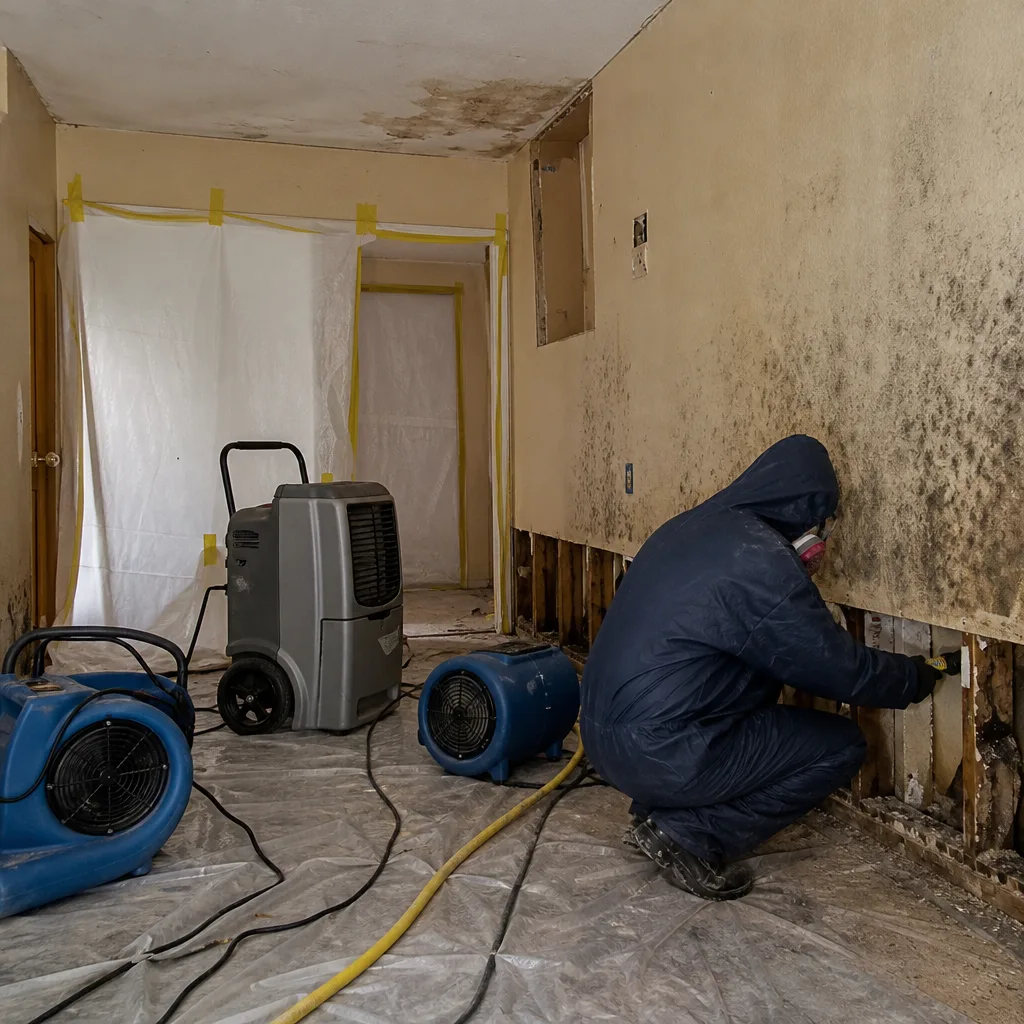 Before
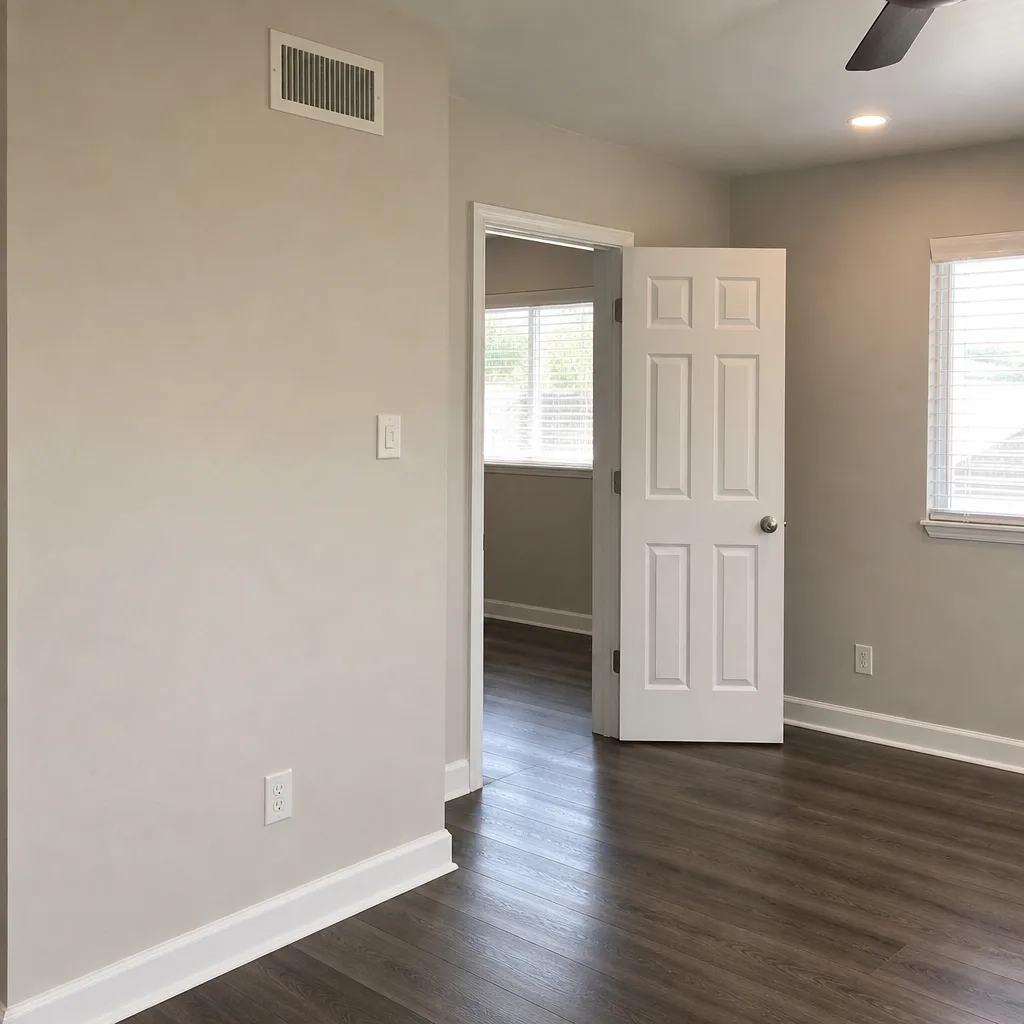 After
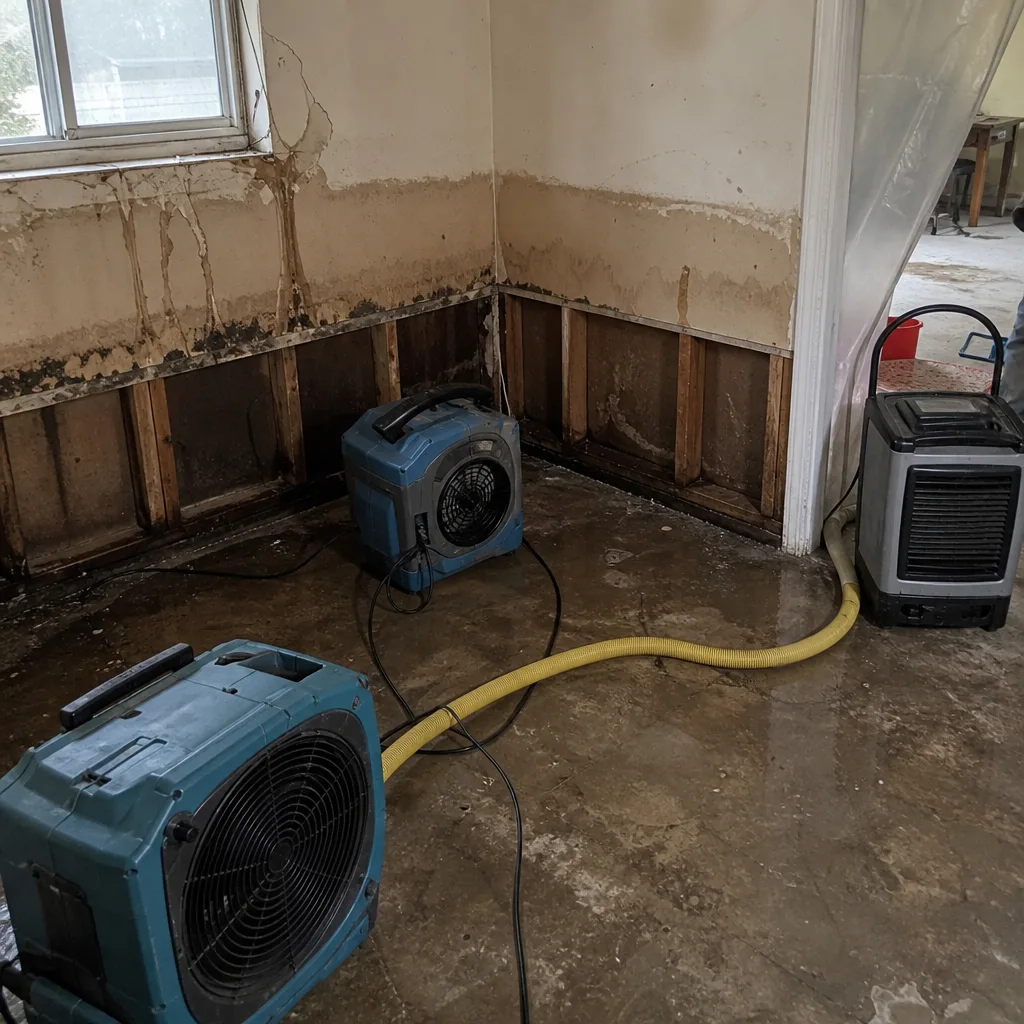 Before
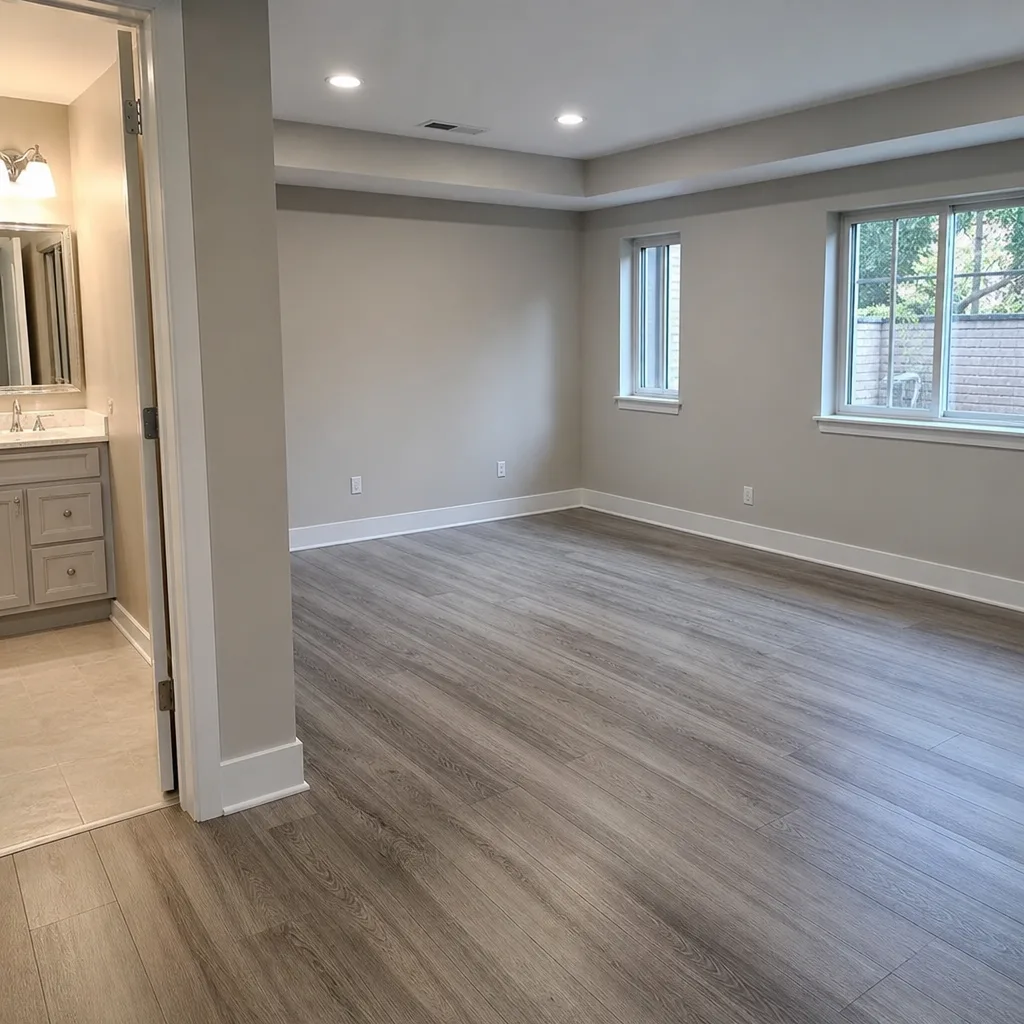 After
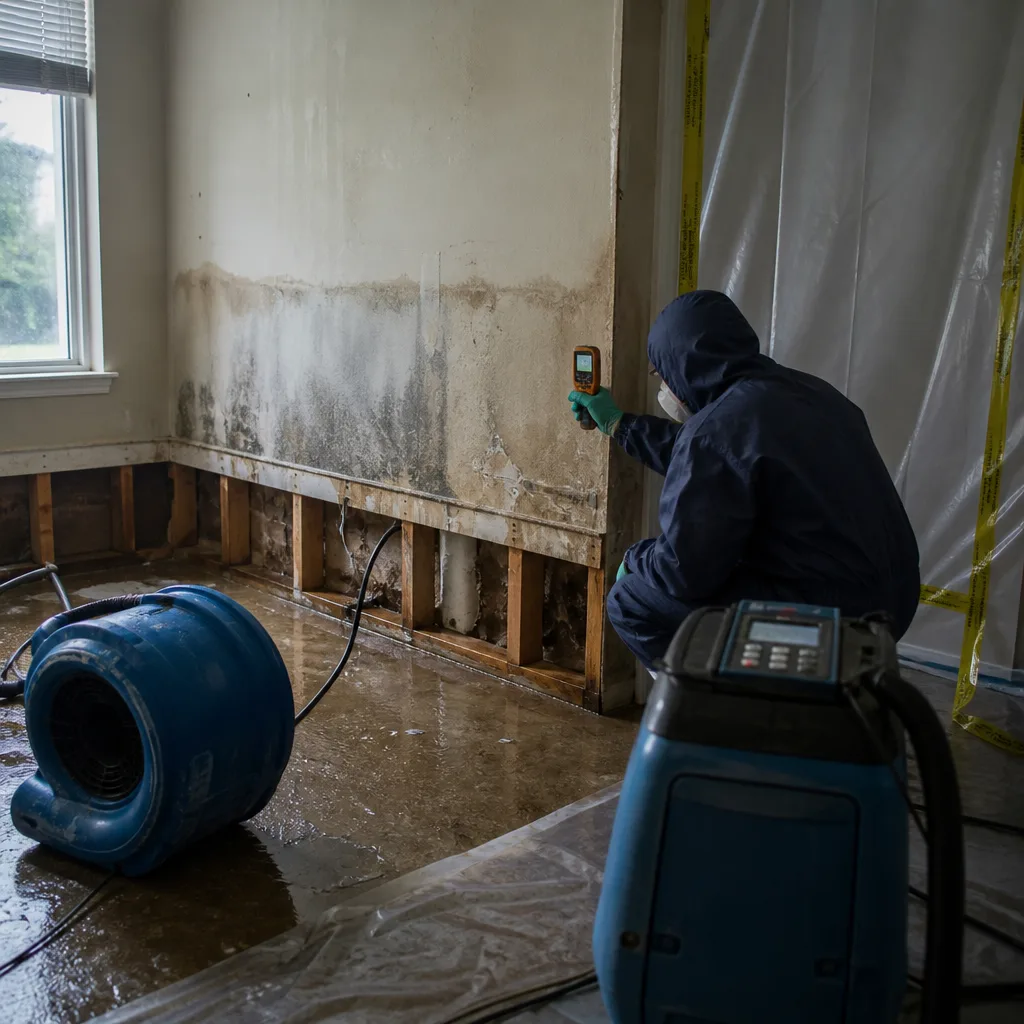 Before
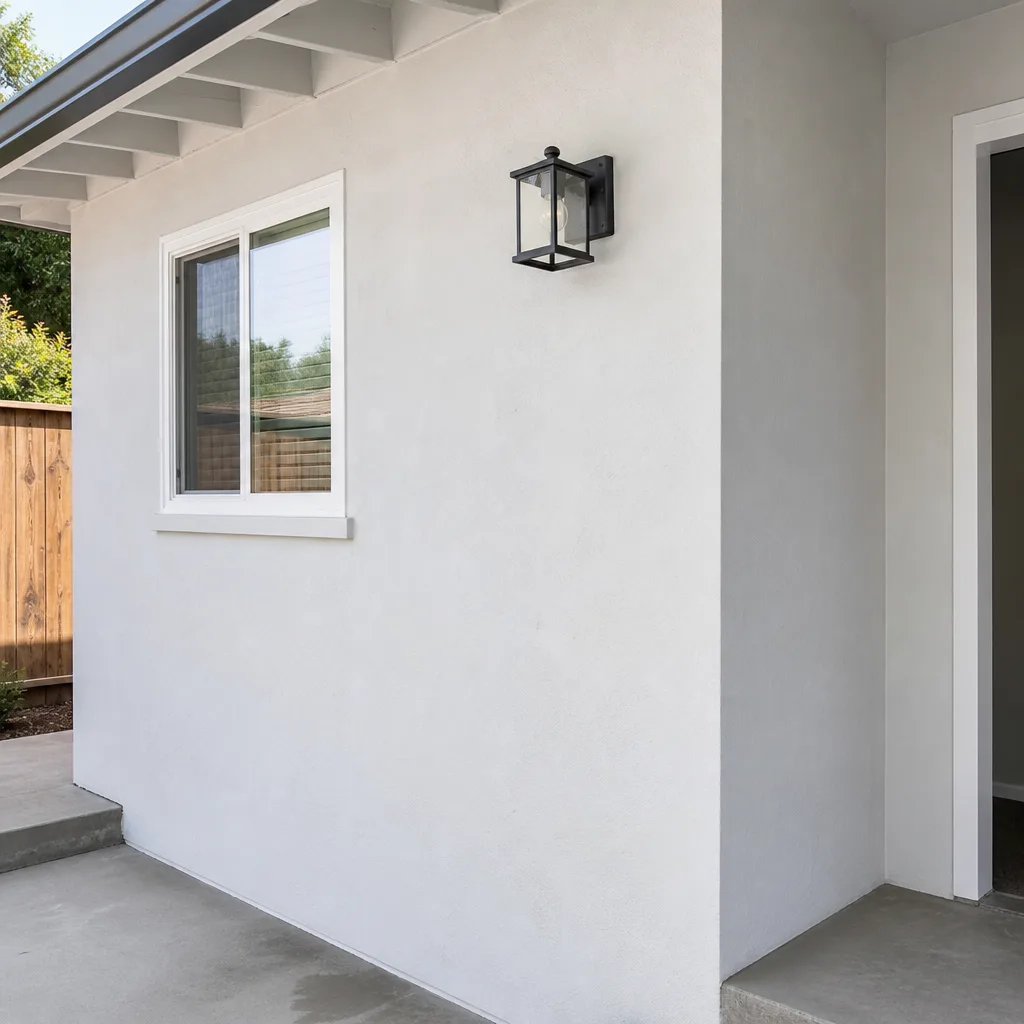 After
Common Mold Remediation Problems We See in Orange Homes
- Corroded garage-door hardware feeding interior mold. Salt-laden air from the marine layer reaches Orange’s garages and attacks springs, hinges, and opener chains. The rusted hardware lets rain and condensation into the framing, and by the time mold shows on the shared interior wall, the moisture pathway has been active for years. We fix the hardware pathway as part of the remediation, or the growth comes back.
- Plaster-and-lath walls that dry too slowly for standard timelines. Old Towne’s historic homes hold moisture inside lathe cavities far longer than drywall. A crew that pulls out drywall and runs fans for three days leaves hidden mold behind in a 1920s bungalow. We extend drying times and verify moisture content with meters before rebuilding.
- Clay sewer laterals backing up under mature citrus and camphor trees. Roots from Old Towne’s tree-lined streets infiltrate aging clay laterals, and the backup wicks moisture into raised foundations and slab edges. The mold shows up in a hallway or closet nowhere near a visible leak, and a standard visual inspection misses it entirely.
- Post-war slab homes with hidden plumbing chases. Orange’s 1960s and 1970s tracts run copper supply lines through slab penetrations and wall chases that corrode over decades. A pinhole leak inside a wall chase feeds mold between the studs, and the only sign is a faint musty smell in one room. We trace those chases with moisture meters before any demolition starts.
Pricing for Mold Remediation in Orange, CA
Expect to pay $1,800 to $3,400 for a contained single-room mold remediation in Orange, $3,000 to $5,500 for growth spanning multiple rooms or a shared garage wall, and $4,000 to $6,500 when crawl spaces, raised foundations, or plaster-and-lath wall cavities are involved. Black mold removal in Orange runs toward the top of those ranges because containment and clearance testing add cost. What moves the price: square footage of affected material, whether the framing can be dried or must be removed, and whether the moisture source is a simple plumbing fix or a corroded garage-door system requiring rebuild coordination. Call (888) 508-8745 for a free written estimate on your specific Orange property. Estimates are free, and we’ll photo-document everything for your insurance file.
We Also Serve Cities Near Orange
Our crews cover Orange and the surrounding North Orange County communities including Villa Park, North Tustin, Tustin, and Anaheim. If you’re a property manager with units across multiple cities, we can handle the full portfolio under one contract. The same Mold Remediation in Orange team that handles Old Towne historic homes also runs jobs in Villa Park’s hillside homes and Anaheim’s older apartment stock.
Serving Orange, CA — Our Local Coverage Area
We’re based in the Orange area and know this community well. Use the map below to see our service coverage — if you’re nearby, we can almost certainly help.
FAQs About Mold Remediation in Orange
Because the moisture pathway feeding the growth was never fixed. In Old Towne, the most common culprit is corroded garage-door hardware: rusted springs, hinges, and opener chains let salt-laden marine air and rainwater into the framing, and the shared garage wall stays damp year-round. Cleaning visible mold without replacing the corroded hardware and drying the framing means the growth returns within a season. Call (888) 508-8745 and we’ll map the actual moisture source before touching anything.
Mold can start within 24 to 48 hours on wet drywall or insulation, but hidden growth inside a wall cavity in a 1960s or 1970s Orange tract home may not become visible for weeks. By then it’s spread along the studs and into the ceiling joists. If you had a roof leak during the winter rains and you’re only now noticing a stain or smell, the growth is older than you think. The sooner we get containment and drying started, the less material has to come out.
Yes, and it’s not close. A pre-1930 Old Towne home has plaster-and-lath walls, often over dimensional lumber framing and a raised foundation, and the wall cavities dry much slower than drywall on a slab tract home. A Santiago-area house from the 1970s or 1980s usually has drywall over kiln-dried studs on a slab, which dries faster but hides plumbing-chase leaks differently. The remediation scope, drying timeline, and rebuild approach all change based on which Orange building type you own.
Category 1 is clean water from a supply line or faucet. Category 2 carries some contamination, like washing machine discharge or sump water. Category 3 is grossly contaminated, like sewage backup or flood water, and it requires full containment, more aggressive material removal, and often antimicrobial treatment before drying begins. Orange homes with aging clay sewer laterals under Old Towne’s mature trees see Category 3 events more often than newer tracts, and the mold remediation scope for a sewage-driven event is larger and more expensive.
Yes, and we treat the hardware as part of the remediation scope, not a separate garage-door contractor’s problem. We were called to a citrus-era bungalow near the Plaza in Old Towne where a homeowner reported a musty smell and visible dark spotting along the garage wall shared with a converted laundry room. After moisture mapping the plaster-and-lath wall and taking moisture readings, we found the source was a rusted-through opener chain and corroded track fasteners letting salt air and rain into the framing, so we set up containment, did water extraction on the wetted drywall and plaster, then ran air movers and dehumidification to bring the wall back toward its pre-loss condition. We finished with an antimicrobial treatment on the framing and recommended galvanized springs and stainless hardware on the rebuild to slow the coastal corrosion cycle. Call (888) 508-8745 for the same level of source-first remediation on your Orange home.
Written by Noel Carrasco, Owner at Clean Slate Water Damage, serving Orange and North Orange County.