

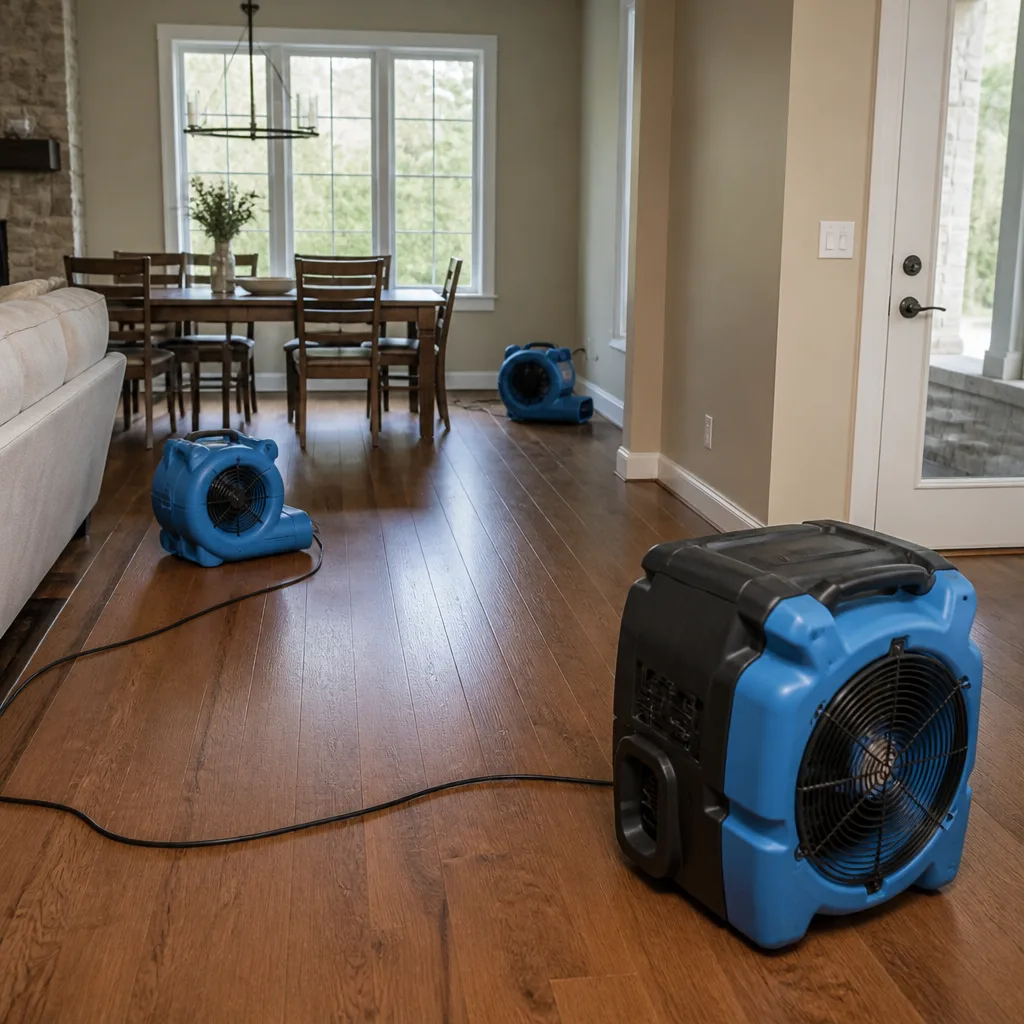
 Water damage drying
 Fire & smoke cleanup
 Mold remediation
 Storm response
 Sewage cleanup
 Reconstruction
Free visual inspection and a written scope of work before any mitigation begins - photos, moisture readings, and drying logs go in your claim file
The scope we write is the scope we bill. Anything new gets shown to you, in writing, before we touch it.
Get your free estimateFast, Reliable Water Damage Restoration Across Portola Hills
Water damage restoration in Portola Hills typically costs between $1,800 and $5,400 for a standard Category 2 dry-out of a stucco-and-drywall tract home, with emergency water extraction alone running $450 – $1,100. If you’re calling from Portola Hills right now with water spreading through a ceiling or seeping into walls from hillside runoff, you need a crew that understands this community’s specific failure points: tile-roof valleys that open after fire season, stucco that hides moisture behind its rigid shell, and Santa Ana winds that push debris against your vents. Call (888) 508-8745 and we’ll have equipment moving toward 92610 immediately.
We’re Clean Slate Water Damage, led by Noel Carrasco, and we run Water Damage Restoration as a professional discipline, not a side service. Portola Hills sits on the western edge of the Santa Ana Mountains where the 241 climbs toward Santiago Canyon. That geography creates a restoration profile you won’t find down in Lake Forest or Mission Viejo. When we respond to homes off Glenn Ranch Road or Saddleback Ranch Road, we’re looking for damage patterns specific to wildland-urban interface housing: flash runoff, ember intrusion, and the slow failure of concrete tile roofing under fire-season stress.
Why Clean Slate Water Damage Is Portola Hills’s Preferred Water Damage Restoration Company
Portola Hills homeowners and property managers call us because we show up with equipment that generalist contractors don’t run. Dri-Eaz LGR dehumidifiers, Phoenix air movers, XPOWER extractors, and the Injectidry structural drying system. We work in alignment with IICRC standards, which means our moisture mapping, drying logs, and clearance documentation hold up when an adjuster asks questions. RIA and IFA membership add accountability beyond a handshake.
Response time matters here. Portola Hills is a compact community, but the 241 and Glenn Ranch Road are the only real arteries in and out. During a rain event or post-fire wind event, those routes clog. We stage our response knowing that a home on a terraced slope off Saddleback Ranch Road is a different access problem than a flat-lot property in Foothill Ranch. Noel Carrasco has built the company around that kind of predictability: a crew that already knows the terrain, the housing stock, and the failure modes, so the first truck isn’t a learning expedition.
Our Portola Hills customers come to us through repeat referrals from neighbors who’ve dealt with post-storm runoff or fire-season smoke intrusion. That’s the reputation that matters in a community of roughly 11,000 homes. When a house on Whispering Hills Drive floods at midnight, the first call goes to someone a neighbor already trusted with the house next door.
Restoration work we handle
Emergency Water Removal in Portola Hills
Emergency Water Removal in Portola Hills starts with extraction, not an inspection tour. When a supply line bursts behind a second-story bathroom in a late-90s stucco home, water travels down through the wall cavity and pools at the base plate before you ever see a stain. Our crew positions truck-mounted and portable extraction units, pulls standing water, and then gets thermal imaging and moisture meters into the affected assembly immediately. In Portola Hills, this typically runs $450 – $1,100 for the extraction phase, with full dry-out scoped after we map the moisture spread.
Structural Drying Without Demolition When Possible
The Injectidry system is what separates a dry-out that preserves your home from one that turns into a rebuild. It forces dry air directly into wall cavities and subfloors, pulling moisture from inside the assembly without cutting out drywall. For stucco homes in Portola Hills, where exterior walls don’t breathe like siding, this matters: demolition on a stucco exterior is invasive and expensive, and non-invasive drying often avoids it entirely.
When Hillside Runoff Is the Culprit
Portola Hills slopes toward the canyon, and hard-pan soil doesn’t absorb the way valley loam does. After a heavy winter storm, runoff moves fast across terraced lots and finds the lowest entry point, often the garage slab or a stucco seam at grade. Homeowners misread this as a plumbing leak, but what’s actually happened is surface water intrusion carrying silt and debris. That’s Category 2 water, and it saturates drywall from the bottom up if extraction doesn’t start within hours.
Flood Damage Restoration in Portola Hills
Flood Damage Restoration in Portola Hills usually means one of two scenarios: a plumbing failure inside the house, or storm-driven runoff and mudflow from the slopes above. The second one is uniquely local. When heavy rain hits the hard-pan slopes behind Glenn Ranch Road, water sheets across terraced lots, overwhelms drainage, and pushes into garages and lower-level rooms. Full flood restoration in Portola Hills, including extraction, drying, antimicrobial treatment, and drywall replacement, runs $2,800 – $7,500 depending on square footage and how long water sat.
Stucco and Drywall Saturation Response
Stucco looks impervious, but it’s a cementitious sponge. Once water saturates the stucco assembly on a Portola Hills home, it holds moisture against the framing for weeks unless we actively dry it. We cut access at the base, set air movement, and use Injectidry to pull moisture from within the wall. This is where drying logs matter: they document moisture reduction day over day, and that documentation is what justifies stopping the dry-out when the numbers hit the target.
Post-Fire Rain: The Double Exposure
Here’s the Portola Hills pattern we’ve seen repeatedly. A canyon fire moves through Santiago Canyon, smoke and ash get forced through soffit and ridge vents, and the tile roof holds against embers. Then the first winter rain arrives, and a valley flashing that was already stressed fails, sending water into the same attic that took smoke months earlier. That’s not a coincidence. It’s a recurring local failure mode, and it requires a restoration team that understands both the fire residue and the water intrusion as one continuous damage event.
Trusted Brands We Service in Portola Hills
We service and restore after damage to all major plumbing fixtures and appliance brands that fail in Portola Hills homes: Rheem and Bradford White water heaters, Moen and Delta supply lines, Kohler and American Standard fixtures, and Whirlpool and LG laundry connections that burst without warning. Because Portola Hills housing stock is largely 1980s-to-2000s tract construction, we stock common replacement parts for these lines and can often complete the water-damage repair with the same brands that were originally installed. Faster turnaround means less time with your walls open.
See the difference
 Before
 After
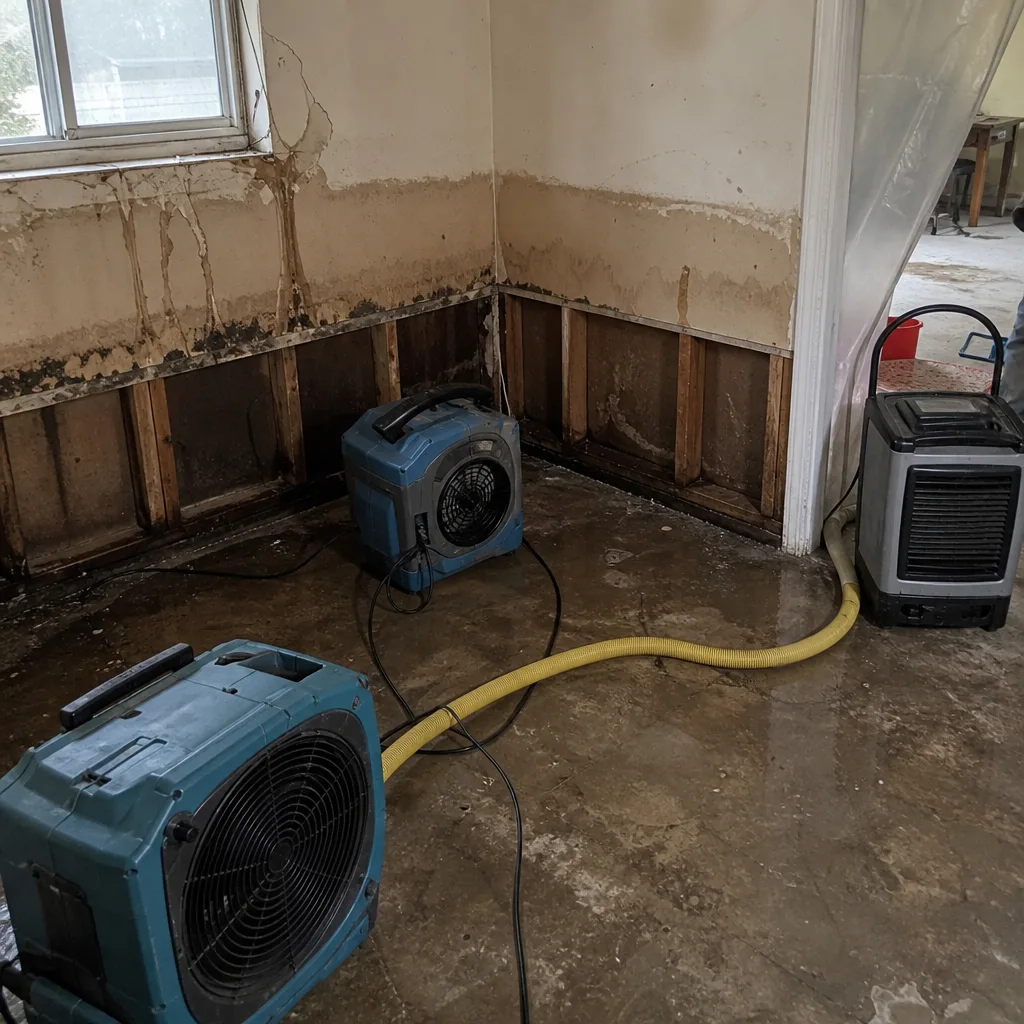 Before
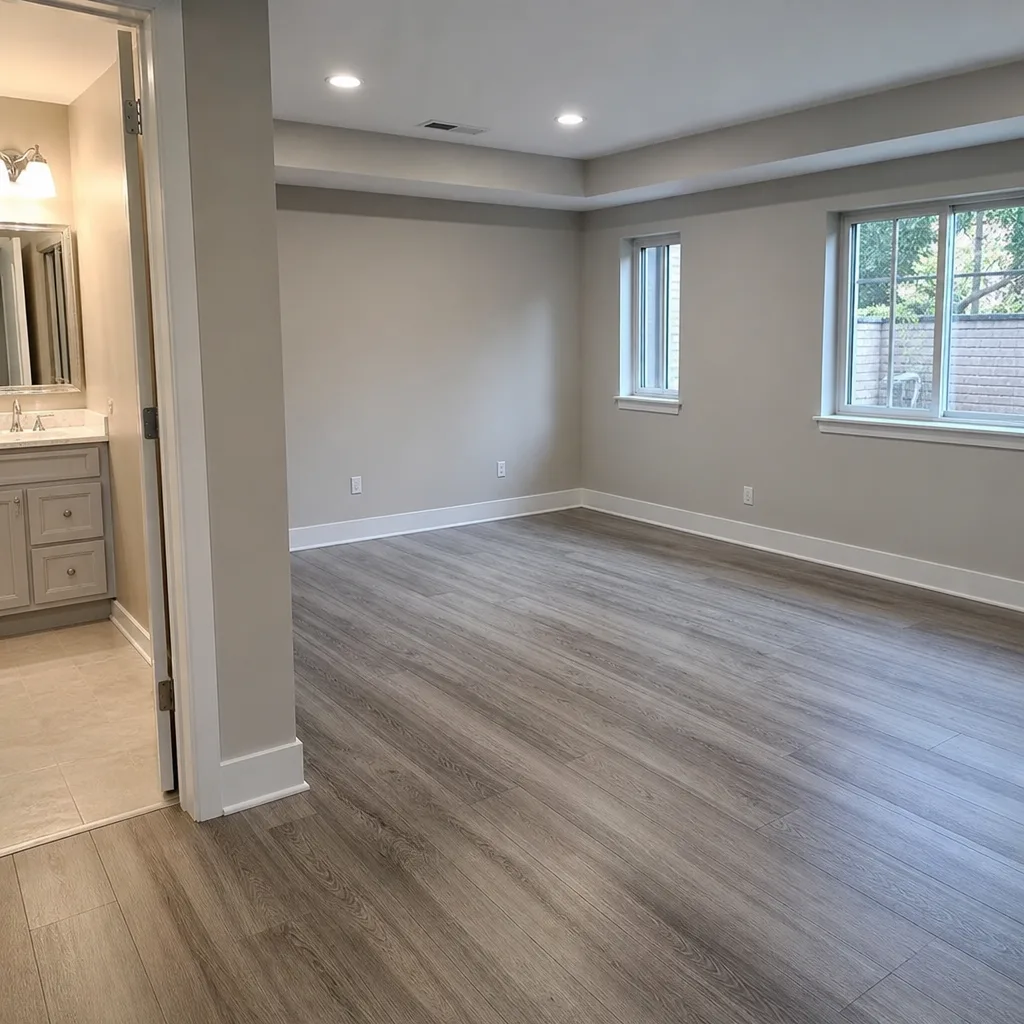 After
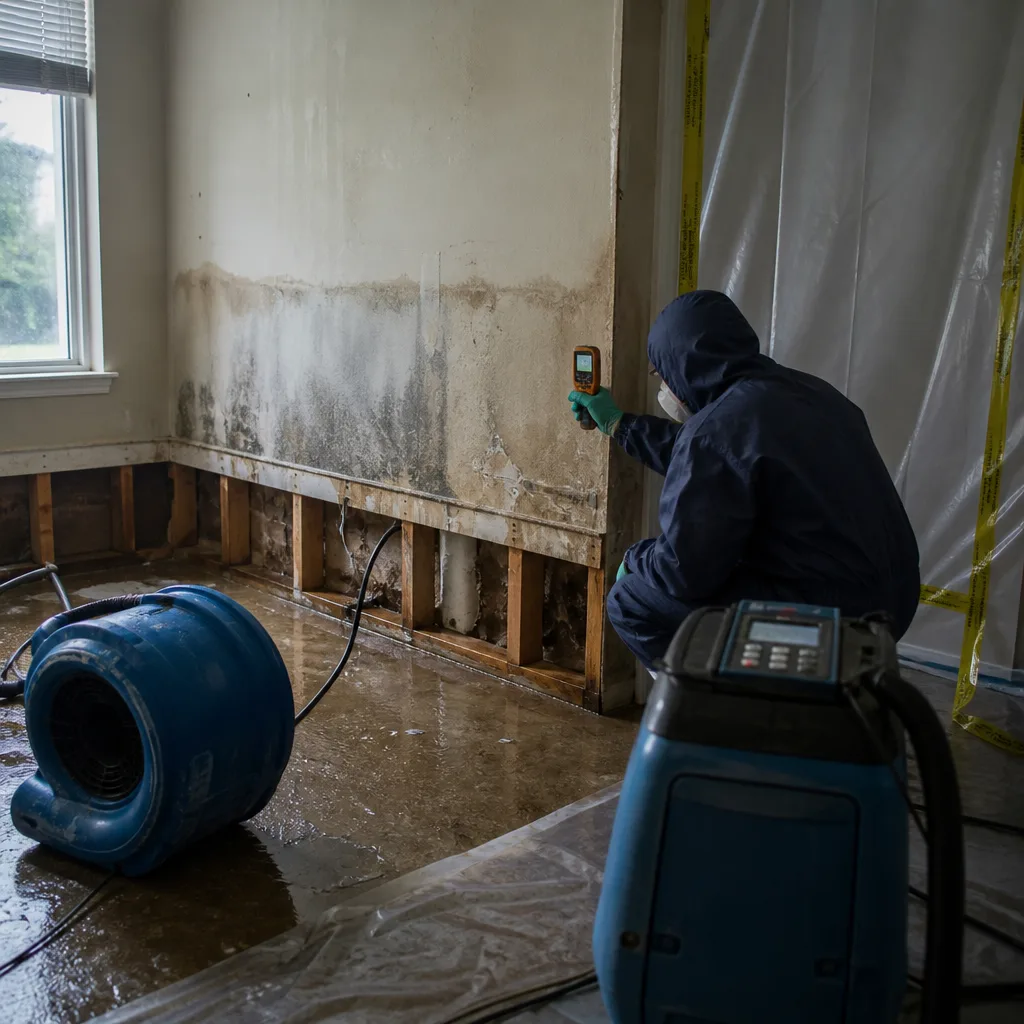 Before
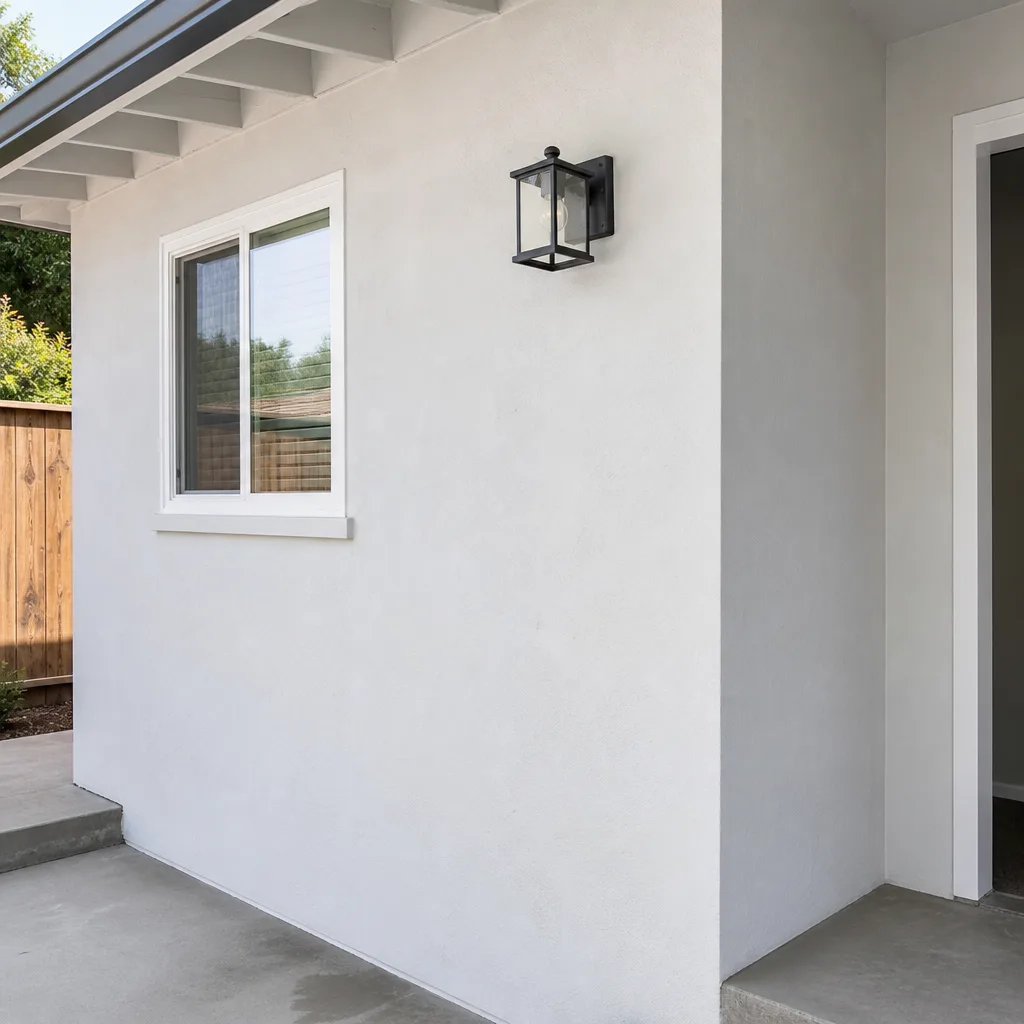 After
Common Water Damage Restoration Problems We See in Portola Hills Homes
- Steep-slope runoff misdiagnosed as plumbing leaks. The hard-pan soil above terraced subdivisions sends surface water into garages and lower-level rooms after heavy rain. Homeowners call a plumber first, the plumber finds no leak, and water extraction is delayed by 24 – 48 hours while the stucco keeps absorbing.
- Tile-roof valley and flashing leaks after fire season. The same roofs that resist embers fail at valleys and flashings in the first big winter storm. Water enters at the roof line, runs down through the attic, and shows up as ceiling stains weeks after the rain stopped.
- Ash and soot intrusion through open-eave and ridge vents. During Santa Ana wind events, even homes far from the flame front get smoke residue forced into attics through passive vents. When that residue gets wet from a subsequent leak, it creates moisture readings and staining that mimic mold growth and complicate the drying plan.
- Attached garage flooding from grade-level entry points. Many Portola Hills homes have garages built into the slope, with the garage slab below grade at the uphill side. Water pools against the stucco and enters through door thresholds or foundation seams, often unnoticed until damage is extensive.
Pricing for Water Damage Restoration in Portola Hills, CA
Emergency water extraction in Portola Hills runs $450 – $1,100. Structural drying and dehumidification for a single room: $1,200 – $2,600. A full Category 2 flood restoration across multiple rooms with stucco drying: $2,800 – $7,500. Tile-roof leak remediation from attic to drywall: $1,800 – $4,200. The two factors that move cost most in Portola Hills are how long water sat before extraction started, and whether the damage involves stucco assemblies that require extended drying. We provide a written scope before work begins, so you know exactly what the mitigation plan includes. Call (888) 508-8745 for a free estimate.
We Also Serve Cities Near Portola Hills
Our crew regularly crosses the Saddleback Valley for Portola Hills work plus the surrounding communities. We respond to water damage in Foothill Ranch, Lake Forest, Mission Viejo, and Trabuco Canyon. Same crew, same equipment, same IICRC-aligned process.
Serving Portola Hills, CA — Our Local Coverage Area
We’re based in the Portola Hills area and know this community well. Use the map below to see our service coverage — if you’re nearby, we can almost certainly help.
FAQs About Water Damage Restoration in Portola Hills
Mold can begin colonizing within 48 – 72 hours of water intrusion in Portola Hills’s semi-arid climate, faster inside wall cavities where humidity gets trapped by stucco. If water sat over a weekend or during a fire-season wind event before you noticed, assume microbial activity is present and request antimicrobial treatment as part of the dry-out. Call (888) 508-8745 for an evaluation.
Ember-driven fires heat and stress concrete tile roofs, expanding and contracting the materials at valleys and flashings where tiles meet. The first heavy winter rain after a fire season often exposes those weakened seams, sending water into the attic. We see this pattern repeatedly on homes off Saddleback Ranch Road and Glenn Ranch Road, where fire-season survivors become water-damage calls within the same year.
Hillside runoff in Portola Hills is almost always Category 2 water: it carries silt, soil, and organic debris from hard-pan slopes. That means it requires extraction, antimicrobial treatment, and proper drying, not just a mop-up. Call us at (888) 508-8745 and we’ll classify the water correctly before any drying plan is set.
Smoke residue forced through soffit and ridge vents during Santa Ana wind events leaves soot and ash in attics. When a later leak wets that residue, it creates staining and moisture readings that look like mold but aren’t. We account for post-fire smoke residue in our moisture mapping and drying documentation so the scope of work reflects what’s actually there, not a misread.
Yes. We use daily drying logs that record moisture content readings at each location and timepoint. Insurance adjusters in Portola Hills expect this documentation, especially on stucco assemblies where drying takes longer and the numbers need to show progress. We provide the logs in a format your adjuster can review directly. Call (888) 508-8745 for a scope that includes full drying documentation.
Contact Clean Slate Water Damage in Portola Hills: If you’re dealing with water intrusion from a burst pipe, a tile-roof leak, or hillside runoff, call (888) 508-8745 now. Noel Carrasco and our restoration team respond to Portola Hills with commercial-grade equipment, IICRC-aligned process, and a written scope before any work begins. Estimates are free.
Written by Noel Carrasco, Owner at Clean Slate Water Damage, serving Portola Hills and the Saddleback Valley.