

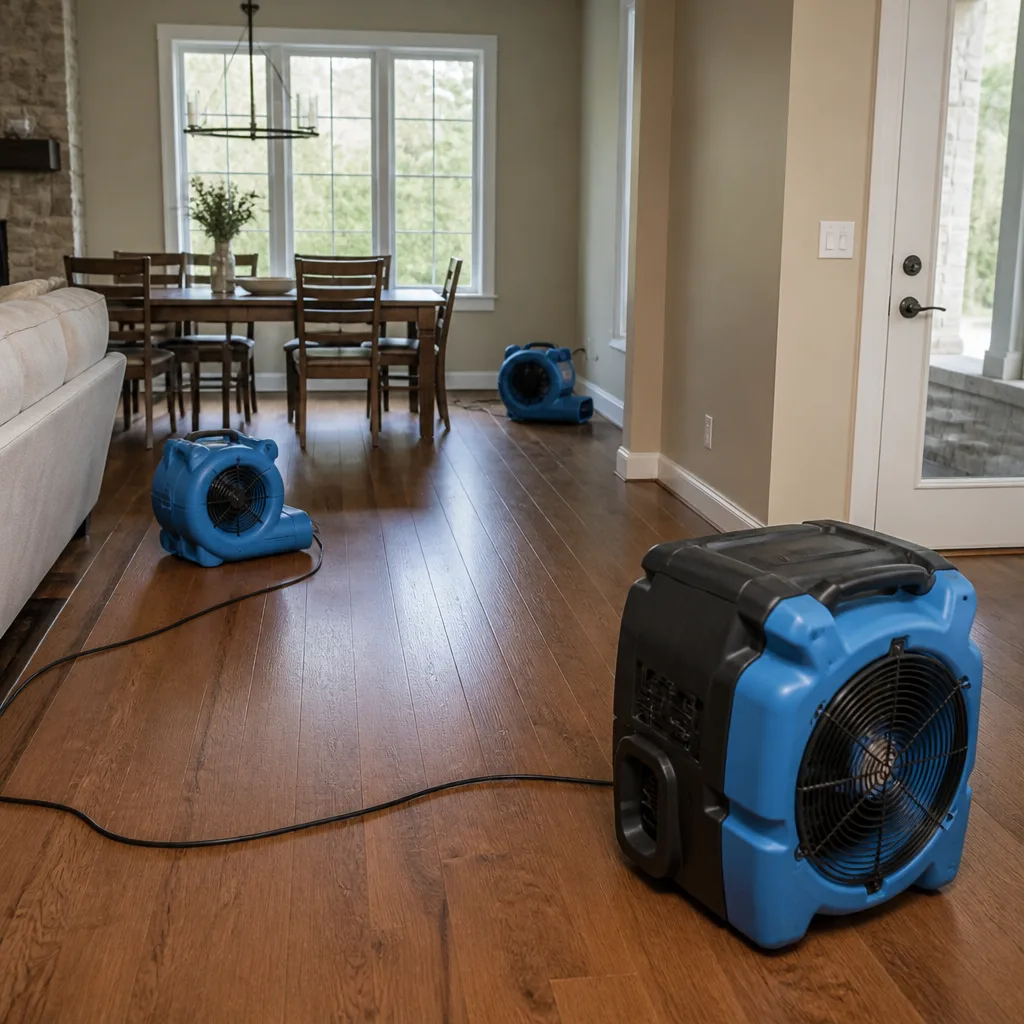
 Water damage drying
 Fire & smoke cleanup
 Mold remediation
 Storm response
 Sewage cleanup
 Reconstruction
Free visual inspection and a written scope of work before any mitigation begins - photos, moisture readings, and drying logs go in your claim file
The scope we write is the scope we bill. Anything new gets shown to you, in writing, before we touch it.
Get your free estimateFast, Reliable Water Damage Restoration Across Rancho Cucamonga
Water damage restoration in Rancho Cucamonga typically costs between $1,200 and $4,800, with emergency water extraction starting around $450 – $900 and full structural drying running $2,000 – $6,000 depending on the scope. Our crews reach most Rancho Cucamonga neighborhoods within 60 – 90 minutes, because standing water and soaked drywall do not wait for a convenient appointment. If you just found a leak, a burst pipe, or water spreading across your floor, call (888) 508-8745 now. Noel Carrasco leads a team that arrives with commercial-grade drying equipment, not hardware-store rentals.
We know the 91737, 91739, 91701, and 91729 ZIP codes well. We understand the stucco tract homes, the tile roofs, the alley-loaded townhomes, and the specific ways water moves through slab-on-grade construction here. That local knowledge changes how we scope a job, where we probe for moisture, and how fast we get you back to pre-loss condition.
Why Clean Slate Water Damage Is Rancho Cucamonga’s Preferred Water Damage Restoration Company
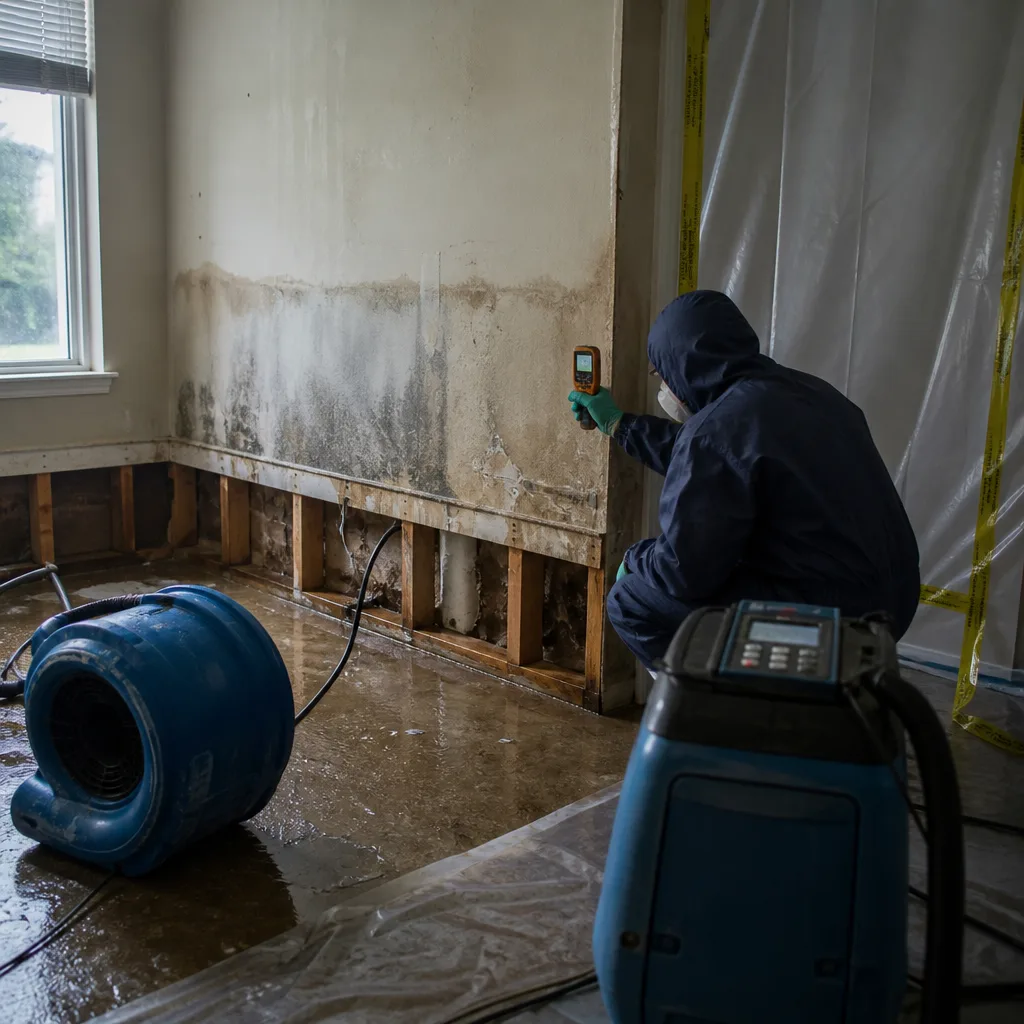
Most calls we take from Rancho Cucamonga start the same way: a homeowner noticed a ceiling stain, a warped laminate plank, or water pushing up through baseboards, and they’re not sure how long it’s been happening. By the time we arrive, water has often already wicked into wall cavities and under flooring. Our Water Damage Restoration team starts with moisture mapping, not guesswork. We use thermal imaging and penetrating meters to trace the water path through the slab perimeter and wall framing, then deploy Dri-Eaz and Phoenix dehumidifiers sized to the actual cubic footage of the affected space.
We work in alignment with IICRC standards, and our process reflects that. That means Category 2 and Category 3 water get contained and handled differently than a clean supply-line leak. It means we document moisture readings before, during, and after drying. It means the goal is never just “getting the carpet to feel dry.” The goal is a verified return to pre-loss condition, with a drying log you can hand to your adjuster.
The reviews we hear from Rancho Cucamonga customers tend to mention two things: the speed of our response and the fact that we did not push unnecessary demolition. The Injectidry system is a big part of that second point. It forces dry air directly into wall cavities and subfloors, so we can often dry saturated framing without tearing out drywall or tile. That saves you rebuild cost and keeps your family in the house.
Restoration work we handle
Water Damage Repair in Rancho Cucamonga
Water Damage Repair in Rancho Cucamonga usually means restoring the materials and surfaces that water has compromised: replacing waterlogged drywall, resetting buckled laminate, repairing baseboards, repainting, and ensuring the structural framing behind all of it is actually dry. For a typical slab-on-grade stucco tract home in the 91701 or 91729 ZIP, a moderate repair after a supply-line leak runs $1,800 – $3,400. A larger loss involving multiple rooms or a shared wall in a townhome can push toward $5,500 – $8,000. This is not a paint-over-it situation. If the framing stays wet, the paint fails and the mold clock starts.
Slab-Perimeter Moisture Mapping
Because most Rancho Cucamonga homes sit on concrete slabs rather than raised foundations, there’s no crawlspace for water to pool in. Instead, a slab leak or a wall intrusion migrates horizontally through the concrete, then wicks up into drywall and under laminate flooring. We probe along exterior and interior wall lines, under baseboards, and at door thresholds. In many Rancho Cucamonga homes, the first visible damage is far from where the water actually entered.
Tile Roof and Stucco Envelope Repairs
The hot, dry Santa Ana seasons bake stucco until hairline cracks open. Tile underlayment dries and shrinks. Then a winter rain arrives and water finds those same cracks. We see this pattern consistently across the foothill ZIPs of 91737 and 91739, where wind exposure is stronger. Repair here means sealing the actual envelope breach, then drying the wall cavity from the interior side before any drywall goes back on.
Water Mitigation in Rancho Cucamonga
Water Mitigation in Rancho Cucamonga is the emergency-side work that stops active water from doing more damage. It involves extraction, containment, controlled drying, and humidity management. A straightforward Category 1 mitigation in a Rancho Cucamonga home, such as a clean water supply line break caught within an hour, typically runs $1,200 – $2,200. If the water is Category 2 or 3, whether from a washing machine overflow, a sewage backup, or a roof leak that soaked through insulation, expect $3,000 – $6,500 once containment, antimicrobial application, and structural drying are included.
Non-Invasive Wall Cavity Drying
This is where the Injectidry system changes the cost conversation. Instead of cutting drywall out of every affected wall to dry the framing, we drill small access points and force dry air through the cavity under controlled pressure. It is slower than demolition in the first 24 hours, but it preserves your finishes and often cuts rebuild cost by thousands. For a stucco-on-wood-frame Rancho Cucamonga home, this matters because stucco exterior walls are expensive to patch and match.
Containment and Air Management for Townhomes
Many Rancho Cucamonga townhomes share walls, and water in one unit migrates through framing into the adjacent unit. We set containment barriers and negative air pressure so that drying our side does not push moist, contaminated air into a neighbor’s living space. We also coordinate with HOAs on access when the property line runs through the affected wall. That is a Rancho Cucamonga reality, especially near Haven Avenue and the denser parts of 91730.
Trusted Brands We Service in Rancho Cucamonga
We do not sell appliances or fixtures, but the water damage we dry out often comes from a specific set of household systems: water heaters and supply lines in attached garages, washing machine hoses, under-sink plumbing, and HVAC condensate lines. Across Rancho Cucamonga we service damage originating from standard residential brands and configurations common to post-1970s tract construction: gas and electric water heaters in garage alcoves, top-load and front-load laundry setups on interior or garage walls, and tile-roof underlayment systems tied to original builder packages. Because we stock professional-grade drying equipment, including Dri-Eaz and Phoenix units, we arrive ready rather than waiting on a rental counter.
See the difference
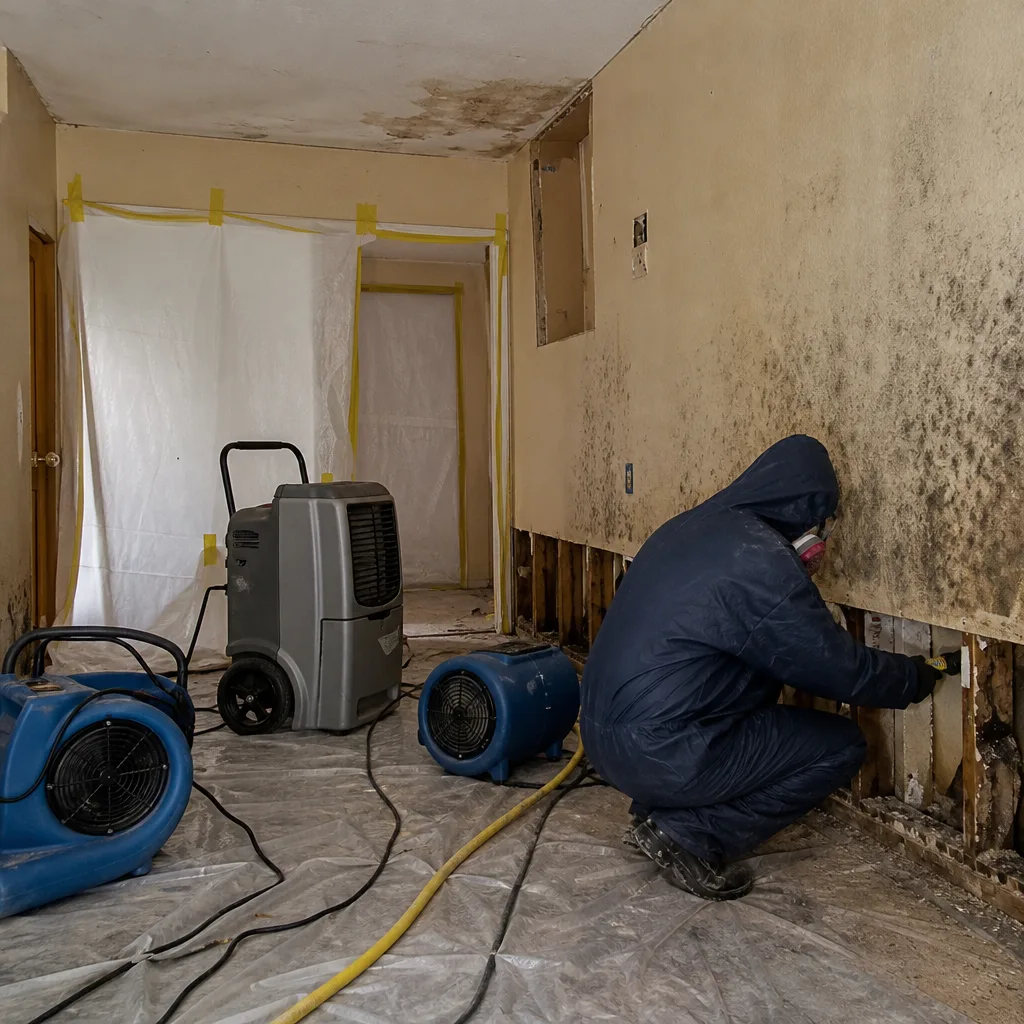 Before
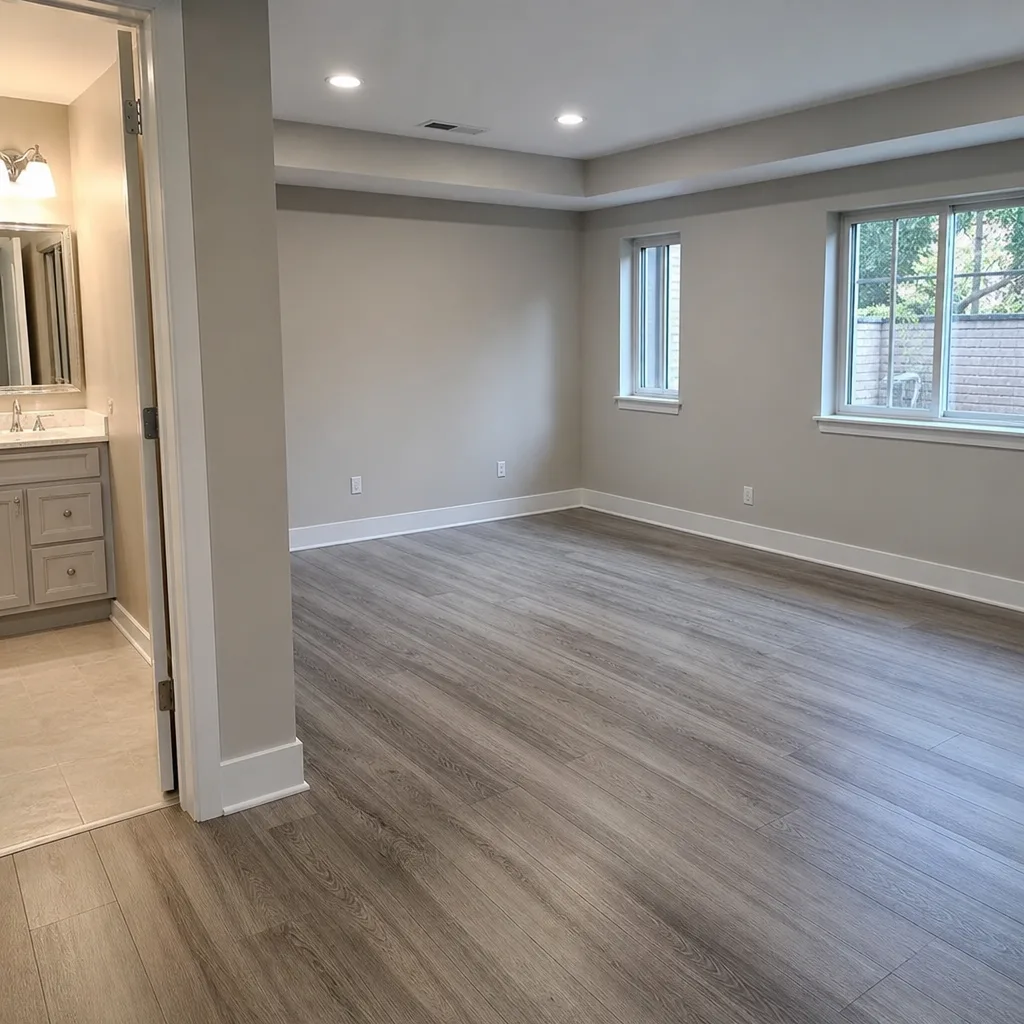
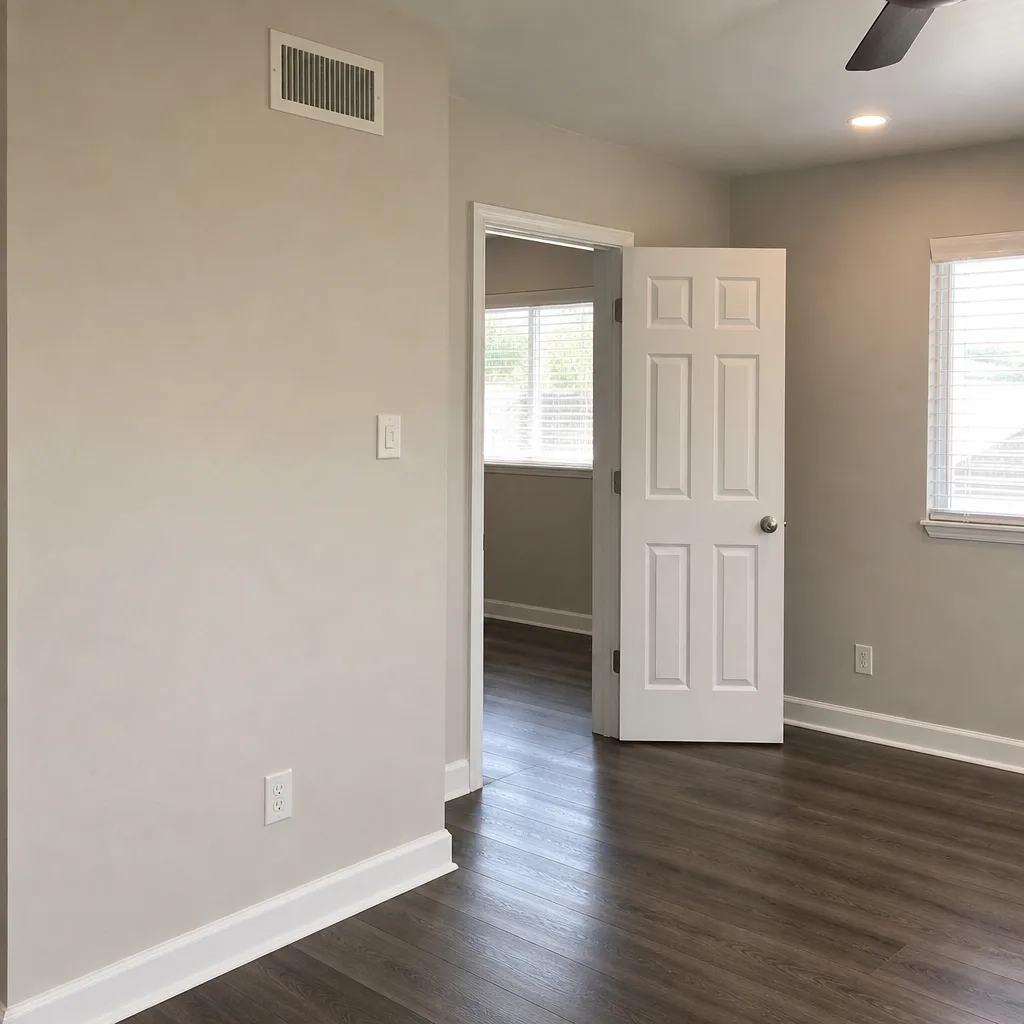 After
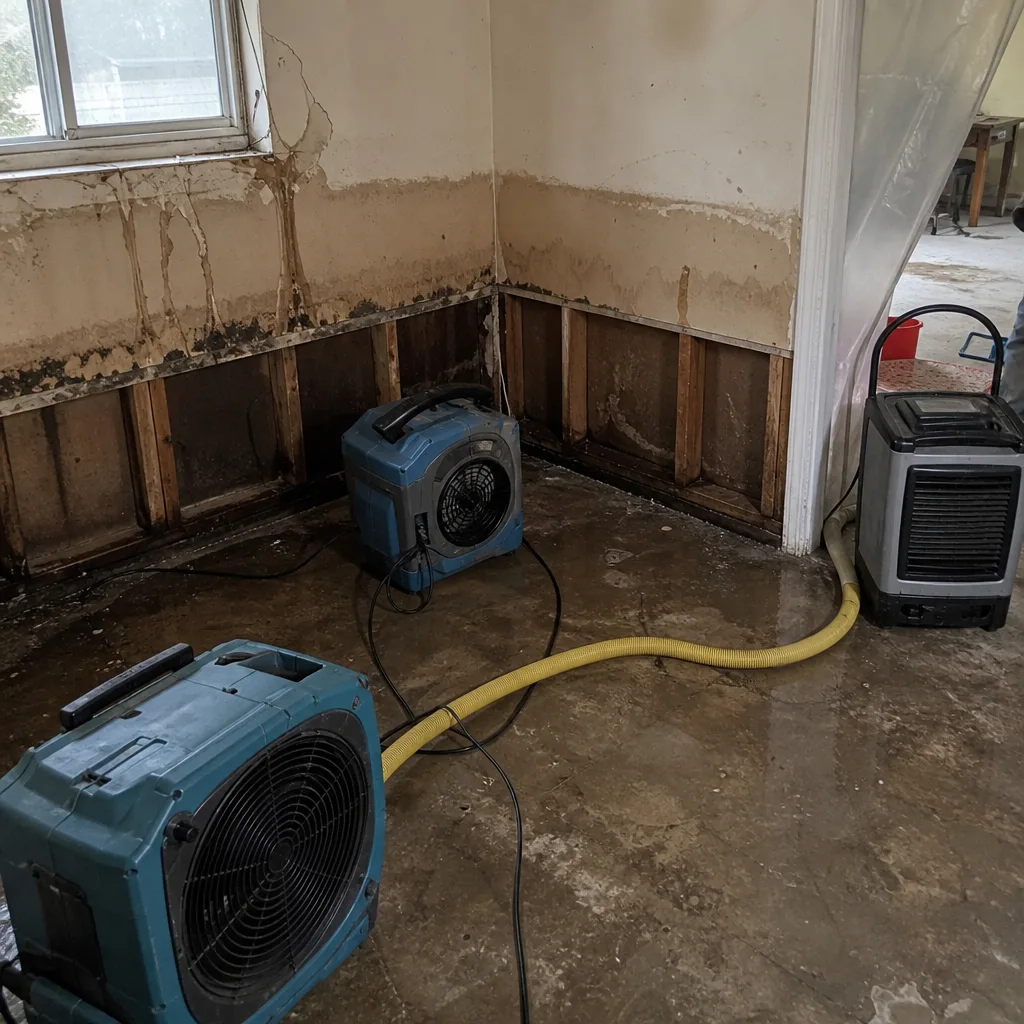 Before
 After
 Before
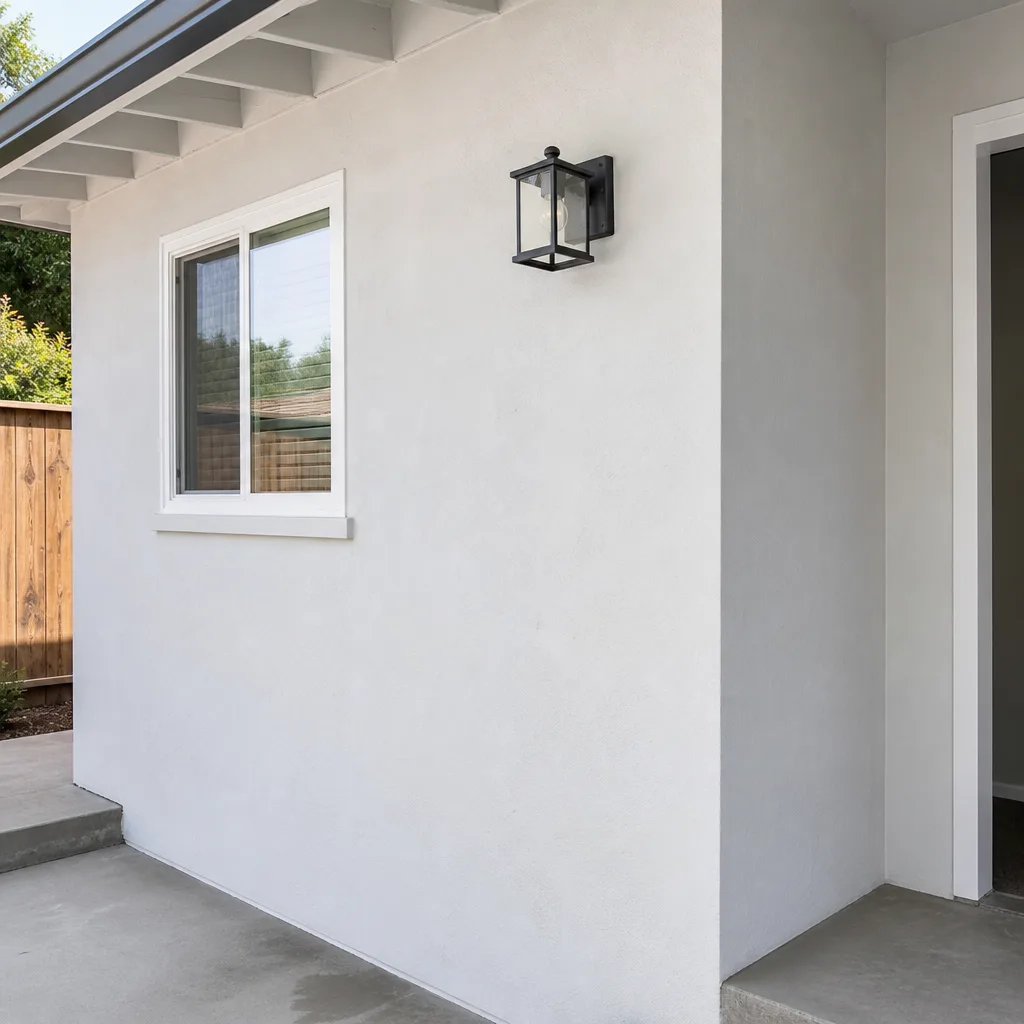 After
Common Water Damage Restoration Problems We See in Rancho Cucamonga Homes
- Slab-on-grade water migration. Water from a burst pipe or slab leak travels horizontally through the concrete and wicks into drywall and laminate before anyone sees a puddle. By the time the buckling shows up, the damage is always larger than it looks.
- Shared-wall moisture transfer in townhomes. In alley-loaded and attached units around the older 91730 ZIP, Category 2 water in one unit soaks through framing into the neighbor’s wall cavity. Containment and pressure-drying on one side alone will not fix the shared assembly.
- Wind-baked stucco and tile underlayment. Santa Ana heat and wind open hairline cracks that act as water entry points during winter rain. Cosmetic patching without interior drying means the same leak reopens the next season.
- Mold already active before we arrive. In Rancho Cucamonga’s semi-arid climate, wet drywall and trapped pocket air can grow mold within 48 hours, especially inside hot garage-adjacent walls. If the leak started days ago, we treat it as a mold-adjacent job from the first reading.
Pricing for Water Damage Restoration in Rancho Cucamonga, CA
Water damage restoration in Rancho Cucamonga runs $1,200 – $6,500 for most residential losses, with small extraction-only jobs at $450 – $900 and full mitigation plus repair projects reaching $8,000+ on a shared-wall or multi-room event. What moves the number: water category, how long the water sat, whether framing is involved, and whether the affected area is a garage-side wall or a living space. Free estimates are exactly that. Call (888) 508-8745 and we will give you a written scope before any work starts.
We Also Serve Cities Near Rancho Cucamonga
Our crews regularly run calls to San Antonio Heights, Upland, Ontario, and Fontana from the same base. If your property sits on the boundary between Rancho Cucamonga and Upland or you manage units in multiple Inland Empire cities, we can handle the full damage cycle at every address. See our Rancho Cucamonga service area page for response details, or call us for a straight answer on timing.
Serving Rancho Cucamonga, CA — Our Local Coverage Area
We’re based in the Rancho Cucamonga area and know this community well. Use the map below to see our service coverage — if you’re nearby, we can almost certainly help.
FAQs About Water Damage Restoration in Rancho Cucamonga
Because most Rancho Cucamonga homes built after 1970 are slab-on-grade, which means there is no crawlspace for water to pool in. Water from a slab leak, supply line break, or wall intrusion migrates through the concrete and wicks upward into laminate flooring and gypsum drywall. That is why we moisture-map the slab perimeter and wall cavities on every Rancho Cucamonga job, even when the visible damage is isolated. If you see buckling laminate or staining at the baseboards, call (888) 508-8745 before the wick line spreads further.
They change the equipment approach, not the outcome. In a compact Rancho Cucamonga townhome with alley access, we run hoses and air movers from one side approach, set containment to protect shared walls, and use low-profile drying setups that fit through standard garage and interior doorways. We have done exactly this near Haven Avenue in the 91730 ZIP, where parking constraints and HOA rules add a layer most generalist crews are not prepared for. The drying plan gets built around your access, not the other way around.
Yes, and it is one of the most predictable patterns we see. The hot, dry gusts that come through the Cajon Pass bake stucco and tile roof underlayment until hairline cracks open. Months later, a winter storm pushes water into those same cracks. Homes in the 91737 and 91739 foothill ZIPs are more exposed to this cycle than properties farther south. If your roof or stucco has wind damage, the next heavy rain will find it before you do.
Yes. In Rancho Cucamonga’s warm, semi-arid climate, wet drywall and trapped cavity air can support mold growth within 48 hours, and in hot garage-adjacent walls the window can be shorter. That is a safety issue, not just a cleanup issue. We treat Category 2 water and any water that has sat for more than a day as a mold-adjacent mitigation, with containment and antimicrobial steps included from the start. Call (888) 508-8745 the moment you see water, even if it looks small.
We make that call based on water category, material type, and time elapsed, not on a gut feeling or a demo crew’s habit. Clean water on tile can often be extracted and dried in place. Category 2 or 3 water in drywall, padding, or insulation usually means removal. But the Injectidry system lets us dry saturated wall cavities and subfloors without opening every wall, which is why we can often save stucco exteriors and finished interior surfaces in Rancho Cucamonga homes. The written scope you get before work starts lists exactly what comes out and why.
Written by Noel Carrasco, Owner at Clean Slate Water Damage, serving Rancho Cucamonga and the surrounding Inland Empire.
If you have water where it should not be, or you just found a stain that has been hiding, call us at (888) 508-8745. We will tell you straight what the job needs, what it costs, and how fast we can get there.