
 Water damage drying
 Fire & smoke cleanup
 Mold remediation
 Storm response
 Sewage cleanup
 Reconstruction
Free visual inspection and a written scope of work before any mitigation begins - photos, moisture readings, and drying logs go in your claim file
The scope we write is the scope we bill. Anything new gets shown to you, in writing, before we touch it.
Get your free estimateFast, Reliable Water Damage Restoration Across Riverside
Water damage in Riverside rarely announces itself politely. It arrives as a burst galvanized line in a 1920s bungalow off Magnolia Avenue, or as muddy runoff pushing through a door threshold after the first storm hits a burn-scarred canyon above La Sierra. When that happens, you need a crew that understands Riverside’s older housing stock and the way our wind corridor turns a routine rain into a structural emergency. Our teams respond to Riverside zip codes 92514, 92515, 92516, and 92517 with commercial-grade extraction and drying equipment, not hardware-store rentals. Call (888) 508-8745 and we’ll have a technician on the way while you’re still standing in the water.
Riverside’s restoration work is shaped by the Santa Ana wind corridor: hot, dry, 60-mph downslope winds that drive wildfire ember intrusion into foothill neighborhoods like Arlington Heights and the La Sierra hills, while the same winds strip tile roofs and jam debris into roof penetrations. A single Riverside jobsite routinely means simultaneous fire-loss soot cleanup and sudden wind-driven water intrusion from the first storm after burn scars denude the canyons. This dual-loss pattern doesn’t occur in coastal or non-wind-corridor cities, and it demands equipment and sequencing that generalist contractors simply don’t carry.
Why Clean Slate Water Damage Is Riverside’s Preferred Water Damage Restoration Company
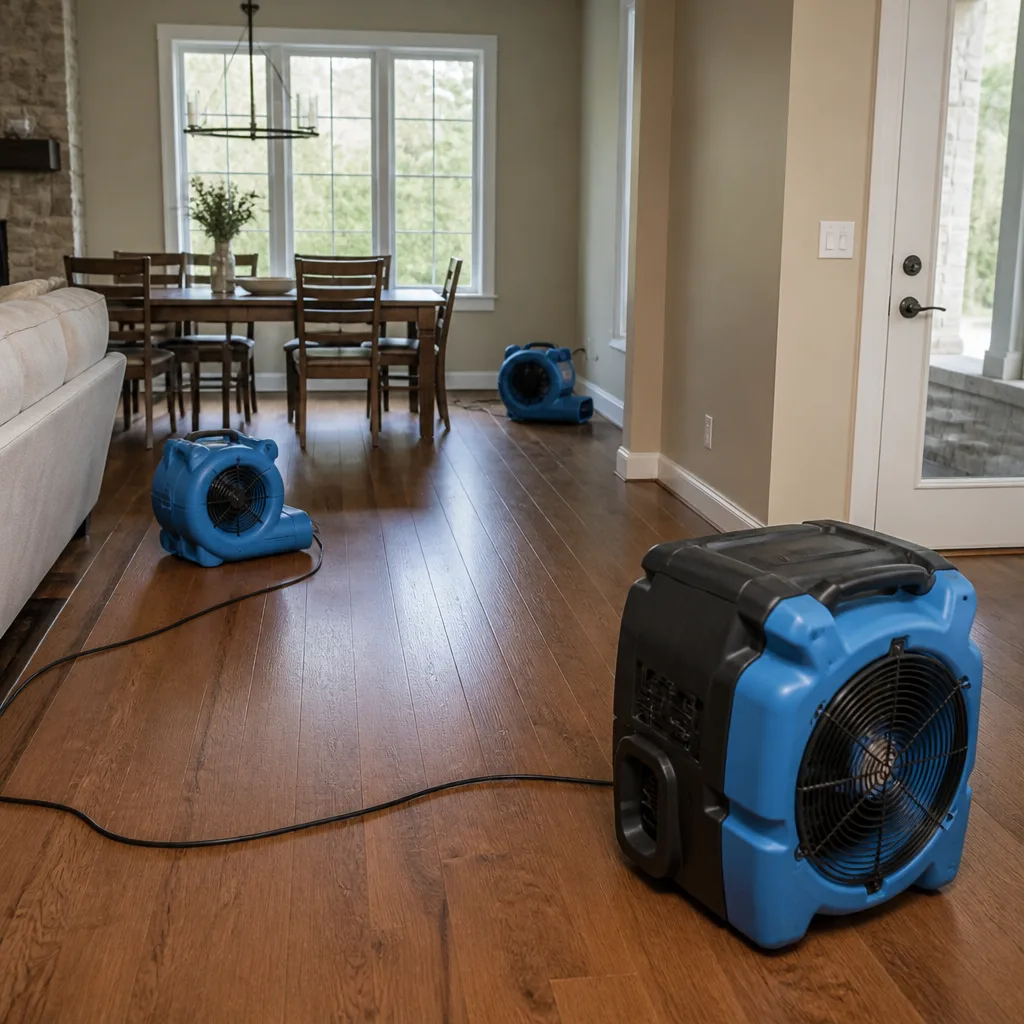
Riverside homeowners and property managers call us because we arrive with the same equipment the top-tier restoration firms use nationwide: Dri-Eaz, Phoenix, XPOWER, B-Air, and the Injectidry system. That last one matters a lot in Riverside’s older core, where 1920s and 1940s wood lath-and-plaster walls absorb water differently than modern drywall. Injectidry forces dry air directly into wall cavities and subfloors, letting us dry structural framing without tearing out original plaster. For a Spanish Colonial in the 92501 or 92503 zip codes, that’s the difference between a targeted repair and a gut-and-rebuild.
Our process is aligned with IICRC standards, the restoration industry’s globally recognized certification body. We maintain RIA and IFA affiliations as well, which means our technicians follow established, auditable protocols rather than improvised methods. When a Riverside homeowner asks whether we’ll document the loss for their adjuster, the answer is yes: photo documentation, moisture mapping, and a written scope agreed before we start work. That discipline matters when you’re dealing with an insurance claim on a 1930s citrus-era bungalow where the damage hides behind lath and stucco.
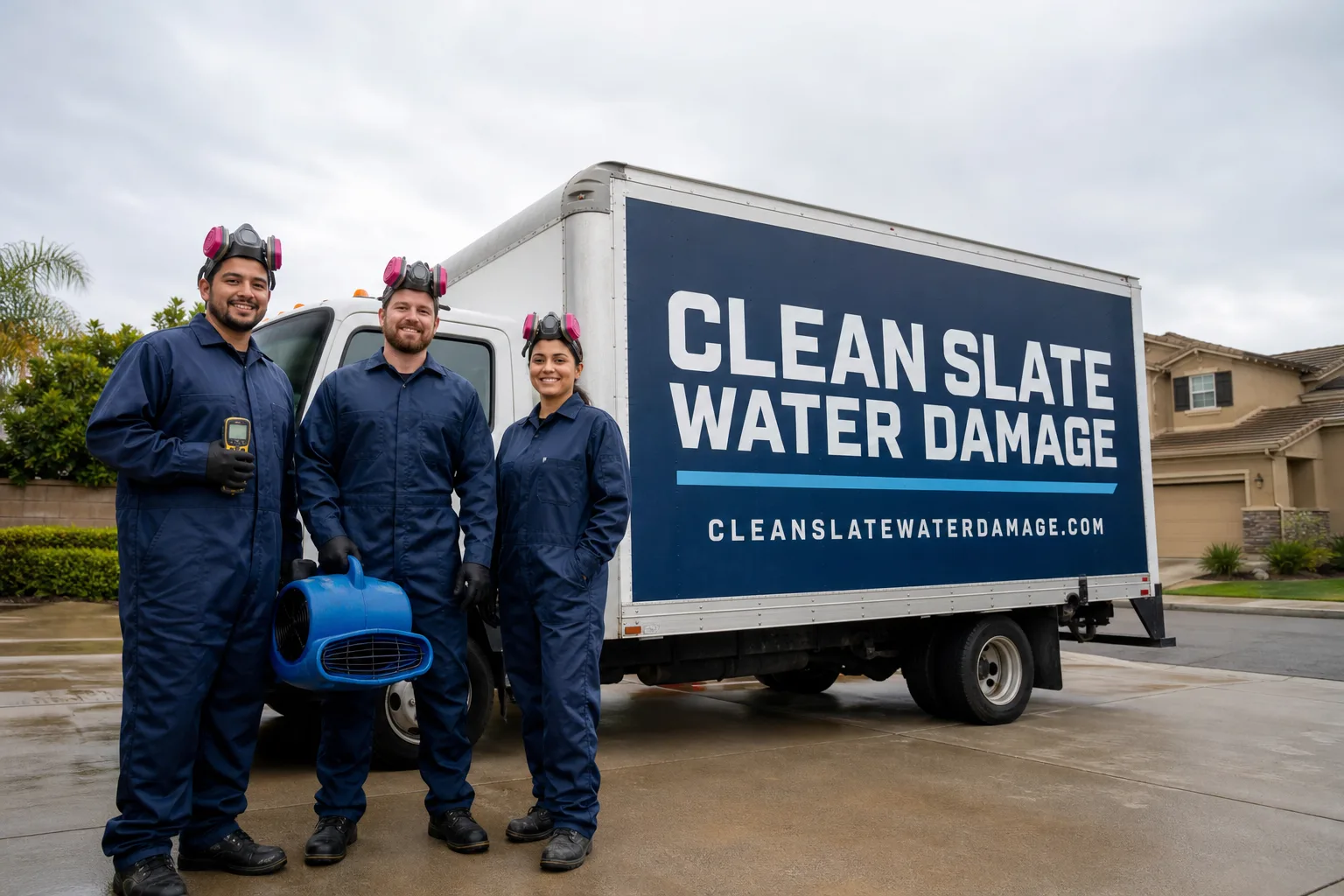
Noel Carrasco, who leads Clean Slate Water Damage, built the company around one outcome: restoring properties to pre-loss condition, not just drying out the obvious patches. That means we don’t stop when the carpet feels dry. We verify with moisture meters, we treat the hidden cavities, and we stand behind the work that returns your Riverside home to verified pre-loss condition.
We serve all of Riverside, from the citrus-era streets of the older core to the stucco-and-tile tracts in the eastern hills. Call (888) 508-8745 for a free estimate and a response that recognizes your home’s specific construction.
Restoration work we handle
Emergency Water Removal in Riverside
Emergency Water Removal in Riverside typically costs $1,200 – $3,400 depending on the affected square footage, the water category, and how long the intrusion has been sitting. We respond same-day, with a technician who should be at your door within 60 – 90 minutes of your call to most Riverside addresses. The job starts with extraction, then moves to containment and air movement. In Riverside’s older homes, that first extraction is critical: the longer water sits against lath-and-plaster or wicks behind stucco over sheathing, the deeper the structural damage climbs into the wall system. Our crew uses truck-mounted extraction and Dri-Eaz LGR dehumidifiers that pull moisture from materials, not just the air.
What We Pull Out First
Standing water gets extracted immediately; then our technicians map the moisture with meters and thermal imaging. In a Riverside bungalow, we’re looking specifically for water that’s traveled behind baseboards into the wall cavity, where old plaster absorbs it like a sponge. If the source was a burst galvanized line, the water is rarely clean: pinhole leaks in 1920s citrus-era plumbing often release Category 2 or Category 3 water from contaminated interior lines. That changes the remediation sequence and the antimicrobial treatment required.
Containment Before Drying
Once the standing water is out, containment goes up. This matters in Riverside’s older core, where homes sit shoulder-to-shoulder and cross-contamination from one room to the next happens fast. Injectidry panels let us direct dry air into the wall cavities themselves, so we don’t have to strip original plaster to reach the moisture behind it. That’s the non-invasive drying approach we use wherever the structure allows.
Flood Damage Restoration in Riverside
Flood Damage Restoration in Riverside starts with an honest assessment: floodwater is not tap water. In our area, a Santa Ana wind event followed by the first atmospheric river often means Category 3 water, the silt-and-sewage-saturated runoff that pushes through door thresholds and slab joints below burn-scarred slopes. We’ve seen it in the La Sierra and University neighborhoods after canyon brush fires on the east side. Our crews pre-stage desiccant dehumidifiers before the first rain because waiting for visible water means the mud has already set in door tracks and slab joints. Preparation is not an upsell; it’s the correct sequence for Riverside’s weather pattern.
The Silt Problem
Muddy floodwater carries contaminants and fine silt that ordinary extraction equipment can’t remove from door tracks, slab joints, and the gaps behind baseboards. We do a secondary cleaning pass after the bulk water is out, using antimicrobial treatment on exposed wood and subfloor surfaces. In Riverside’s older homes, that treatment often means the difference between drying and mold blooming inside the wall within 72 hours.
Drying the Unseen
The visible floor is only part of the problem. In a Riverside home with original wood lath-and-plaster walls, water wicks upward from a slab flood event, saturating the lath and the plaster coat behind it. Injectidry panels force dry air into those cavities without demolition, cutting the dry-out time and sparing original materials. That’s the non-invasive advantage a generalist contractor can’t offer, and it’s the reason we can return a flooded Riverside home to pre-loss condition without tearing out every wall we touch.
Trusted Brands We Service in Riverside
Riverside’s older homes often need specialized parts and equipment that don’t come from a big-box store, which is why we service and work with professional-grade systems from Dri-Eaz, Phoenix, XPOWER, B-Air, and Injectidry. Our technicians stock consumables and common replacement parts for these systems and can typically source OEM components for older Injectidry manifolds and Dri-Eaz dehumidifiers within 24 hours for our Riverside customers. Whether you need a drying equipment set-up on a 1920s Spanish Colonial or a full extraction deployment for a flooded basement in a mid-century tract home, we maintain what we use. One call to (888) 508-8745 puts a technician on the road.
Common Water Damage Restoration Problems We See in Riverside Homes
- Hidden water behind stucco over sheathing. In Riverside’s older core, stucco doesn’t stop water; it traps it. Moisture wicks behind the wall and hides until lath-and-plaster crumbles, so skipping invasive moisture readings leaves Category 2 or Category 3 water sitting inside the wall cavity. We meter every loss, not just the visible ones.
- Galvanized plumbing pinhole leaks. 1920s citrus-era bungalows in 92501 and 92503 often still carry original galvanized lines, and pinhole leaks release contaminated water from interior lines that’s traveled through decades of sediment and corrosion. Drying without antimicrobial treatment after one of these leaks risks mold within 24 to 48 hours.
- Burn-scar silt flooding. After a Santa Ana fire denudes the canyons above La Sierra and University neighborhoods, the first storm turns rain and ash into silt that forces through door thresholds and slab joints. Pre-staging desiccant dehumidifiers before that first rain is what separates a controlled dry-out from a tear-out.
- Wind-driven roof damage before the rain. Santa Ana winds strip tiles and jam debris into roof penetrations, so the water intrusion often starts before the storm does. By the time a Riverside homeowner sees the ceiling stain, water has already traveled inside the wall plane. We trace the path with moisture mapping, not just the visible stain.
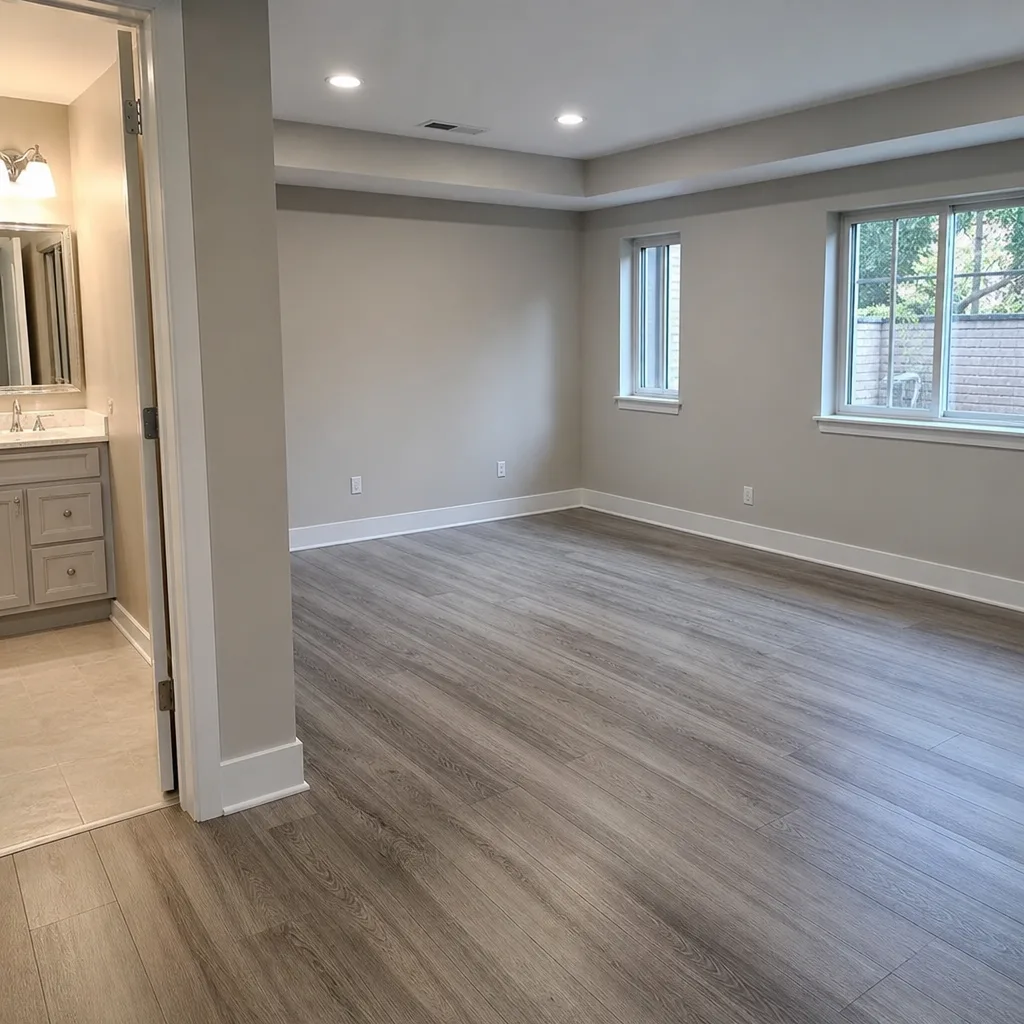
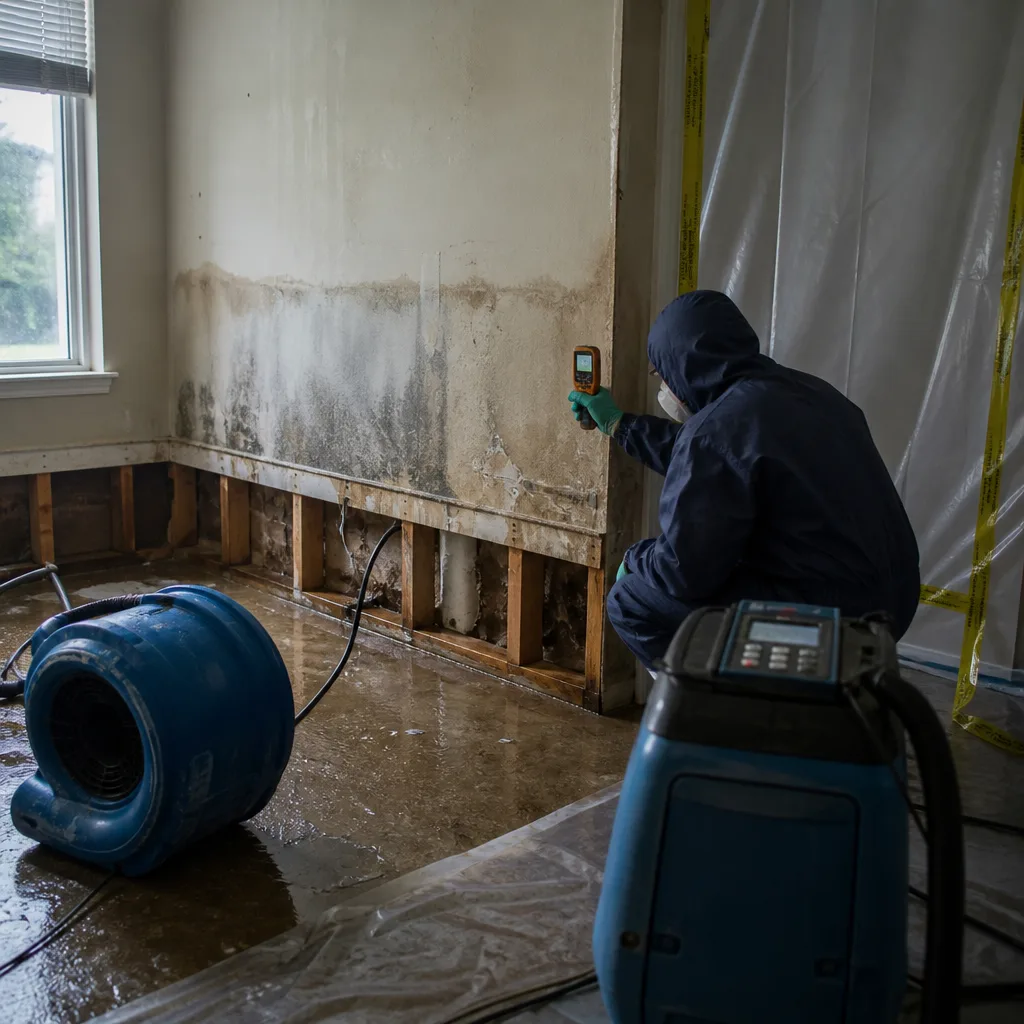
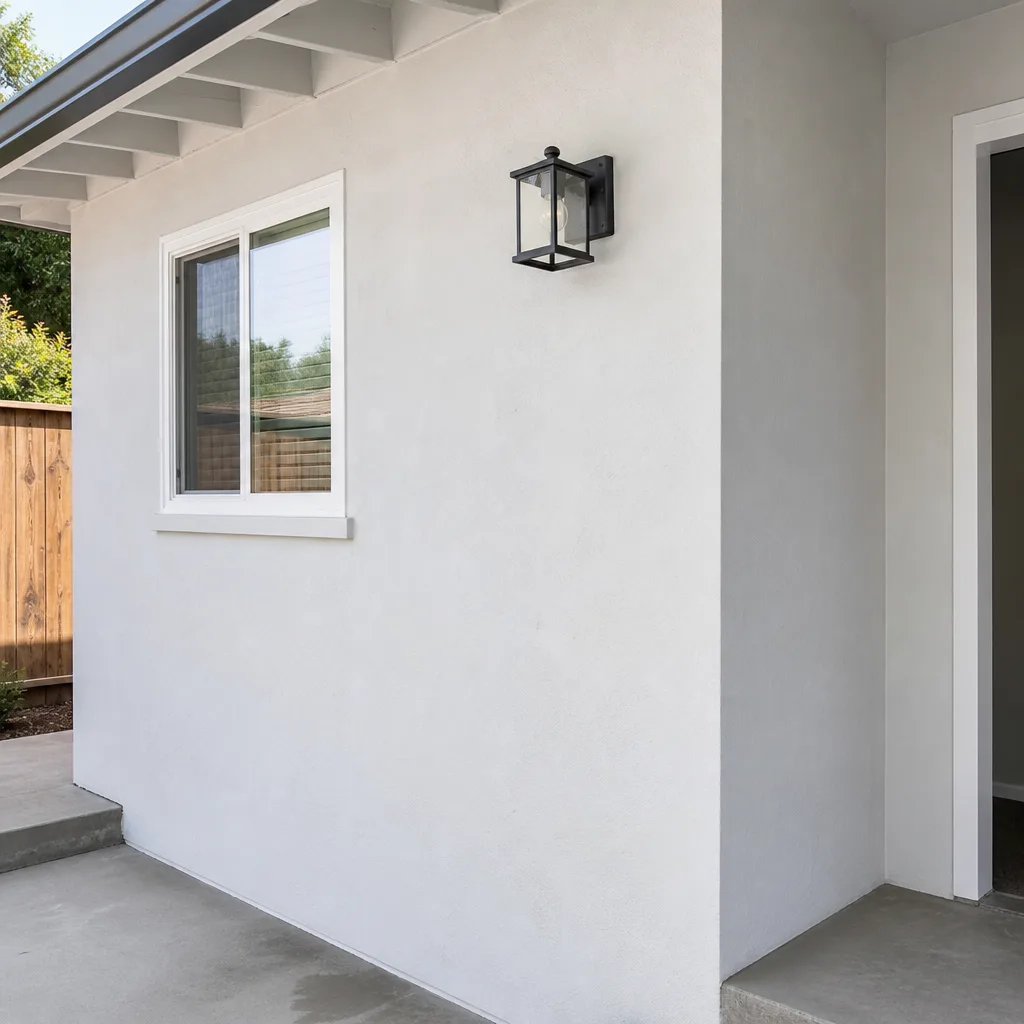
See the difference
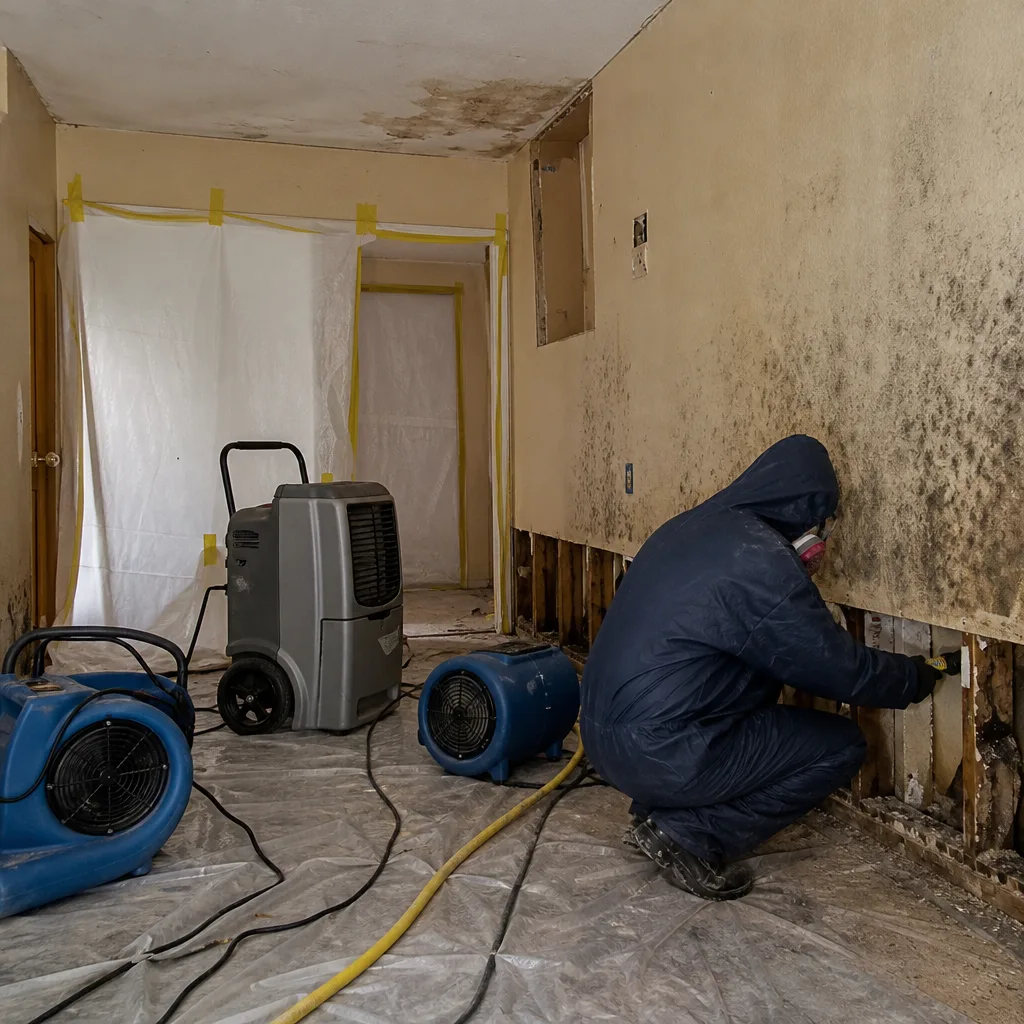 Before
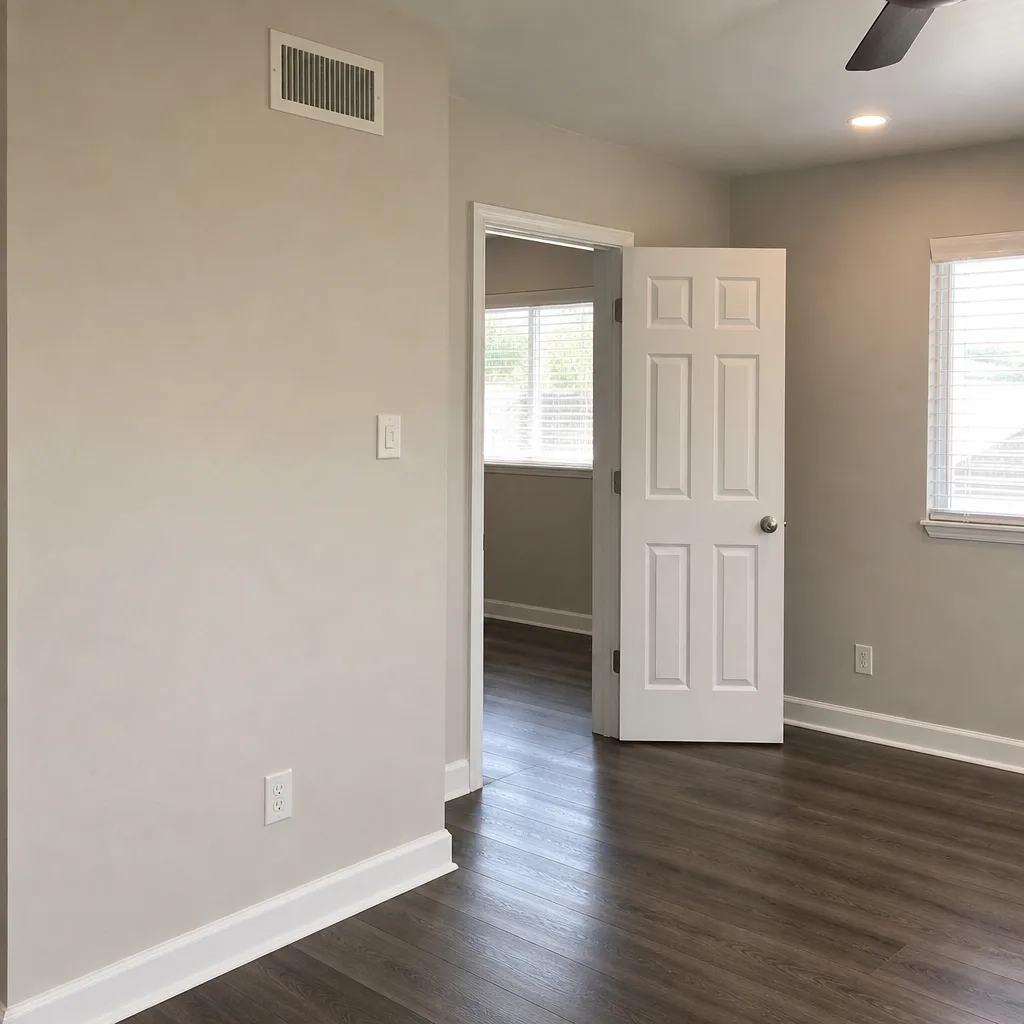 After
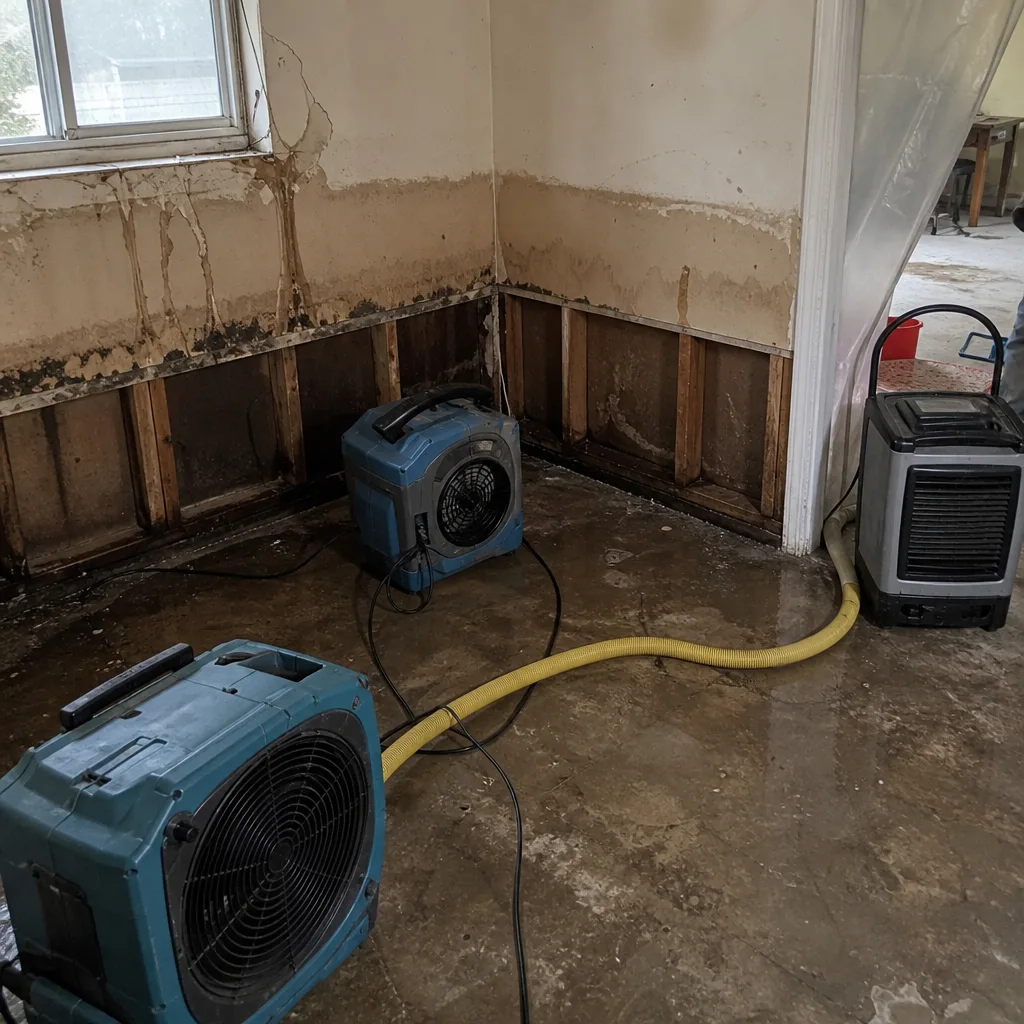 Before
 After
 Before
 After
Pricing for Water Damage Restoration in Riverside, CA
Water damage restoration in Riverside runs from about $1,200 for a contained Category 1 clean-water loss in a single room up to $4,800 or more for a Category 3 flood event involving multiple rooms, contaminated water, and structural drying. The main cost drivers are the water category, the square footage affected, the age and construction type of the home, and how long the water sat before extraction began. Older lath-and-plaster walls and stucco-over-sheathing construction tend to run higher than modern drywall because the drying work is more involved. We always provide a written scope with our estimate before work begins, and our photo documentation supports your insurance claim. Estimates are free: call (888) 508-8745.
We Also Serve Cities Near Riverside
Beyond Riverside proper, our crews respond daily to Rubidoux, Glen Avon, Pedley, and Sunnyslope, covering the same Santa Ana wind corridor and the same mixed housing stock: older bungalows, mid-century tracts, and newer stucco-and-tile construction. If you’re in one of these nearby communities and dealing with water intrusion, call (888) 508-8745. We’re also the team behind Water Damage Restoration across the region, and we bring the same equipment and IICRC-aligned process to every Water Damage Restoration in Riverside job we take.
Serving Riverside, CA — Our Local Coverage Area
We’re based in the Riverside area and know this community well. Use the map below to see our service coverage — if you’re nearby, we can almost certainly help.
FAQs About Water Damage Restoration in Riverside
We usually arrive at Riverside addresses within 60 to 90 minutes of your call during business hours. For after-hours emergencies, dispatch times can stretch slightly longer depending on which route we take through the 92514, 92515, 92516, or 92517 zip codes, but we run a live dispatch line at (888) 508-8745 and a technician will tell you the ETA before they hang up. We don’t send a salesperson first; we send a crew with extraction equipment.
In Riverside’s 1920s-40s citrus-era bungalows, the walls are typically wood lath with a thick plaster coat over it, and many still have original galvanized plumbing. Water soaks into the lath and wicks upward, often hiding behind baseboards and inside wall cavities where the moisture doesn’t register on the surface. Newer tract homes with drywall and PEX plumbing dry faster and show damage sooner. In older homes, the damage is often further along than it looks.
Call for a pre-storm assessment. After a canyon fire, the burn-scar slopes above La Sierra and University neighborhoods turn the first storm into silt and mud, and the time to stage desiccant dehumidifiers and check door thresholds and slab joints is before the water arrives, not after. If your roof already lost tiles to the wind, that assessment includes the roof plane, because the same damage that lets embers in will let rain in. Waiting for visible water in these situations usually means Category 3 damage already set into door tracks and subfloors.
Yes, and it’s a specific failure mode in Riverside’s older core. Stucco is not waterproof; it’s a moisture reservoir. When wind-driven rain hits a stucco wall, water can get behind the surface and wick through the sheathing into the wall cavity, where it stays trapped against the framing and lath. That’s why we use invasive moisture readings, not just visual inspection, on stucco homes. The surface can feel dry while the cavity behind it is saturated.
Category 1 is clean water, typically from a broken supply line or an overflowing sink. Category 3 is grossly contaminated water, which in a Riverside flood usually means runoff that has picked up silt, ash, sewage, or agricultural chemicals on its way down a burn-scar slope or across a flooded street. Category 3 water requires full containment, antimicrobial treatment, and removal of affected porous materials. Treating Category 3 as if it were clean water is the single most expensive mistake a Riverside homeowner can make, because the mold blooms aren’t visible until the wall is already compromised. Call (888) 508-8745 for an assessment, and we’ll tell you what you’re actually dealing with.
Call Clean Slate Water Damage for Riverside Water Damage Restoration
When water is inside your Riverside home, every hour makes the damage worse. Our crews are ready now with the equipment and the training to handle the worst our Santa Ana corridor and older housing stock can throw at a property. Call (888) 508-8745 for a free estimate and a response that starts with extraction, not excuses. We serve all of Riverside, from the 1920s bungalows of the older core to the stucco-and-tile tracts in the eastern hills, and we’re ready to bring your home back to pre-loss condition.
Written by Noel Carrasco, Owner at Clean Slate Water Damage, serving Riverside and the surrounding communities.