
Dri-Eaz Water Damage Restoration in Pomona: A Homeowner’s Guide
A box-store dehumidifier pulls moisture from the air. A Dri-Eaz LGR dehumidifier pulls moisture from the structure. They are not the same machine, and the difference determines whether your floor joists fully dry or quietly rot for the next three years. If you’ve got water in your Pomona home right now, here’s what you actually need to know about the equipment that will run in your house for three to five days: what it does, why it costs what it costs, and how to tell if you’re getting a real restoration or an expensive approximation of one.
If you’d rather skip the technical read and just hand the problem to someone who runs this equipment daily, call (888) 508-8745 and we’ll walk you through what your Pomona property needs.
Why the Equipment in Your Living Room Actually Matters
Here’s the thing most Pomona homeowners don’t realize: water damage restoration has no licensing requirement for dehumidifiers. Any contractor can rent a few consumer units from a hardware store, park them in your wet room, and call it mitigation. The machines will hum. The floor will feel dry at the surface. And three months later, your subfloor smells like a damp basement because the moisture never left the joists.
Professional water damage restoration in Pomona is a structural drying process. The goal is not to make the air less humid. The goal is to extract bound water from building materials: drywall, hardwood, subfloor plywood, sill plates, and stud cavities. That takes professional-grade equipment with a specific drying capacity, measured in pints per day at AHAM conditions. A rental dehumidifier pulls 20 to 30 pints per day. A single Dri-Eaz LGR 3500i pulls 130 pints at saturation and close to 80 pints even in cool, dry conditions. That gap is not a marketing detail. It is the difference between drying a wall cavity in 72 hours and never drying it at all.
When we arrive at a Pomona water loss, we’re running a calculation based on the Clean Slate Water Damage home process: how many cubic feet of affected air, how many gallons absorbed into materials, what class of water damage we’re dealing with, and what the ambient conditions are out in the garage and under the crawlspace. That calculation tells us how many units you need and where they go. The machines do the rest, but they only work if they’re the right machines in the right count in the right rooms.
What LGR Technology Actually Does at the Structural Level
LGR stands for Low Grain Refrigerant. “Grain” is the old-school humidity measurement (7,000 grains equals one pound of water). An LGR dehumidifier uses a refrigerant system tuned to keep pulling moisture out of air that is already fairly dry, which lets it continue removing water from materials after a conventional dehumidifier has plateaued and stopped being useful.
Think of it this way: a standard dehumidifier drops the room to 50 to 55 percent relative humidity and calls it done. But the wood inside your wall is still at 20 percent moisture content. The water tries to equalize. It moves from the wet material into the drier air, and the dehumidifier has to keep removing it in a continuous cycle. A conventional machine loses efficiency as the air dries out. An LGR machine keeps working down to a much lower humidity threshold, which means it keeps pulling water out of the studs for the full drying cycle instead of quitting halfway.
In our experience with water damage in Pomona, the typical home built in the 1950s and 1960s has old-growth lumber in the framing. That old-growth Douglas fir is denser than modern kiln-dried studs, and it holds water longer. An LGR unit paired with proper drying calculations gives that lumber the time and draw it needs. A rental machine gives it a head start and then walks away. The result is a house that feels dry in July and smells like a problem by December.
Why Pomona’s Heat Changes the Drying Equation
Pomona sits in the San Gabriel Valley’s inland heat zone. Summer days regularly run into the 90s, and homes without central air or with older AC systems create hot, humid pockets inside wall cavities and attics where water vapor collects. Heat accelerates evaporation, but it also accelerates mold growth: above 80 degrees, mold colonies double fast enough to become a structural health issue in 48 to 72 hours. A professional drying plan in Pomona has to manage that tension between fast evaporation and controlled humidity removal, and it has to account for the temperature inside the wall, not just the temperature of the living room.
Equipment selection matters here. We run Dri-Eaz LGR dehumidifiers in Pomona homes partly because they maintain drying performance in warmer interior conditions that cause conventional dehumidifiers to ice up or shut down. The LGR refrigerant system handles high-heat loads better, and when paired with high-velocity air movers, it creates the evaporation-to-extraction cycle that pulls moisture out of building materials instead of just pushing it around the room.
One thing we tell every Pomona homeowner during active drying: if the contractor is not taking moisture readings from inside the wall or under the flooring, they are guessing. Moisture meters with insulated pins read deep into the material. If those numbers are not being recorded every day and shown to you, ask why. The drying plan should produce a daily rhythm: numbers come down, equipment gets repositioned, and by day three or four, you should see a clear trend toward pre-loss moisture levels.
What You Should See, Hear, and Be Told During Active Drying
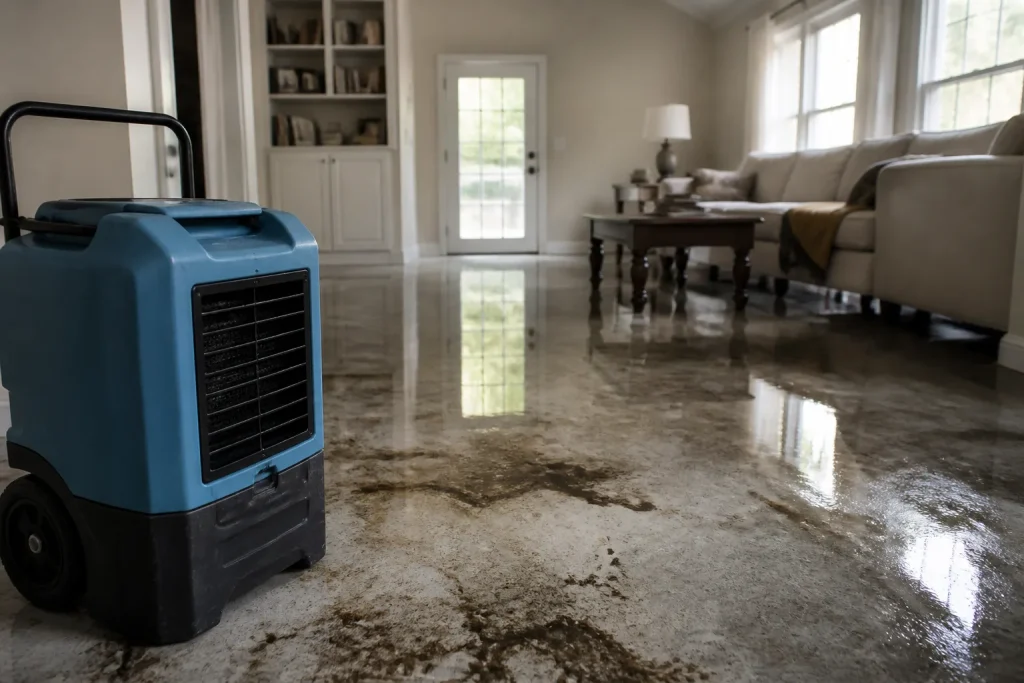
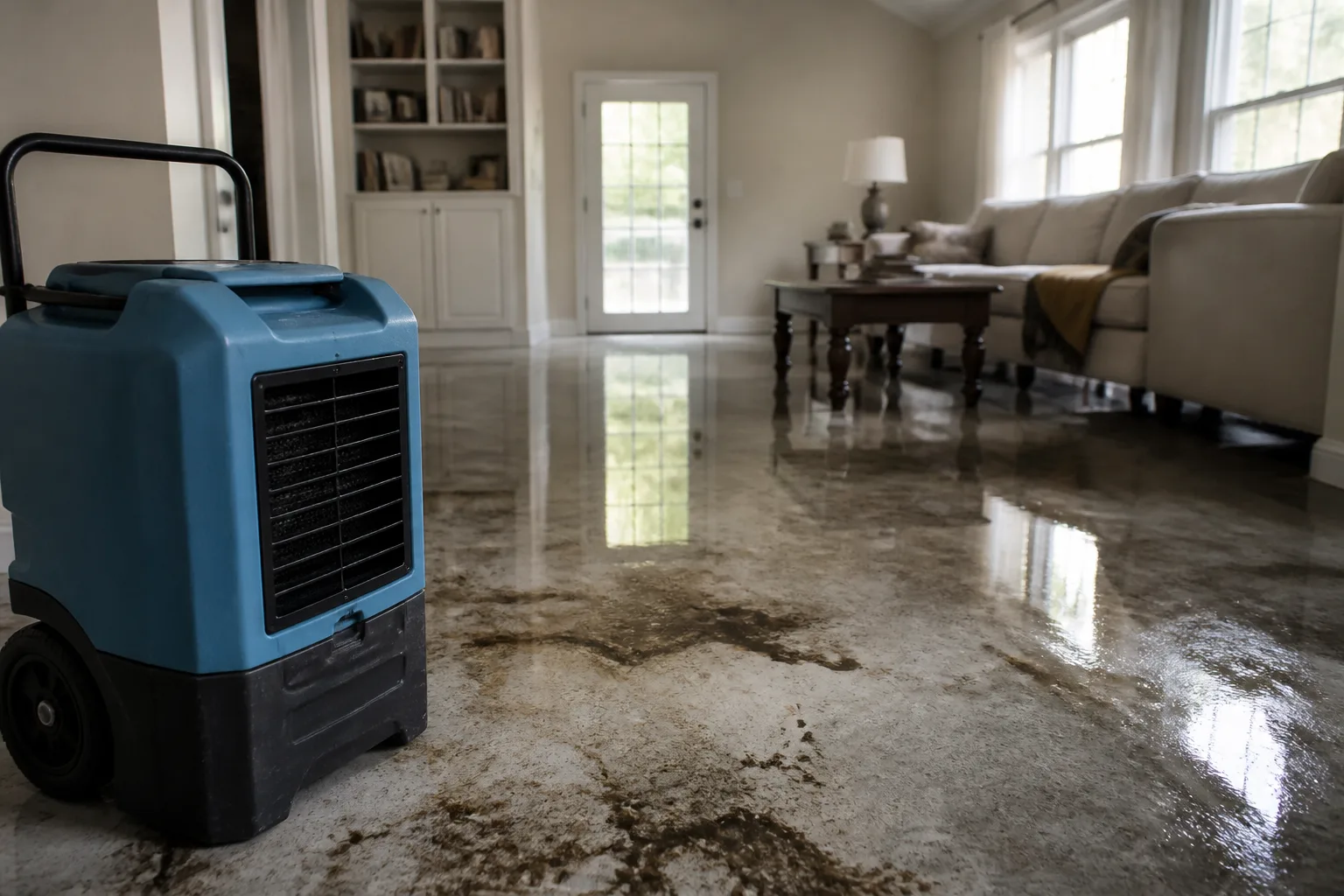
Active structural drying is loud. There is no way around that. A Dri-Eaz LGR unit in your hallway sounds like a window air conditioner running at full speed. Air movers sound like strong fans. The combination is intrusive, and a homeowner should expect that. What you should not accept is equipment that is doing nothing visible while the contractor tells you it’s “working.” Here’s what a professional drying setup in a Pomona home should look and sound like:
- Air movers are aimed at wet surfaces. Not just placed in the room. They should blow across the wet drywall, across the wet carpet, or into the affected wall cavity from a controlled opening.
- Dehumidifiers are running and draining. You should see water moving through a drain tube or hear the unit cycling. If the dehumidifier has been running for two days and the collection bucket is dry, something is wrong.
- Daily moisture readings are taken and logged. This is where Dri-Eaz data logging comes in. Higher-end units record temperature, humidity, and grain depression over time. That log protects both parties: the homeowner can see the drying curve, and the contractor can prove the structure reached target moisture levels before the equipment was pulled.
We pulled one out of a garage over in Phillips Ranch last month where a water heater had let go into a shared wall with the laundry room. The homeowner had called us after a generalist handyman ran a box fan and a small dehumidifier for a week. The drywall still read 24 percent moisture content in the wall cavity. We opened two small ports, put a Dri-Eaz LGR and a few air movers on it, and had that wall below 12 percent in three days. It is not magic. It is just equipment that is actually designed for the job.
The Equipment Audit Question: How to Verify You’re Getting a Real Restoration
When you call a water damage restoration company in Pomona, you have a right to ask what equipment they are deploying, how many units, and how they calculated the count. A credible answer sounds specific. It references the class of water damage, the square footage of the affected area, and the pint-capacity of the dehumidifiers being used. A vague answer sounds like “we’ll bring some fans and dehumidifiers.”
Here is the question to ask: “What make and model dehumidifier are you putting in my home, and how many pints per day does it pull at AHAM?” A company running Dri-Eaz, Phoenix, or XPOWER units will answer immediately. Those are professional brands with published performance specs, and anyone who owns them knows the numbers. A company that hesitates, deflects, or says “commercial-grade” without naming a brand is likely renting retail equipment, and you should treat that as a red flag.
We run a full professional fleet in Pomona: Dri-Eaz LGR dehumidifiers, Phoenix axial air movers, XPOWER high-volume fans, B-Air units where the drying plan calls for them, and the Injectidry system for non-invasive structural drying. The Injectidry panel forces dry air directly into wall cavities and subfloors through small, controlled ports, which lets us dry the inside of the structure without tearing out drywall or flooring. That technique is not available to most generalist contractors in Pomona, and it changes the math on rebuild costs: less demolition means less reconstruction, which means less time out of your home and less total cost to your insurance carrier.
When to call a pro: if the water touched drywall, flooring, or reached a wall cavity, you are not dealing with a mop-and-bucket loss. You are dealing with a structural drying job. The clock on mold growth starts the moment the water stops flowing, and in Pomona’s inland heat, that clock moves faster than you want it to.
Related services in Pomona: Water Damage Restoration in Pomona for active water losses and structural drying. If the moisture has been sitting long enough to smell musty, see Mold Remediation in Pomona. And if the source was a fire suppression effort rather than a plumbing failure, Fire Damage Restoration in Pomona covers the full water-plus-smoke cycle.
The Bottom Line
Dri-Eaz equipment matters because structural drying is a physics problem, not a cleaning problem. The right dehumidifier, sized and placed according to IICRC S500 drying calculations, pulls bound water out of studs, joists, and subfloors. A rental unit pulls humidity out of the room and leaves the structure wet. In Pomona’s hot inland climate, that difference shows up weeks later as musty smells, warped flooring, and hidden mold growth behind baseboards.
If you are facing water damage in Pomona, the best move is to ask the right questions before you sign anything: what equipment is going into your home, what are the daily moisture readings, and when do they prove the structure is dry. If you do not like the answers, call someone else.
If you need a team that runs professional-grade Dri-Eaz and Injectidry equipment with an IICRC-aligned process, Clean Slate Water Damage offers free estimates for Pomona homeowners. Call (888) 508-8745 and we will tell you exactly what your home needs, in writing, before any work begins.
Frequently Asked Questions
Dri-Eaz LGR dehumidifiers use Low Grain Refrigerant technology that continues extracting moisture from air that is already very dry. Rental units plateau around 50 to 55 percent relative humidity, while an LGR keeps pulling water out of structural materials like drywall, studs, and subfloor plywood down to the low 30s. That extended draw is what actually dries the structure, not just the room air.
Most water damage losses in Pomona dry in three to five days when the right equipment is properly sized and placed. Older Pomona homes with dense old-growth framing may take a day or two longer. Daily moisture readings should show a steady downward trend, and a drying log should show the structure reaching target moisture levels before equipment is removed. If a contractor cannot show you those readings, question the process.
Most homeowners insurance policies cover water damage restoration including professional drying equipment when the loss is sudden and accidental, such as a burst pipe or appliance failure. Your adjuster will want documentation of moisture readings and drying progress. A contractor who provides photo documentation and a drying log makes that claim process smoother. Slow leaks that have been ongoing for months may fall under different policy language. Call (888) 508-8745 if you need help navigating what your Pomona loss means for your coverage.
Keep the equipment running 24 hours a day, even if it is loud, hot, and inconvenient. Turning off dehumidifiers or air movers at night sets the drying curve back and can extend the process by days. Expect noise, expect heat from the machines, and expect daily visits from your restoration team to take readings and reposition equipment. If nobody returns to take moisture readings after day one, call them and ask for the drying log.
Written by the team at Clean Slate Water Damage, serving Pomona since 2018.
Need Damage Restoration Help?
Call Clean Slate Water Damage — licensed & insured, here with fast after-hours help in Upland.
(888) 508-8745