Last updated October 31, 2026
 Water damage drying
 Fire & smoke cleanup
 Mold remediation
 Storm response
 Sewage cleanup
 Reconstruction
Free visual inspection and a written scope of work before any mitigation begins - photos, moisture readings, and drying logs go in your claim file
The scope we write is the scope we bill. Anything new gets shown to you, in writing, before we touch it.
Get your free estimateDamage Restoration Cost Breakdown: The Pomona Homeowner’s Reference for 2026
Most Pomona homeowners don’t get overcharged on restoration because a contractor’s rates are high. They get overcharged by accepting a scope of work that’s too narrow, too shallow, or built on guesswork rather than measurement. The damage gets “fixed,” the invoice gets paid, and six months later the odor returns, the drywall swells, or the floor buckles because moisture was still moving through the structure. This guide exists to change that equation. We’re going to walk through exactly how restoration costs are calculated in Pomona in 2026, what drives prices up or down, how insurance adjusters think, and the line items you should expect to see on any legitimate bid. By the time you finish, you’ll know more about restoration pricing than most contractors who claim to do this work.
Quick Answer
Water damage restoration in Pomona typically runs $3.50 to $8.00 per square foot for clean-water mitigation, $6.00 to $12.00 per square foot once contaminated water or mold rears its head, and fire damage restoration starts around $8.00 per square foot and climbs based on structural charring and smoke penetration. Most full projects land between $2,800 and $14,000 for a single room, with whole-home events running $25,000 to $75,000 or more. The single biggest cost variable is the IICRC damage category, which determines how much material gets removed and what safety protocols apply.
Restoration work we handle
Table of Contents
- How the IICRC Damage Category System Multiplies Your Cost
- Equipment Costs, Line by Line: What Each Machine Costs Per Day
- Material Replacement Benchmarks for Pomona in 2026
- How Insurance Adjusters Calculate What You’re Owed
- The Hidden Costs That Inflate Final Invoices
- How to Evaluate a Scope of Work Without Being an Expert
- Water, Mold, and Fire: Three Different Cost Structures
- How Restoration Timelines Affect Your Final Bill
How the IICRC Damage Category System Multiplies Your Cost
The IICRC defines water damage in three categories, and these categories are the single largest cost driver in any restoration project. A contractor who doesn’t reference categories in their bid is either pricing blind or hoping you won’t ask. Let’s break each one down.
Category 1 (Clean Water) comes from a supply line, a broken faucet, or a water heater that leaked clean municipal water. This is the cheapest to mitigate because the water itself carries no harmful bacteria at the source. Drying can often proceed without removing drywall, provided the water hasn’t sat for more than 48 hours. In Pomona homes built in the 1950s and 1960s, we regularly see Category 1 leaks that sat longer than homeowners realized, which means the category shifts.
Category 2 (Gray Water) contains significant contamination: washing machine overflow, dishwasher discharge, or sump pump failures. This water carries bacteria and requires more aggressive removal. Drywall below the water line is typically cut and removed, flooring gets pulled, and the affected area needs antimicrobial treatment before drying equipment goes in. Labor costs jump 30 to 50 percent over Category 1 because of the extra containment and disposal work.
Category 3 (Black Water) is sewage or flood water from outside. This is the most expensive category because everything it touches is considered contaminated: drywall, insulation, carpet, pad, baseboards, and often lower cabinets. Pomona homes in the areas near San Jose Creek or the Phillips Ranch foothills are more likely to experience Category 3 intrusion during heavy rain events. The cost multiplies because of personal protective equipment requirements, containment barriers, hazardous waste disposal fees, and the fact that demolition goes deeper and faster. A Category 3 project can easily run 2.5 to 4 times the cost of a Category 1 project of identical square footage.
Here’s what that looks like in practice for a 20-by-20-foot living room (400 sq ft):
- Category 1 mitigation only: $600 to $1,100 (no demolition, dry-in-place approach)
- Category 2 mitigation with partial demolition: $1,800 to $3,200
- Category 3 mitigation with full demolition and disposal: $4,000 to $8,500
We work in alignment with IICRC standards on every project, which means the category determination happens before any equipment gets placed, not after the invoice gets written.
Equipment Costs, Line by Line: What Each Machine Costs Per Day
Restoration companies don’t own dehumidifiers the way a homeowner owns a box fan. Commercial-grade drying systems are expensive to buy, maintain, and run, and restoration pricing reflects that. Here’s what you should expect to see on an equipment line item for a Pomona water damage job.
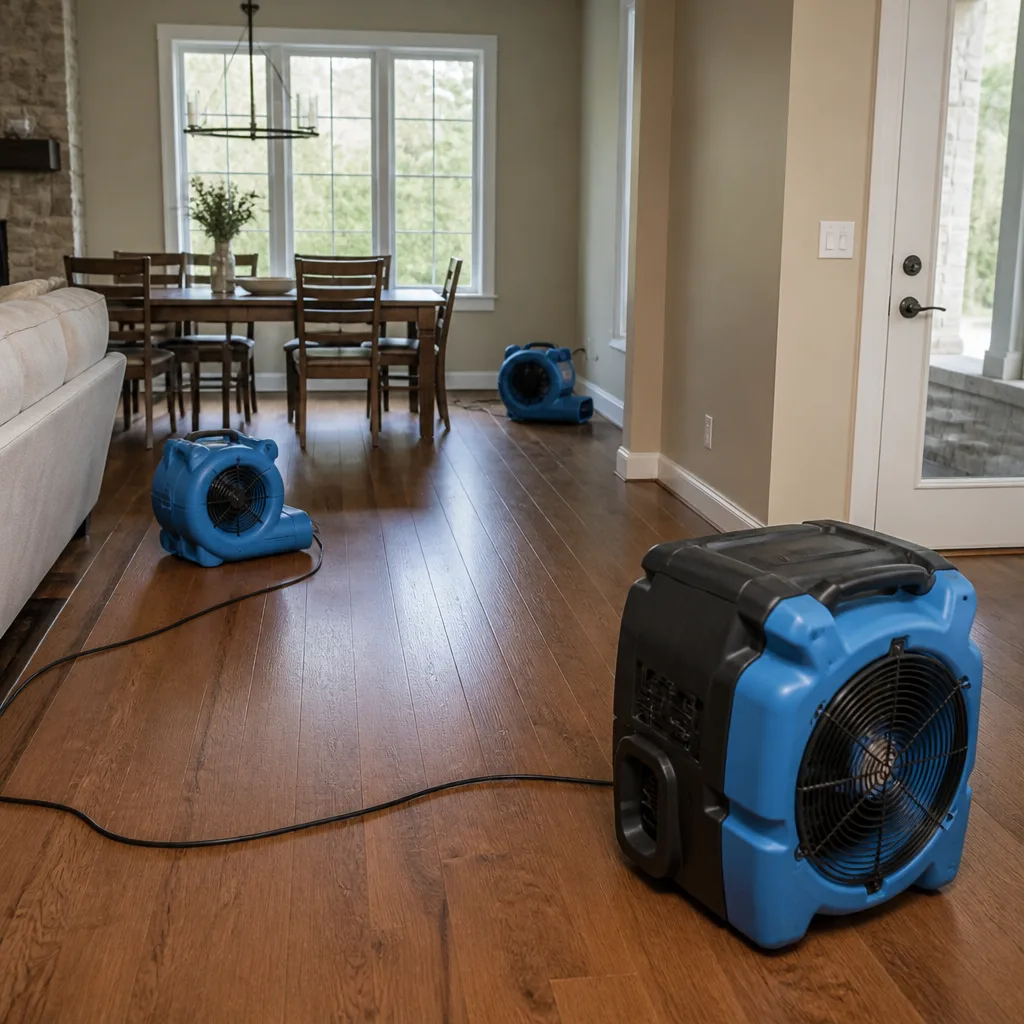
Low-Grain Refrigerant (LGR) Dehumidifiers pull moisture from the air at a rate that consumer units can’t touch. A Dri-Eaz LGR unit typically bills at $75 to $150 per day. A 400-square-foot affected area usually requires one unit. Larger spaces or multiple affected rooms need two or three. If the project runs five days, that’s $375 to $2,250 in dehumidification alone.
High-Velocity Air Movers create the airflow that drives evaporation from wet surfaces. B-Air and XPOWER models are workhorses in this category, and each unit typically bills at $30 to $50 per day. Industry standard is roughly one air mover per 50 to 75 square feet of affected material. That 400-square-foot room means six to eight air movers, or $180 to $400 per day.
Moisture Meters and Thermal Imaging are diagnostic tools, not rental equipment, but their use is usually included in a monitoring fee. Expect $75 to $150 per monitoring visit. A proper drying project includes daily monitoring: measurement readings, humidity checks, and documentation. Three to five monitoring visits is standard for a moderate Category 2 job.
The Water Damage Restoration in Pomona process we run uses Dri-Eaz, Phoenix, XPOWER, and B-Air equipment, with daily moisture documentation. One piece of equipment that changes the math is the Injectidry system, which forces dry air directly into wall cavities and subfloors through a manifold and hose network. This non-invasive drying approach can cut the project duration by days and reduce the square footage of drywall that has to be cut out. Injectidry panels typically bill at $50 to $100 per day, but the savings they create on the demolition and rebuild side usually wipe out that cost several times over.
Here’s a sample equipment-only cost for a moderate Category 2 kitchen flood in Pomona, roughly 300 square feet affected over five days:
- 2 LGR dehumidifiers x 5 days: $750 to $1,500
- 6 air movers x 5 days: $900 to $1,500
- Injectidry panel system x 3 days: $150 to $300
- Monitoring visits x 4: $300 to $600
- Total equipment range: $2,100 to $3,900
When a bid shows a single line item like “equipment setup” with no breakdown, ask for the unit counts and daily rates. Contractors who run professional-grade systems have no reason to hide the math.
Material Replacement Benchmarks for Pomona in 2026
Drying is the mitigation phase. Replacement is the reconstruction phase, and this is where prices in Pomona have shifted most noticeably over the last three years. Material costs fluctuate with supply chains, labor in Southern California remains competitive, and drywall sub-contractors in the Inland Empire have been booked out in the aftermath of recent storm cycles.
Drywall removal and replacement, including texture matching and paint-ready finish, runs $2.75 to $4.25 per square foot in Pomona in 2026. That figure includes hanging, taping, texturing, and disposal. For context, a 12-foot by 8-foot wall (96 square feet) is $264 to $408. If the ceiling is involved, add 25 to 40 percent for the extra labor and ladder work.
Insulation replacement in walls or attics runs $1.50 to $3.00 per square foot, depending on whether it’s fiberglass batts or blown-in. If water soaked the insulation, it stays wet for days after the drywall dries, which is exactly why proper restoration includes checking the cavity, not just the surface.
Flooring is the widest range. Carpet and pad removal and replacement runs $4 to $8 per square foot in Pomona. Luxury vinyl plank (LVP) runs $6 to $12 per square foot installed. Hardwood flooring, if it can be salvaged, often costs more to dry and refinish than to replace: expect $8 to $15 per square foot for either path. But Pomona’s older housing stock often means original oak floors, and those are worth drying when possible. The Injectidry system excels here: it can pull moisture through the subfloor from below, avoiding the need to pull up and discard hardwood that could be restored.
Cabinetry is the quiet budget-breaker. Lower kitchen or bathroom cabinets hit by water swell at the seams, and particle-board boxes are almost always a loss. RTA (ready-to-assemble) replacement cabinets run $150 to $300 per linear foot installed. Semi-custom cabinets run $350 to $800 per linear foot. If the cabinet faces are intact but the boxes are wet, a skilled restoration firm can sometimes dry the boxes using Injectidry and save the investment in new cabinetry.
Here’s a reconstruction cost snapshot for a Category 2 kitchen flood affecting one wall of cabinets, 250 square feet of drywall, and 200 square feet of LVP flooring in Pomona:
- Drywall removal and replacement: $690 to $1,060
- Baseboard and trim: $120 to $250
- LVP flooring replacement: $1,200 to $2,400
- Lower cabinets (12 linear feet, RTA): $1,800 to $3,600
- Disposal and debris hauling: $250 to $600
- Total reconstruction: $4,060 to $7,910
That’s on top of mitigation. When homeowners ask why a “simple leak” becomes a five-figure project, this is the answer: the water stopped being simple when it crossed from mitigation into reconstruction.
How Insurance Adjusters Calculate What You’re Owed
Insurance companies pay claims using two different valuation methods, and Pomona homeowners routinely leave thousands of dollars on the table by not understanding the difference.
Actual Cash Value (ACV) is replacement cost minus depreciation. If your carpet is eight years old and carpet has a 10-year life expectancy, the adjuster awards 20 percent of the replacement cost. This is the default on many policies, and it’s a fraction of what the same floor costs to buy and install today.
Replacement Cost Value (RCV) is what it costs to replace the item with new materials of similar quality, with no depreciation deduction. This is what you want in your policy, and it’s worth checking right now, before anything happens. The difference on a single kitchen loss can be $6,000 to $15,000.
Where homeowners leave money on the table: adjusters write initial estimates based on what they can see in photos or a quick walkthrough. They miss what’s beneath the surface. A proper restoration estimate includes moisture readings inside wall cavities, thermal imaging evidence of hidden water migration, and documentation of secondary damage to framing or subflooring. We produce photo-documented assessments on every Pomona project for exactly this reason: the insurance carrier has to respond to evidence, not assertion.
There’s also the matching provision question. In California, if the damaged flooring or cabinetry can’t be matched to the existing adjacent materials, some policies (and some adjusters) will cover replacement of the entire continuous area. That’s a conversation worth having with your adjuster and a restoration firm that’s prepared to document the mismatched materials.
One more point on insurance: restoration bids should be written in the same software language adjusters use (Xactimate, Symbility) so that line items match line items. When a Pomona contractor writes an estimate in Xactimate and we’re performing the work IICRC-aligned, the adjuster’s approval process gets dramatically smoother. When a bid arrives on a handwritten invoice with no scope detail, the adjuster has every excuse to reject it.
The Hidden Costs That Inflate Final Invoices
Every Pomona homeowner should know these five line items before they sign a work authorization. These aren’t scams, but they’re costs that a cleaner process can often reduce or eliminate, and they’re the items that most often surprise people at the end.
1. Contents Pack-Out and Storage. If your living room needs six air movers and two dehumidifiers running for five days, where does the furniture go? If it stays in the room, it blocks airflow and slows drying. If it moves to a storage pod, that’s $500 to $2,000 for packing, transportation, and monthly storage. A restoration firm that moves contents carefully and documents everything is worth the money; a firm that leaves your couch in the affected room is cutting the drying budget at your expense.
2. Mold Clearance Testing. After mold remediation, the work should be verified by a third-party testing company that takes air samples and surface samples. This is separate from the remediation contractor in most ethical setups, and it costs $400 to $900 per event. It’s worth every dollar, because it protects you from a remediation that looked complete but wasn’t. The Mold Remediation in Pomona process is only finished when clearance testing confirms spore counts have returned to background levels.
3. Permit Fees. Pomona requires permits for some reconstruction work, especially when electrical, plumbing, or structural framing is involved. Permit fees range from $150 to $1,200 depending on the scope. A legitimate restoration firm pulls permits when required. A firm that says “we don’t need permits for this” on a structural job is either wrong or cutting corners, and that corner falls on you when you sell the house.
4. Temporary Housing and Living Expenses. If the kitchen is out of service for three weeks and the family is eating takeout every night, that’s a real cost. Many insurance policies include loss-of-use coverage, but homeowners have to document it and ask for it. Keep every receipt. The adjuster can’t reimburse what you didn’t record.
5. Secondary Water Damage to Structure. This is the hidden cost that grows while everyone waits. Water that entered the wall cavity but wasn’t found during the initial scope will keep wicking through framing, causing dry rot, rust on fasteners, and eventual structural degradation. It’s the most expensive hidden cost because it’s invisible during the estimate phase. The only defense is thorough moisture mapping with meters and thermal imaging before the drying plan is finalized.
How to Evaluate a Scope of Work Without Being an Expert
You can’t become a restoration estimator in one afternoon, but you can spot whether a scope is credible by looking for a few specific things. Here’s a numbered checklist—along with our Damage Restoration Emergency Preparedness Guide for Pomona Homes—we walk homeowners through when they’re comparing bids.
- Look for the damage category. The scope should say “Category 1,” “Category 2,” or “Category 3” and describe why. No category on the bid is an immediate red flag.
- Look for equipment counts, not just “equipment.” A legitimate scope lists “2 LGR dehumidifiers, 6 air movers, 1 Injectidry panel system” along with daily rates and estimated days on site.
- Look for the moisture map. The scope should reference specific areas that tested wet: “east wall cavity, 8 linear feet at 40% moisture content,” not “some walls were damp.”
- Look for the end point. Every scope should include the drying goal: “dry to within 4 percent of unaffected materials” or “clearance testing performed by third party.” If the scope is open-ended, the invoice will be too.
- Look for the demolition boundary. A professional scope says exactly what gets removed and what stays. If it says “remove as needed,” you’ve just signed a blank check.
- Look for rebuild authority. Does the firm handle reconstruction, or do they dry and walk away, leaving you to find a general contractor? Either model works, but you should know which one you’re buying before you sign.
The right question to ask is not “what’s your price” but “walk me through this scope and explain why each line item is here.” A restoration firm that can’t or won’t explain its own scope is telling you something useful.
Water, Mold, and Fire: Three Different Cost Structures
These three damage types get lumped together under “restoration,” but they have fundamentally different cost architecture.
Water damage is dominated by drying equipment costs and flooring/drywall replacement. The project usually has a compressed timeline: five to seven days of drying, then reconstruction. Costs concentrate in the first two weeks.
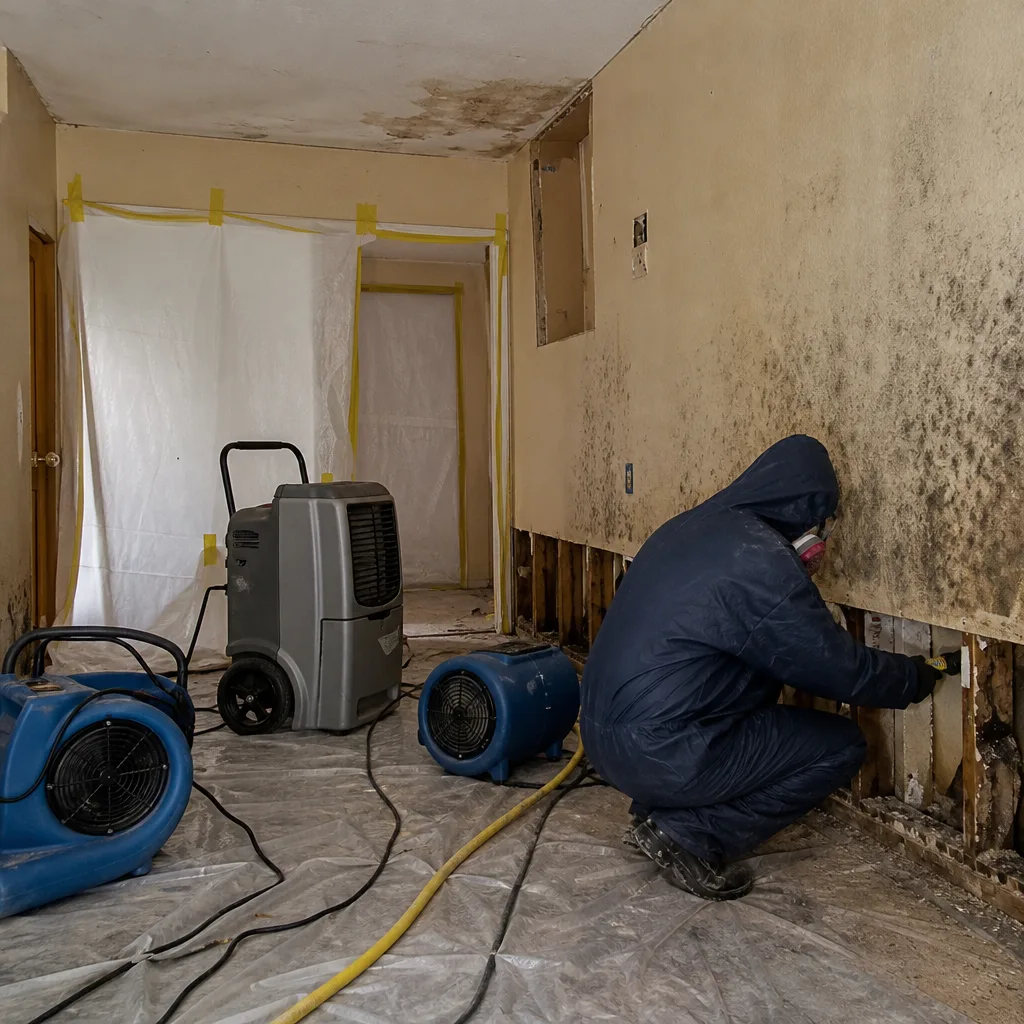
Mold remediation is dominated by containment and labor. Building containment barriers with negative air pressure is expensive but non-negotiable for protecting unaffected areas from cross-contamination. Abrasive cleaning, wire-brushing, and antimicrobial application add labor hours. Post-remediation clearance testing adds verification cost. Mold projects in Pomona run longer than water projects because testing and clearance take time, and the water damage restoration that preceded the mold often needs to be addressed first.
Fire damage has the widest cost range of all, because the variables are structural: how hot did it burn, how deep did the char go, and how far did smoke travel? Soot is acidic and corrosive, so every surface in the affected area needs cleaning or sealing. Smoke penetrates insulation, ductwork, and attic spaces far from the flame itself. The Fire Damage Restoration in Pomona approach has to address the full smoke path, not just the burn zone, which is why fire restoration consistently surprises people with its scope.
Here’s a comparative cost snapshot for a single 400-square-foot room in Pomona, all-in including mitigation and basic reconstruction:
- Category 1 water damage: $2,800 to $6,500
- Category 2 water damage: $5,000 to $11,000
- Category 3 water damage: $9,000 to $18,000
- Mold remediation (contained area): $4,000 to $12,000 depending on colony extent and surface type
- Fire damage (smoke throughout, moderate structural char): $12,000 to $30,000
These ranges assume professional-grade equipment, IICRC-aligned processes, and proper reconstruction. Prices from handymen or generalists without restoration equipment will be lower on the mitigation side and almost always higher on the long-term rebuild side, because the drying wasn’t completed to the standard that prevents secondary damage.
How Restoration Timelines Affect Your Final Bill
Restoration pricing is time-sensitive in a way most home improvement work is not. The faster the drying phase completes, the lower the reconstruction bill. This is a mathematical relationship, not a marketing claim.
Drywall that stays wet beyond 72 hours starts breaking down at the paper and gypsum level. Wood framing that holds moisture for more than a week starts inviting fungal activity. Carpet pad that’s been wet for four days is generally a tear-out, while the same pad caught within 24 hours can sometimes be saved. Every day of delay adds downstream cost.
This is why commercial-grade equipment matters in Pomona specifically. Our summers run dry and hot, but homes with central air create cool, closed environments where moisture doesn’t evaporate naturally at useful speed. Winter months bring the opposite problem: ambient humidity keeps surfaces wet longer without mechanical drying.
A typical Category 2 water damage timeline in a Pomona single-family home:
- Day 1: Emergency response, water extraction, equipment placement, initial moisture mapping
- Days 2 through 5: Daily monitoring, adjustments to drying plan, documentation for insurance
- Day 5 to 7: Final moisture readings, equipment removal, demo of unsalvageable materials
- Days 8 through 21: Reconstruction phase, inspections, final walkthrough
Total elapsed time for a moderate water event: three to four weeks. Fire and mold events extend that timeline because of the testing and clearance requirements.
Common Mistakes to Avoid
- Delaying the initial call. Water doesn’t stop moving because you’re tired. Every hour of delay extends the drying timeline and pushes materials from salvageable to replacement. In Pomona, where summer heat accelerates mold growth inside wall cavities, a 24-hour delay can double the microbial scope.
- Accepting a bid without a written scope. If the work authorization doesn’t describe the work, you have no idea what you approved. The invoice at the end will reflect the scope the contractor decides to remember.
- Using a general contractor for mitigation. Framers, drywallers, and handymen build things. They don’t read moisture meters, they don’t size drying chambers, and they don’t understand IICRC categories. Let them build. Hire a restoration firm to mitigate.
- Assuming insurance covers everything. Policies have deductibles, caps, and depreciation schedules. Some have mold exclusions or water damage exclusions for specific sources. Read the policy before the adjuster walks in, not after the check arrives.
- Skipping the post-remediation clearance test. That $700 test is the only objective proof that the mold is gone. Skipping it saves pennies and risks dollars.
- Replacing flooring before the subfloor is dry. New flooring installed over a wet subfloor fails within months. Moisture meters on the subfloor are the gatekeeper: no reading under the target threshold, no new flooring.
- Not asking about the Injectidry option. Most contractors don’t own Injectidry systems because they’re expensive and require training. If a wall or hardwood floor can be dried without demolition, that’s thousands saved in reconstruction. Ask whether your contractor has this capability before you sign.
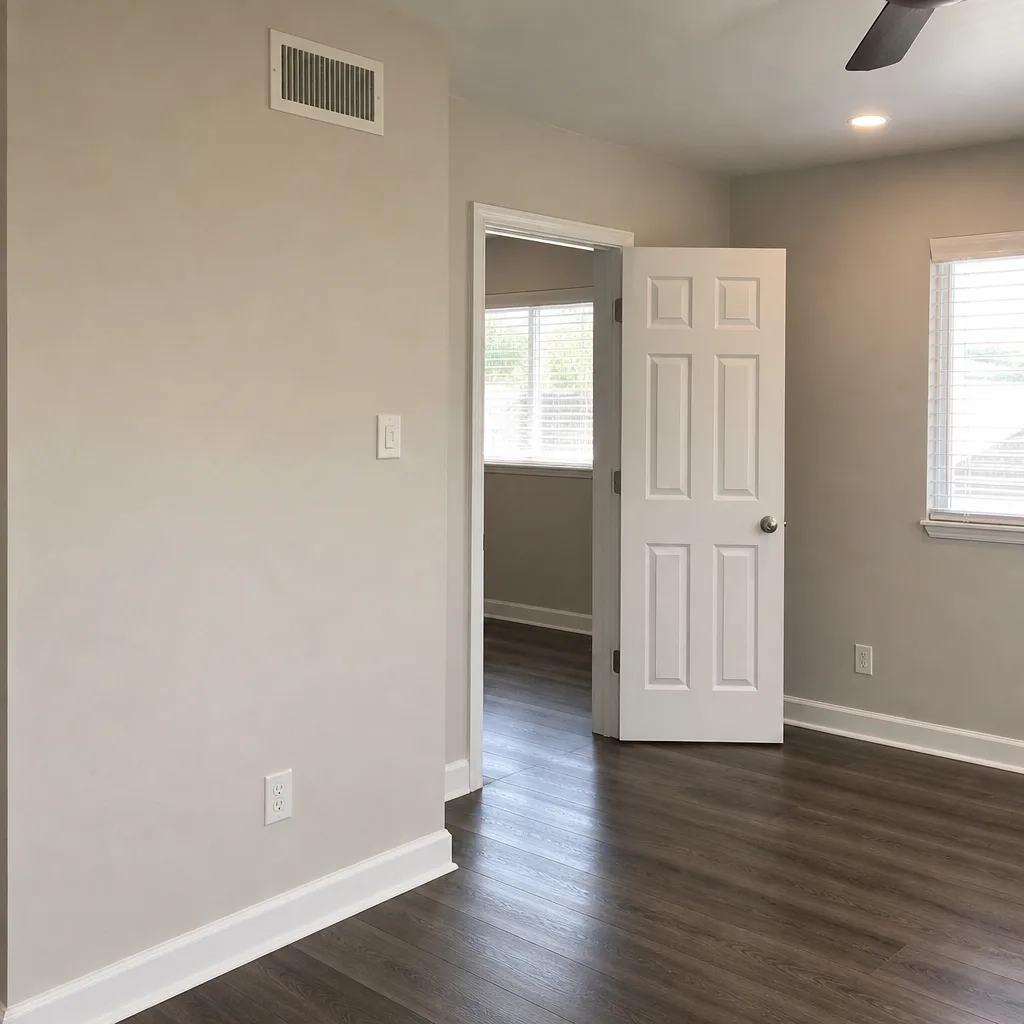
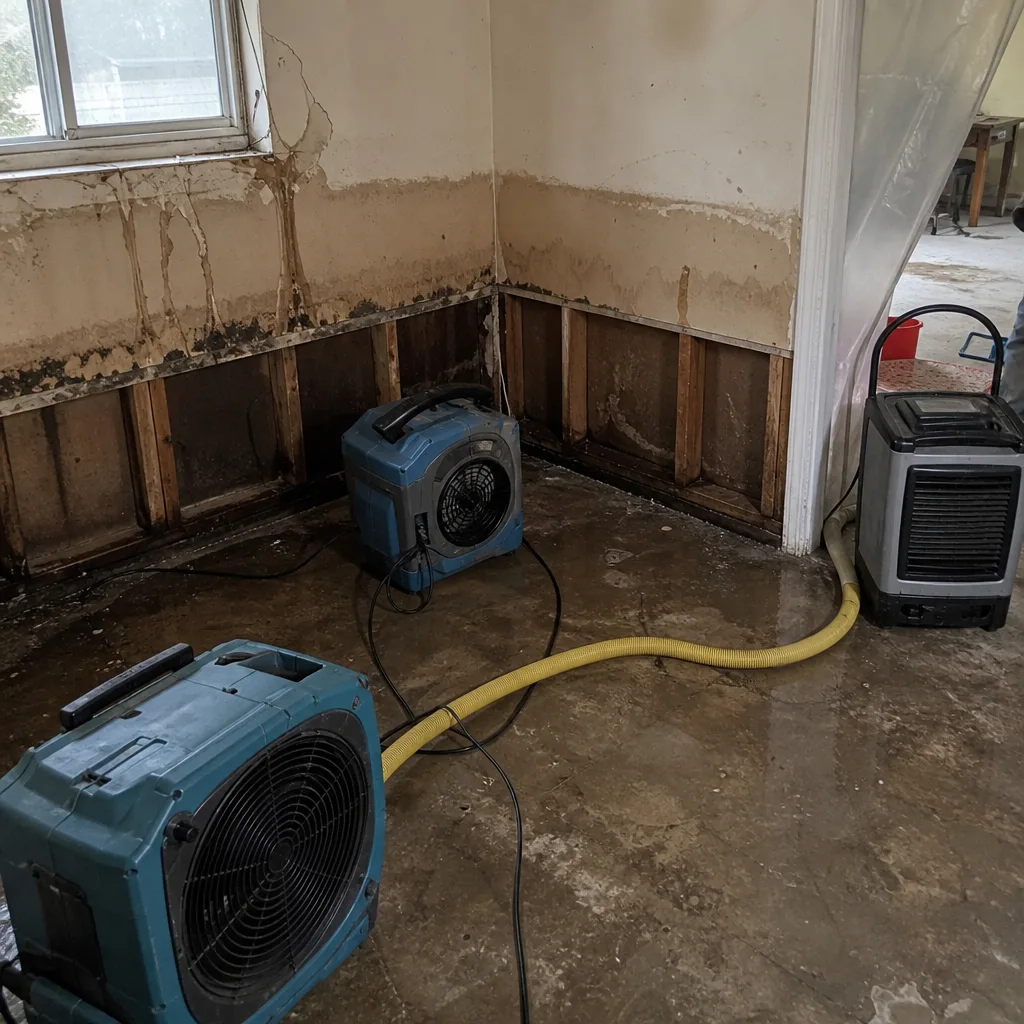
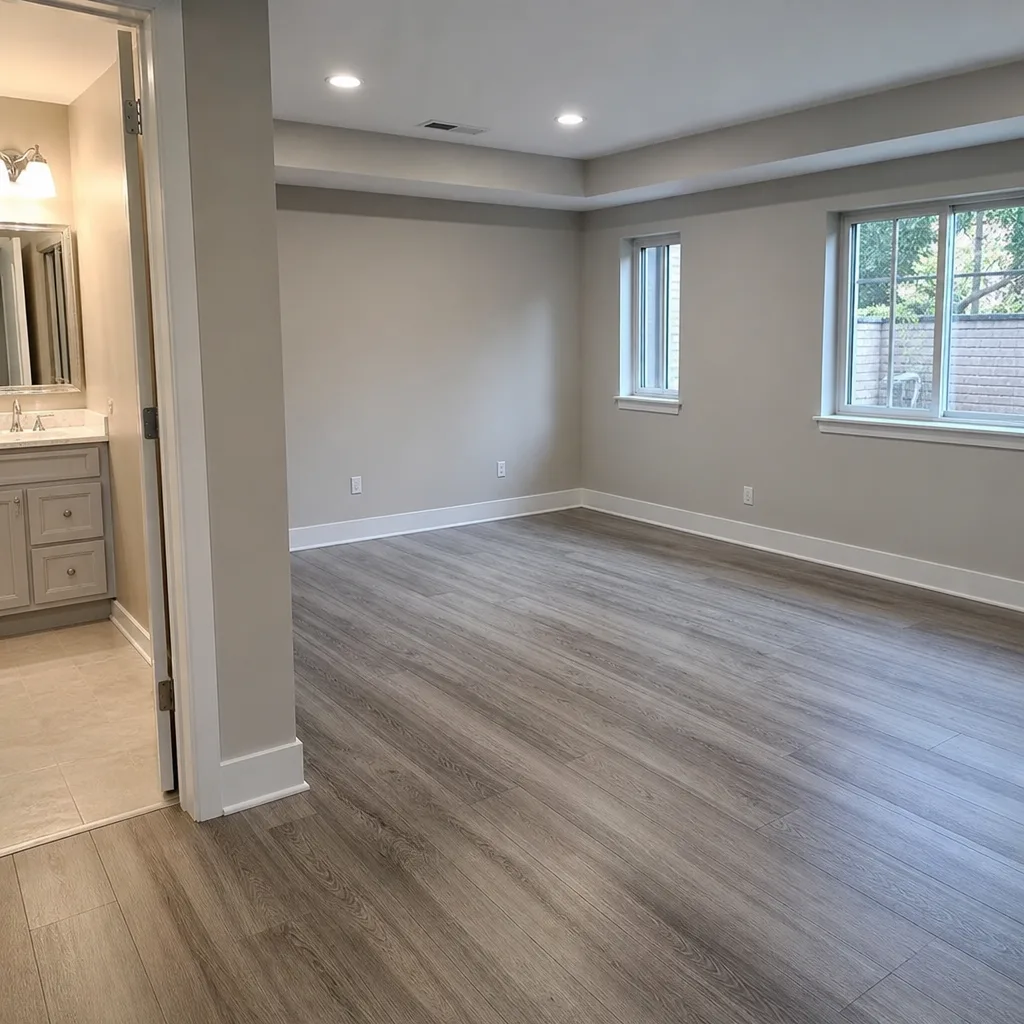
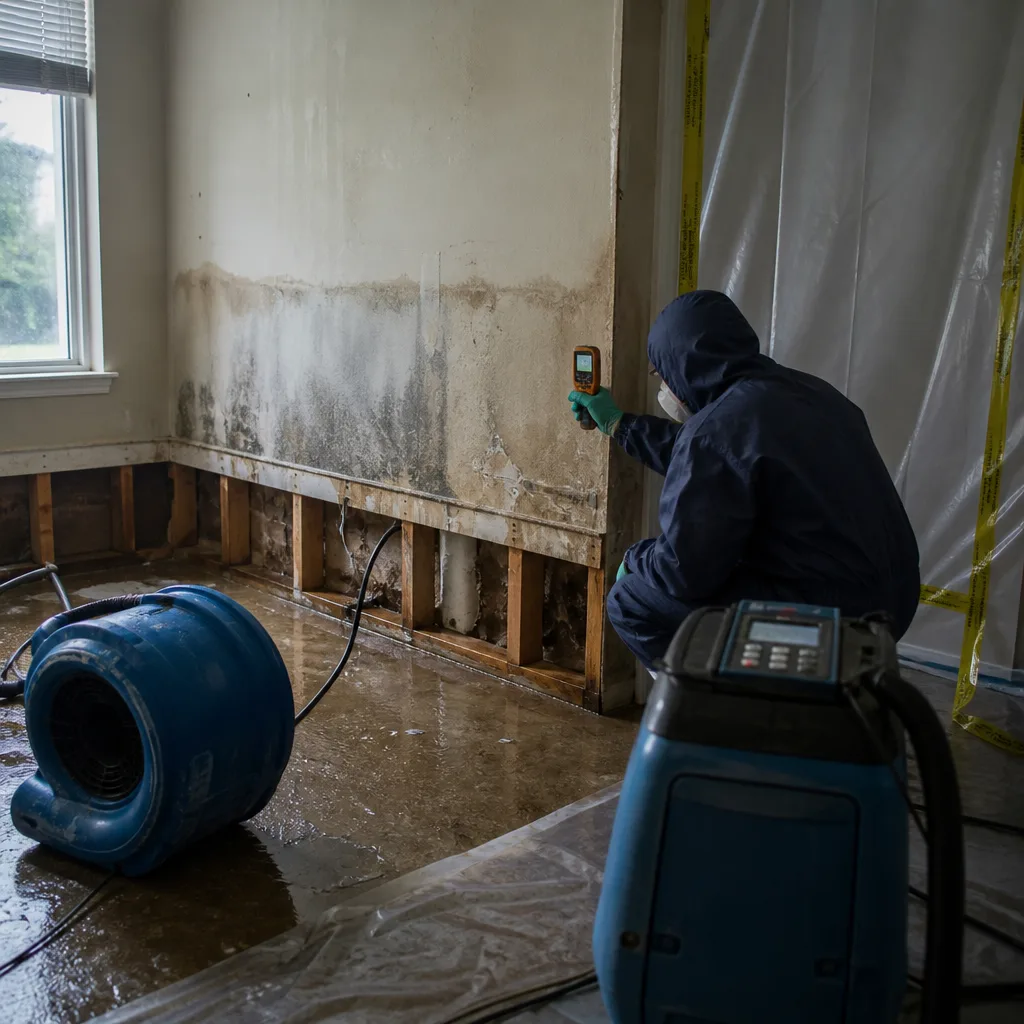
See the difference
 Before
 After
 Before
 After
 Before
 After
When to Call a Professional
Some situations are judgment calls. These are not. Call a restoration professional immediately when water has penetrated wall cavities or subflooring, when standing water is deeper than what towels or a shop vac can handle, when you see visible mold growth larger than a dinner plate, when the water source is sewage or flood water, when your circuit breaker has tripped in an affected area, or when smoke has traveled through a home’s ductwork. These are conditions where amateur intervention makes the problem worse and more expensive. In Pomona, Clean Slate Water Damage offers free estimates, and you can reach us at (888) 508-8745 to talk through what you’re seeing before you commit to anything.
Frequently Asked Questions
Water damage restoration in Pomona typically ranges from $3.50 to $8.00 per square foot for Category 1 clean water, $6.00 to $12.00 for Category 2 gray water, and $8.00 to $18.00 for Category 3 black water or sewage. A single-room project usually lands between $2,800 and $14,000, while whole-home flood restoration runs $25,000 to $75,000. The final cost depends on the damage category, the square footage affected, and how much material gets demolished versus dried in place. Call (888) 508-8745 for an exact quote tailored to your home’s situation.
Most Pomona water damage projects complete the drying phase in five to seven days, with reconstruction adding two to three weeks after that. Faster drying is possible with Injectidry systems that pull moisture from inside wall cavities and subfloors directly. The timeline stretches if materials sat wet for more than 72 hours before equipment arrived, because the demolition and rebuild scope grows.
Insurance coverage for water damage depends on the water source: sudden and accidental leaks are typically covered, while gradual seepage, neglect, and some flood events are excluded. Most Pomona policies cover sudden pipe bursts, water heater failures, and appliance supply line breaks, subject to your deductible. Coverage for flood damage requires a separate flood insurance policy. Document everything with photos and keep a running list of materials and contents affected, then call your agent before you start work. The right restoration firm will help you document the full scope so the adjuster sees everything, not just what’s visible. For a free consultation on what your policy likely covers, call (888) 508-8745.
Yes, drywall can often be dried in place when the water is Category 1, the affected area is moderate, and drying begins within 48 hours. The most effective non-invasive method is the Injectidry system, which pushes dry air directly into wall cavities through small access points, drying the inside of the wall without cutting out large sections. In our Pomona projects, Injectidry saves homeowners thousands in reconstruction costs by preserving drywall and hardwood floors that a conventional contractor would tear out.
Emergency water extraction should happen within hours, not days. Every restoration firm operates differently on response times, so ask directly when you call. Clean Slate Water Damage dispatches crews to Pomona homes quickly because that first day determines whether you’re looking at a drying project or a full reconstruction. Call (888) 508-8745 and describe the water source, the affected rooms, and whether the power is still on.
Mitigation is the emergency phase: water extraction, equipment placement, drying, monitoring, and removal of unsalvageable materials. Reconstruction is the build-back phase: drywall replacement, flooring installation, cabinetry, and finishes. Mitigation is priced per day and per square foot, while reconstruction is priced per line item at tradesperson rates. In Pomona, mitigation typically represents 25 to 40 percent of the total project cost, with reconstruction filling the rest. Understanding this split helps you evaluate bids and negotiate with your adjuster. For a detailed breakdown of your specific project, call (888) 508-8745.
The Bottom Line
Restoration cost in Pomona is not a mystery if you know what drives it. The IICRC damage category sets the floor. Equipment costs scale with square footage and days on site. Material replacement costs follow local 2026 pricing. Insurance reimbursement depends on your policy language and the quality of documentation. The homeowners who come out ahead are the ones who ask about damage categories, insist on written scopes, verify equipment counts, and understand the difference between mitigation and reconstruction before they sign. If you’re facing a water, mold, or fire event right now, the Clean Slate Water Damage home page has more context, and a phone call to (888) 508-8745 gets you a free estimate and a straight answer.
Written by the team at Clean Slate Water Damage, serving Pomona since 2018.