Last updated October 31, 2026
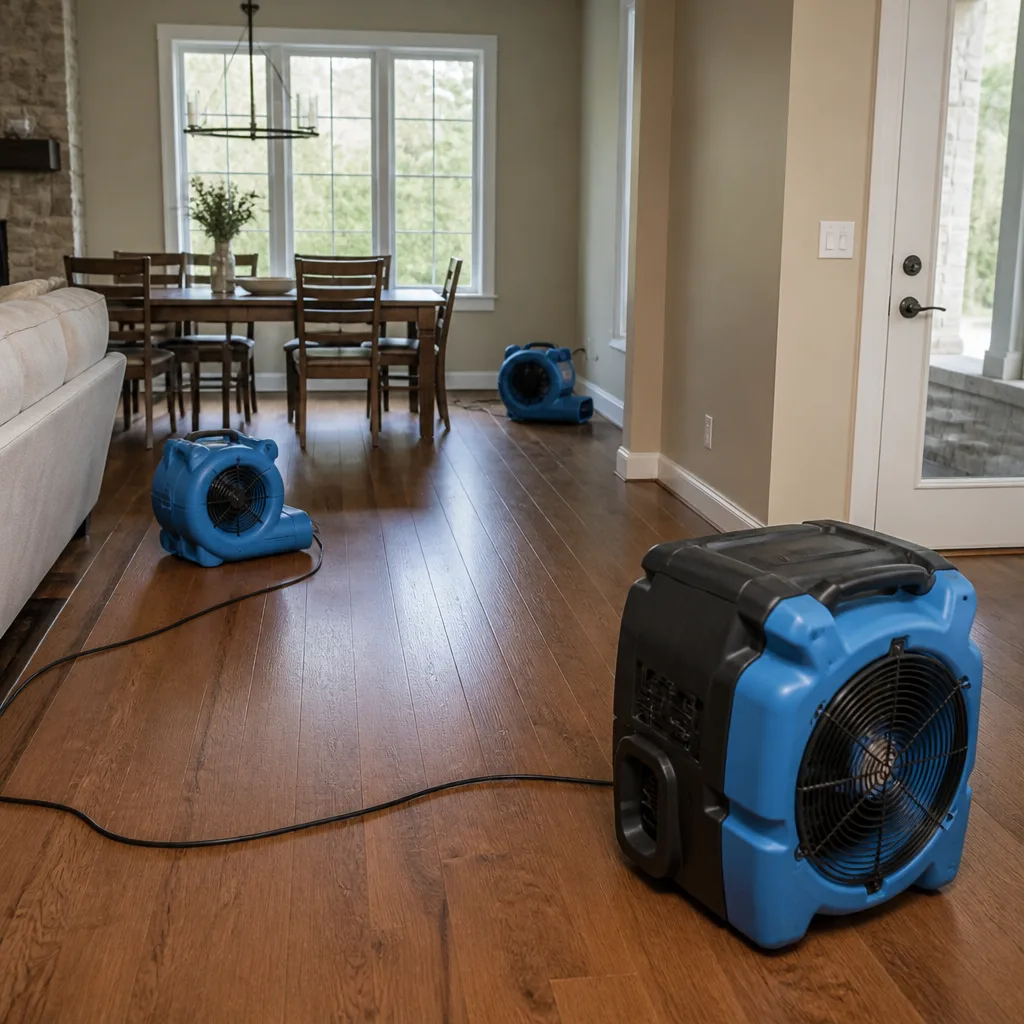 Water damage drying
 Fire & smoke cleanup
 Mold remediation
 Storm response
 Sewage cleanup
 Reconstruction
Free visual inspection and a written scope of work before any mitigation begins - photos, moisture readings, and drying logs go in your claim file
The scope we write is the scope we bill. Anything new gets shown to you, in writing, before we touch it.
Get your free estimateChoosing the Right Damage Restoration Brand: A Buyer’s Guide for Pomona
There are over 40 restoration contractors serving the Pomona area. The majority use the same surface-level marketing language: “trusted,” “professional,” “fast response.” If you’re standing in a flooded living room or staring at a water-stained ceiling, those words tell you nothing. What separates a serious restoration company from a general contractor with a wet-dry vac comes down to one question most homeowners never think to ask: what does this company use to verify the job is actually complete? Not finished. Complete. This guide shows you how to evaluate restoration brands in Pomona through that lens, so you can choose a contractor who returns your property to verified pre-loss condition, not just a space that looks dry on the surface.
Quick Answer
Choosing the right damage restoration brand in Pomona means looking past marketing language and evaluating three operational indicators: third-party certification (specifically IICRC-aligned training), the type of drying and extraction equipment the company deploys, and the documentation they provide to prove the job is done. For a deeper look at what this process involves, see The Complete Guide to Damage Restoration in Pomona. A serious restoration company will name specific equipment brands like Dri-Eaz or Phoenix when you ask, will walk you through their moisture-verification process, and will hand you a completion report with final readings against industry baselines. If a contractor can’t answer those questions clearly, they’re not the right choice for a loss event involving water, mold, or fire.
Restoration work we handle
Table of Contents
- The Certification Hierarchy: What IICRC Actually Requires
- Equipment as a Signal: The Machines That Reveal a Serious Company
- National Franchise vs. Independent Certified Specialist
- How to Read Online Reviews for Restoration Companies
- What a Legitimate Completion Report Includes
- Pomona-Specific Factors That Affect Restoration Work
- Questions to Ask Any Restoration Company Before You Sign
- Common Mistakes to Avoid
- When to Call a Professional
- Frequently Asked Questions
The Certification Hierarchy: What IICRC Actually Requires
When a restoration company in Pomona says they’re “certified,” that word can mean almost anything. Some contractors hold a general contractor’s license and call that certification. Others completed a two-hour online course. Neither prepares someone to properly dry a structure after water intrusion or remediate mold to clearance standards. Here’s what actually matters in the certification hierarchy.
The IICRC (Institute of Inspection, Cleaning and Restoration Certification) is the restoration industry’s globally recognized credentialing body. Its Water Damage Restoration Technician (WRT) certification requires classroom instruction, hands-on training, and a proctored exam covering the science of water damage: psychrometry (the behavior of air and moisture), extraction techniques, antimicrobial applications, and structural drying principles. The Applied Structural Drying (ASD) certification goes further, requiring technicians to demonstrate they can calculate drying chamber requirements, place equipment based on measured moisture conditions, and verify drying progress against documented baselines.
Here’s the practical takeaway for a Pomona homeowner:
- A contractor with WRT-certified technicians has demonstrated baseline competency in water damage science. Without it, they’re learning on your property.
- ASD certification signals the company understands structural drying, not just surface drying. That matters because water trapped inside walls and subfloors is what leads to mold three weeks after the visible problem looks “fixed.”
- Companies aligned with RIA (Restoration Industry Association) and IFA (Institute of Inspection, Cleaning and Restoration Certification’s allied association for flooring professionals) commit to ongoing professional development and auditable standards. Membership isn’t a rubber stamp; it signals the company participates in the industry’s standards-setting ecosystem rather than operating in isolation.
If you want to see the difference between certification-backed restoration and generalist contractor training in action, look at our Water Damage Restoration in Pomona page, which explains the process step by step.
Equipment as a Signal: The Machines That Reveal a Serious Company
Ask any restoration contractor in Pomona what equipment they’ll bring to your job. The answer tells you more about their capability than any review or website copy. Here’s why: professional-grade drying equipment is expensive, and only companies that do restoration work consistently invest in it.
The equipment brands that signal serious capability include Dri-Eaz, Phoenix, XPOWER, and B-Air. These are the names used by top-tier restoration firms nationwide, not the hardware-store rental units a general contractor might wheel in for a weekend job. Specifically:
- LGR (Low Grain Refrigerant) dehumidifiers pull moisture from the air at a rate conventional dehumidifiers can’t match. In Pomona’s climate, where summer temperatures routinely exceed 90 degrees, conventional units struggle to maintain the low humidity levels required for effective structural drying. Dri-Eaz and Phoenix LGR units are built for exactly this condition.
- Thermal imaging cameras reveal moisture trapped behind walls and under flooring without demolition. A company that uses thermal imaging as part of its initial assessment is mapping the full extent of water damage before touching a single surface.
- Calibrated moisture meters provide the quantitative readings that verify drying progress. Without them, “dry” is a guess, not a measurement.
- The Injectidry system is a specific differentiator worth asking about. This equipment forces dry air directly into wall cavities and subfloors, allowing deep structural drying without unnecessary demolition. Most generalist contractors don’t own this system. That means their only option for drying inside a wall is to tear the wall open. Injectidry changes the math: faster recovery, less disruption, lower rebuild costs. If a company doesn’t know what Injectidry is when you ask, that’s your answer about their depth of equipment investment.
The Complete Water Damage Restoration Guide for Pomona Homeowners explains why, when we assess a water-damaged property in Pomona, our first conversation with a homeowner often includes showing them the moisture readings from their own walls. That transparency isn’t a marketing tactic. It’s the only way to establish a verifiable baseline that we’ll measure against throughout the drying process and again at the end, before we call the job complete.
National Franchise vs. Independent Certified Specialist
Pomona homeowners will encounter both national franchise restoration brands and independent certified specialists when they search for help. The difference matters more than most people realize.
National franchises operate with centralized call centers, standardized pricing structures, and technician pools that rotate based on dispatch volume. The person who answers your call at 2 a.m. is likely not the person who shows up, and the person who shows up may not be the person who handles your insurance documentation or your follow-up questions. Franchise accountability exists, but it’s structural: your job file moves through a corporate system designed for volume.
Independent certified specialists operate differently. The person who answers the phone knows the local crews, the local adjusters, and the specific building conditions in Pomona. Pricing latitude is typically greater because there’s no franchise royalty layer. Accountability is direct: the company owner has a name, a local reputation, and a direct interest in the outcome of your job. Your job file stays with people whose names you know.
Neither model is universally better or worse. What matters is the capability behind the brand name. A franchise with IICRC-certified technicians and professional-grade equipment can do excellent work. An independent contractor with no certification and rental-grade equipment cannot, regardless of how friendly their dispatcher is. The certification and equipment questions in this guide apply equally to both. Ask them of anyone you’re considering.
How to Read Online Reviews for Restoration Companies
Restoration company reviews follow predictable patterns, and learning to read them critically will save you from choosing a contractor based on customer service satisfaction when what you need is technical competence. Here’s how to decode the language.
Red-flag review language: reviews that focus exclusively on customer service without mentioning process. “They were so nice and professional” tells you nothing about whether they actually dried your structure correctly. “They showed up fast and worked hard” is fine, but it doesn’t verify anything technical. Companies that do mediocre technical work often generate good reviews in the immediate aftermath because the customer hasn’t yet discovered the mold growing inside their walls six weeks later.
Credibility-signal review language: reviews that mention specific technical details indicate the reviewer understood what was happening. Phrases like “they showed me the moisture readings before and after,” “they explained why they needed to place equipment where they did,” “the completion report included photos and final numbers” tell you the company documented their work and communicated the process. That’s the behavior of a certification-aligned company.
The follow-up review pattern: the most valuable reviews for restoration work are posted 60 to 90 days after the job. Those catch the mold that appeared after the surface dried, or confirm that it didn’t. If a company has a history of follow-up reviews mentioning mold recurrence, that’s a drying-verification problem. If a company’s reviews consistently mention thorough documentation and final clearance, that’s the signal you want.
For a deeper look at how restoration evaluations work, our Mold Remediation in Pomona page explains what legitimate post-remediation verification involves.
What a Legitimate Completion Report Includes
This section answers the question most Pomona homeowners never think to ask: how do you know the restoration is done? Not “we’re done” in the sense that the crew packed up and left, but done in the sense that moisture levels, mold spore counts, and structural conditions have returned to objectively verifiable baselines.
A legitimate completion report from a certification-aligned restoration company includes at least four elements:
- Initial moisture readings. Taken at the start of the job, documenting baseline conditions throughout the affected area. Without this, there’s no way to verify improvement.
- Final moisture readings. Taken at the end of the job, compared against the initial readings and against IICRC standard baselines for the material type (drywall, hardwood, concrete, etc.). A professional company can tell you what “dry” means for each material in your specific property.
- Equipment logs. Documentation of what equipment was placed, where, when it ran, and when drying goals were achieved. This creates an auditable record of the drying process.
- Photo documentation. Before, during, and after images of affected areas. For insurance purposes, this documentation is the difference between a claim that gets paid and one that gets questioned.
If a restoration company in Pomona tells you the job is done and hands you a final invoice with no completion report, the job isn’t truly done. You’re being asked to take their word for it. A certification-aligned company doesn’t ask for that leap of faith; they hand you the documentation because producing it is part of the standard.
Pomona-Specific Factors That Affect Restoration Work
Pomona’s climate and building stock create specific conditions that affect how restoration work should be approached. Here’s what local homeowners should understand.
Climate and drying conditions. Pomona’s hot, dry summers are actually favorable for structural drying in many cases; low ambient humidity helps LGR dehumidifiers work more efficiently. However, winter rain events in the San Gabriel Valley bring humidity that slows evaporation and requires longer equipment runtimes. A restoration company that treats every job with the same equipment configuration and timeline isn’t reading the conditions; they’re applying a template. For context on how these factors affect what you’ll pay, see our Damage Restoration Cost Breakdown: The Pomona Homeowner’s Reference for 2026. Templates are for franchises that don’t trust their technicians to assess independently.
Housing stock. Pomona has a substantial inventory of mid-century single-family homes with stucco exterior walls and interior drywall construction. That construction traps water inside wall cavities effectively; once water enters through a roof leak or window flashing, it moves horizontally through the framing and shows visible damage long after the penetration has spread. Non-invasive drying with Injectidry equipment is particularly well-suited to this construction type because it allows drying inside the cavity without opening the stucco.
Older plumbing systems. Homes in Pomona built before the 1980s often have galvanized steel or original copper supply lines that fail with age. When those lines fail, water travels along floor joists and through subfloor assemblies before it becomes visible as a stain on a ceiling below. This is why a “small” visible stain often indicates a much larger trapped moisture problem. Thermal imaging and calibrated moisture meters identify the full extent before remediation begins.
Our Clean Slate Water Damage home page describes how we approach these conditions with an equipment-serious, certification-backed process.
Questions to Ask Any Restoration Company Before You Sign
The difference between a restoration company that will get your Pomona property back to pre-loss condition and one that will leave you with a lingering problem often comes down to the questions you ask before you sign anything. Here are seven questions that reveal everything.
- “What certifications do your technicians hold, and can you show me the documentation?” IICRC WRT and ASD certifications are specific, verifiable credentials. If the answer is vague, the capability is vague too.
- “What specific equipment will you use on my project?” Listen for brand names: Dri-Eaz, Phoenix, Injectidry. If they say “dehumidifiers and fans” without specifics, they’re using rental-grade equipment.
- “Will you provide a written scope of work before starting, and will you walk me through it?” Any legitimate restoration company documents the scope, the equipment plan, and the drying goals in writing before work begins. If they want to start tearing out drywall before providing a written scope, stop.
- “How will you verify the structure is dry before you call the job complete?” The answer must include calibrated moisture meters, final readings, and a completion report. “We’ll know when it looks dry” is not a verification method.
- “Do you handle water, mold, and fire damage, or will I need to coordinate multiple contractors?” A loss event often involves more than one category of damage. Water intrusion leads to mold. Fire suppression leaves water damage in its wake. Using one company for the full cycle eliminates the coordination risk of hiring multiple specialty contractors who may disagree about scope and responsibility. Our Fire Damage Restoration in Pomona page describes how these disciplines overlap in real-world loss events.
- “Who will be my point of contact from start to finish?” The answer tells you about accountability structure. A named person indicates direct accountability. A rotating dispatch pool indicates a volume operation.
- “Will you coordinate directly with my insurance adjuster, and will you provide photo documentation for the claim?” Restoration work almost always involves an insurance claim in Pomona. A company that documents thoroughly and coordinates with adjusters reduces your burden and helps ensure the claim reflects the actual scope of work performed.
Common Mistakes to Avoid
- Choosing based on response time alone. Yes, speed matters for water extraction. But a company that arrives in 30 minutes with rental equipment will do less good than a company that arrives in 90 minutes with professional-grade equipment and a documented process. Evaluate capability along with responsiveness.
- Accepting a verbal scope of work. In the stress of an active loss event, a contractor says “we’ll take care of everything” and you’re relieved to hand off the problem. Without a written scope, you’ve given a blank check to someone whose incentives may not align with returning your property to pre-loss condition.
- Assuming your insurance company’s preferred vendor is automatically the best choice. Insurers have preferred vendors because they have negotiated rates and standardized processes. Those vendors are typically competent, but “preferred” means preferred by the insurer, not necessarily by a standard of independent verification. You’re entitled to choose your own restoration contractor in most cases.
- Not asking about verification documentation. This is the single most consequential mistake in this guide. If you don’t ask how the company verifies the job is complete, you’re accepting their self-declaration. That’s a recipe for discovering mold three months after the crew leaves.
- Treating mold as a surface cleaning problem. Mold in Pomona homes often originates from trapped moisture inside wall cavities or subfloors. Cleaning visible mold without addressing the moisture source is temporary cosmetics, not remediation.
- Waiting to see if the problem “dries out on its own.” It won’t. Trapped moisture in Southern California building assemblies doesn’t evaporate fast enough to prevent mold colonization, which can begin in 24-72 hours under the right conditions.
- Hiring a general contractor for restoration work. A capable builder is not necessarily a capable restoration specialist. Restoration requires psychrometric understanding, antimicrobial application protocols, and verification equipment. A general contractor’s “restoration services” page is often an afterthought, not a core competency.
When to Call a Professional
Call a restoration professional in Pomona when water has penetrated beyond a surface you can see and wipe dry. That includes any of these scenarios: water from a supply line or appliance that has saturated flooring or wall material; visible mold growth larger than about 10 square feet; water from an unknown source that has been present for more than 24 hours; any flooding that has reached drywall, insulation, or cabinetry; or fire damage that has left structural materials charred or water-saturated from suppression efforts. In each case, the damage extends beyond what drying fans and surface cleaning can address. Clean Slate Water Damage offers free estimates in Pomona. Call us at (888) 508-8745 for an assessment, and we’ll walk you through what we’re seeing with documentation you can share with your adjuster.
Frequently Asked Questions
If water has saturated any porous building material (drywall, flooring, insulation, cabinetry), it’s serious enough to call. Surface water you can wipe up with towels is manageable on your own. Water that has penetrated into materials or has been present for more than 24 hours requires professional extraction and drying with calibrated equipment. When in doubt, call for an assessment; a restoration company in Pomona will document conditions so you understand the scope, and reputable companies provide estimates without charge.
Most standard homeowner’s policies cover sudden and accidental water damage, such as a burst supply line or appliance overflow. Gradual damage from a slow leak is typically excluded, as is flood damage from exterior sources without a separate flood policy. The documentation your restoration company provides (initial moisture readings, photo documentation, scope of work) directly influences your claim outcome. A company that documents thoroughly increases the likelihood your claim reflects the actual scope. Call (888) 508-8745 with the details of your situation and we can help you understand what to expect from your insurer.
Most structural drying projects take three to five days, though factors including the extent of saturation, the materials affected, and the time of year (winter rain events in Pomona bring higher ambient humidity) can extend that. A professional company sets equipment based on measured conditions, monitors drying progress with calibrated moisture meters, and removes equipment only when readings verify that drying goals have been met. Companies that promise a fixed 48-hour drying timeline regardless of conditions are prioritizing schedule over verification.
Mold remediation is about returning spore counts to normal background levels, not sterilization. A legitimate remediation includes identifying and correcting the moisture source, containing the affected area, removing contaminated porous materials, cleaning remaining surfaces, and verifying clearance through post-remediation testing. If mold returned after a previous remediation, the moisture source was likely not correctly identified or eliminated. Our Mold Remediation in Pomona process addresses both removal and source correction.
Cleanup is surface-level: removing standing water and wiping up visible moisture. Restoration is structural: extracting water from building materials, drying wall cavities and subfloors, verifying that moisture levels have returned to established baselines, and documenting the entire process. If a company in Pomona describes their service as “cleanup,” they’re likely not addressing what’s happening inside your walls. Restoration requires professional-grade equipment and verification processes that cleanup doesn’t include.
No, and coordination risk is a real problem when separate contractors handle overlapping damage categories. Water damage and mold are causally linked: water creates the conditions for mold, and mold remediation requires addressing the moisture that caused it. Fire damage includes water damage from suppression efforts. A company covering the full damage cycle provides a single point of contact from initial mitigation through final clearance, eliminating the disputes over scope and responsibility that occur when multiple contractors’ work overlaps. Clean Slate Water Damage handles water damage restoration, mold remediation, and fire damage restoration under one roof.
The Bottom Line
Choosing a restoration brand in Pomona comes down to verification. The company that verifies their work with calibrated instruments, third-party certification standards, and documented completion reports is the company that returns your property to pre-loss condition. The company that asks you to trust their word is the company that leaves you wondering three months later. Ask about IICRC certification, listen for specific equipment brands like Dri-Eaz and Phoenix, demand a written scope before work begins, and insist on a completion report at the end. For Pomona property owners ready to hand the problem to a certification-backed, equipment-serious team, Clean Slate Water Damage offers free estimates. Explore more guides & resources to help you navigate the restoration process with confidence. Call (888) 508-8745 and we’ll start with documentation you can understand and share with your adjuster.
Written by the team at Clean Slate Water Damage, serving Pomona since 2018.
See the difference
 Before
 After
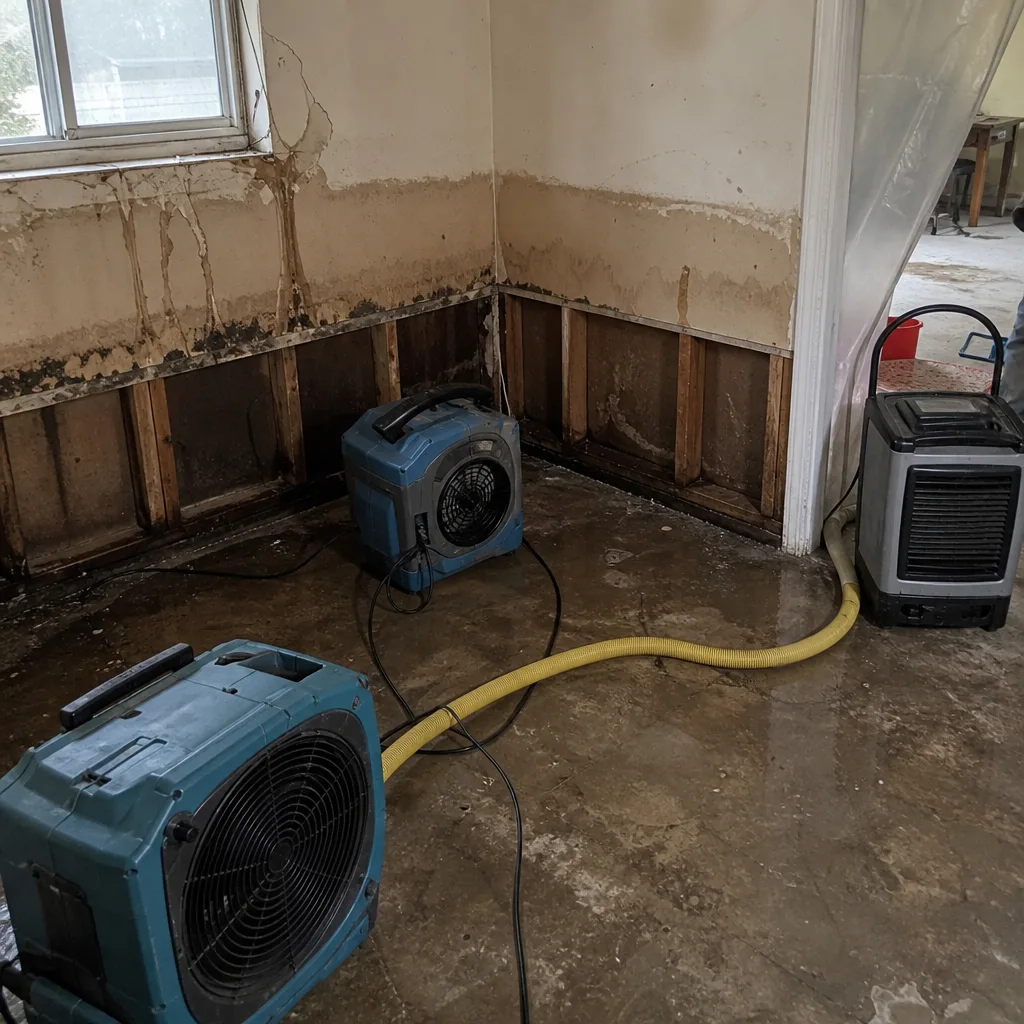 Before
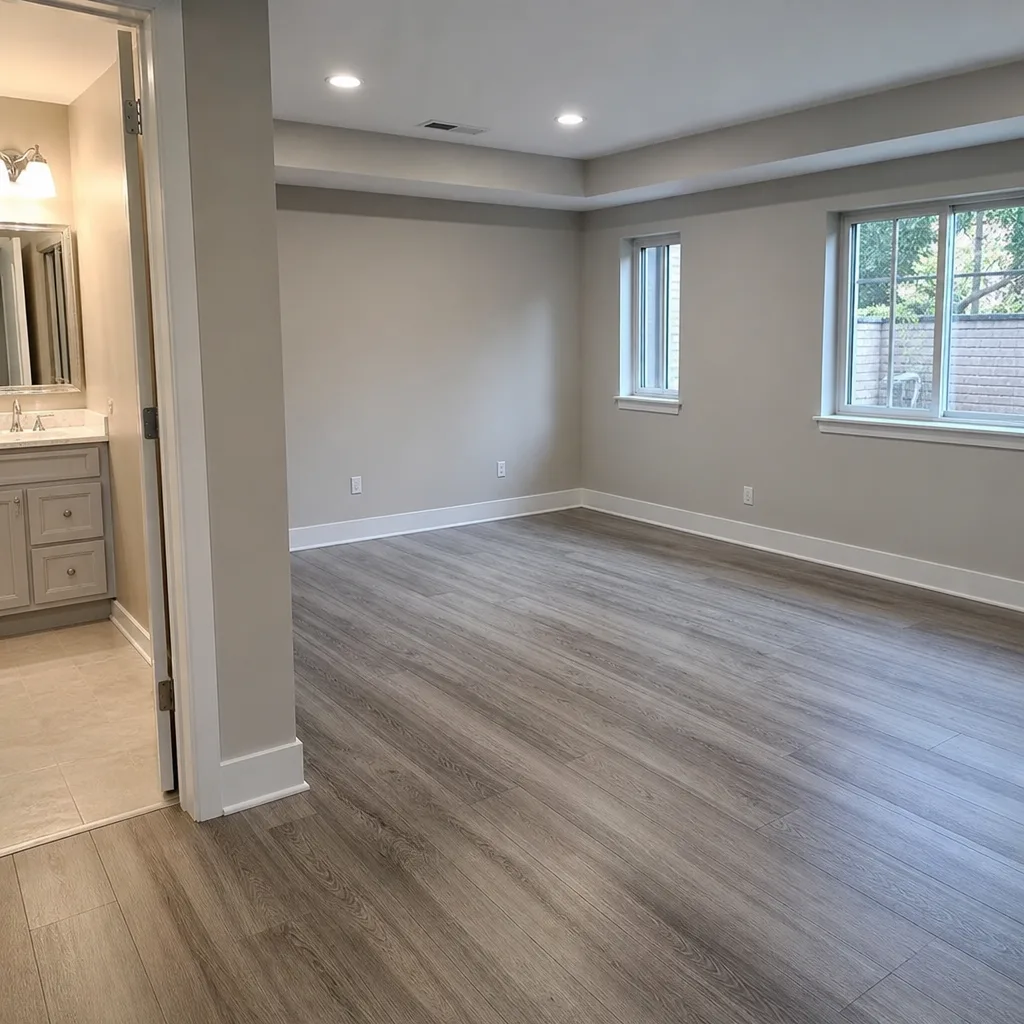 After
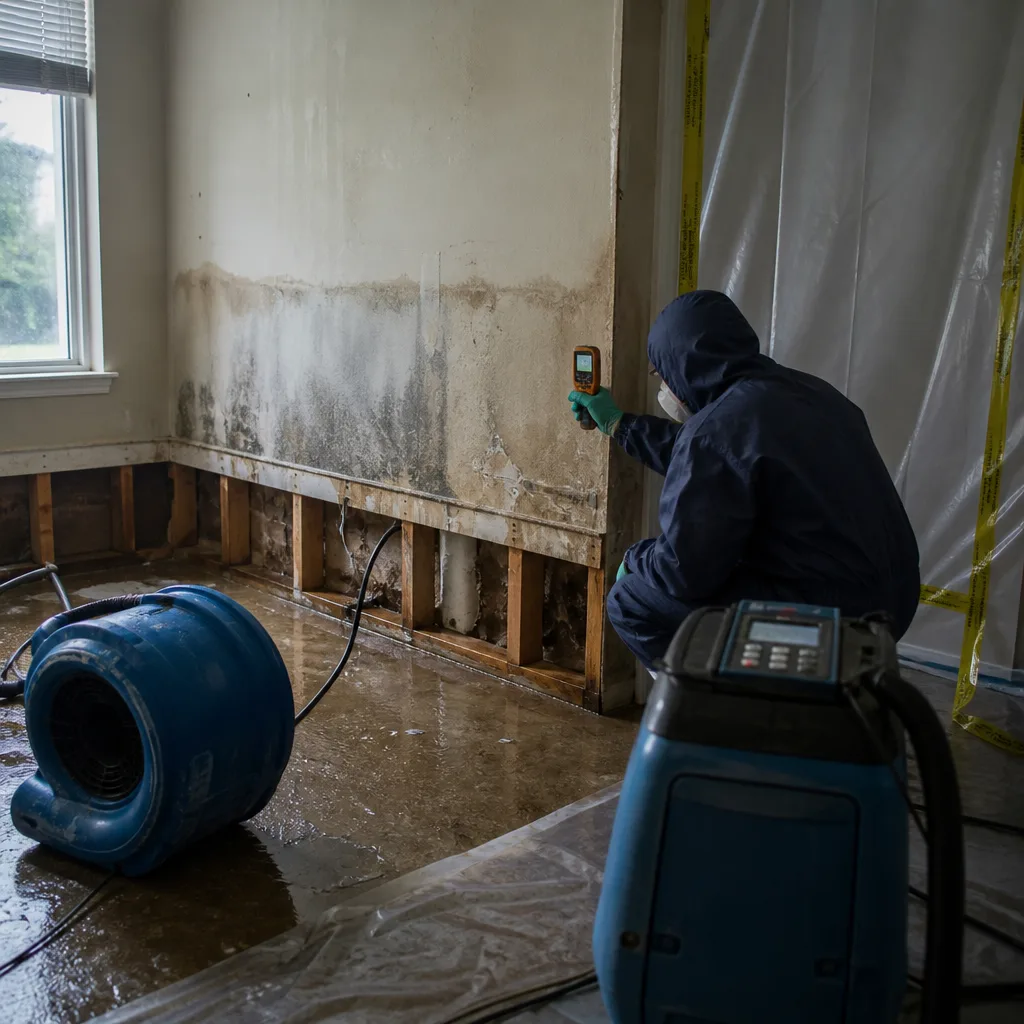 Before
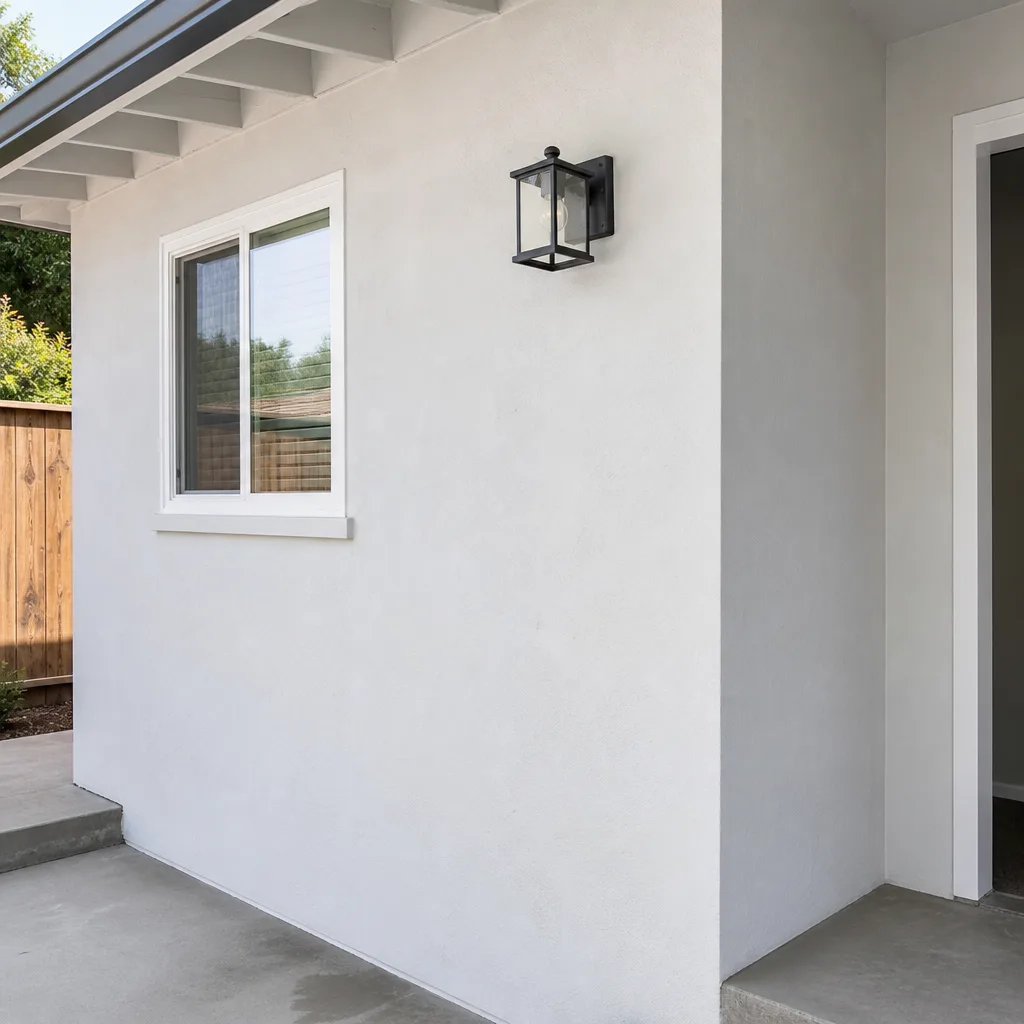 After