Last updated October 31, 2026
 Water damage drying
 Fire & smoke cleanup
 Mold remediation
 Storm response
 Sewage cleanup
 Reconstruction
Free visual inspection and a written scope of work before any mitigation begins - photos, moisture readings, and drying logs go in your claim file
The scope we write is the scope we bill. Anything new gets shown to you, in writing, before we touch it.
Get your free estimateHow to Hire a Damage Restoration Contractor in Pomona: A Step-by-Step Guide
Here’s a truth most homeowners in Pomona learn too late: the contractor who shows up fastest with the lowest bid is often the one who leaves behind the most expensive problem. Water creeps into wall cavities. Mold colonizes behind baseboards where nobody looks. Smoke odor settles into ducts and resurfaces every time the AC kicks on. The contractor who does visible work fast and hands you a completion certificate without documented moisture readings inside your walls isn’t doing you a favor. They’re setting you up for a second, more expensive loss. This guide gives you the exact vetting framework restoration professionals use when they evaluate a job, and you can find more guides & resources on our blog. By the time you finish reading, you’ll know the three credentials that matter, the five questions that expose corner-cutting, and the red flags specific to the Pomona market.
Restoration work we handle
Quick Answer
To hire a damage restoration contractor in Pomona, verify three non-negotiable credentials before signing anything: IICRC certification, an active California contractor’s license (B or C-10), and restoration-specific liability insurance. Then demand a written scope of work with line-item equipment and moisture documentation protocols, ask the five questions detailed below, and reject any contractor who can’t provide all three credentials within one business day.
Table of Contents
- The Three Non-Negotiable Credentials
- What a Legitimate Insurance Relationship Actually Looks Like
- The Five Questions to Ask Before Equipment Enters Your Home
- How to Evaluate a Written Scope of Work
- Pomona-Specific Red Flags: Storm Chasers and License Checks
- Why Equipment Brands Tell You More Than Reviews
- The Hiring Process: A Step-by-Step Walkthrough
- Common Mistakes to Avoid
- When to Call a Professional
- Frequently Asked Questions
- The Bottom Line
The Three Non-Negotiable Credentials
Before a single piece of equipment enters your home in Pomona, three credentials must be verified. Not two. Not “we’re working on it.” All three, in writing, before you sign. We’ve seen too many property owners in Pomona’s older housing stock, homes built in the 1920s through the 1970s, discover after the fact that the crew dismantling their walls had no certification and no insurance carrier willing to stand behind the work.
First: IICRC certification. The Institute of Inspection, Cleaning and Restoration Certification is the restoration industry’s globally recognized credentialing body. An IICRC-aligned contractor works to documented, auditable standards, not improvised methods learned on someone else’s job site. The IICRC publishes specific standards for water damage restoration (S500), mold remediation (S520), and fire and smoke restoration (S740). A contractor who can’t name the standard that applies to your situation isn’t a restoration professional. They’re a generalist guessing at your home’s future.
Second: California Contractor’s License. In Pomona, and throughout California, any contractor performing work valued over $500 must hold a valid license from the Contractors State License Board (CSLB). For restoration work, look for a B (general building) or C-10 (electrical) classification. You can verify a license number on the CSLB website in under a minute. A contractor who hedges on providing a license number is telling you something important about how they operate.
Third: active liability insurance with restoration-specific coverage. General liability insurance protects your property if something goes wrong. Restoration-specific coverage recognizes the unique risks of water extraction, structural drying, and mold handling. Ask for a certificate of insurance (COI) that names your property and lists the coverage types. A legitimate contractor in Pomona can email you a COI from their carrier within one business day. Anyone who can’t is a risk you don’t need.
We operate in alignment with IICRC standards and maintain professional memberships with RIA (Restoration Industry Association) and IFA (International Fireproofing Association, a third layer of professional accountability). Those affiliations aren’t wall decorations. They’re commitments to practices that get audited, reviewed, and held to a standard higher than “looks dry to me.”
What a Legitimate Insurance Relationship Actually Looks Like
“We work directly with your insurance.” If you’ve called three restoration companies in Pomona, you’ve heard this phrase at least twice. Here’s the problem: the phrase is meaningless without understanding what direct insurance billing actually requires. A contractor who says “we’ll handle your insurance” but can’t explain the claim process, can’t produce photo documentation protocols, and can’t describe how they communicate with adjusters is not handling your insurance. They’re handling you.
A legitimate insurance relationship looks like this: the contractor documents the damage with timestamped photos and moisture readings before any work begins. They provide a written scope of work that mirrors the language adjusters expect to see, line items with actual measurements, not vague descriptions. They communicate directly with your adjuster, submit documentation electronically, and keep you copied on every exchange. They understand that your claim payout depends on evidence, not narrative.
We’ve seen Pomona homeowners get denied claims because the contractor they hired took three photos on a phone, wrote “dried affected areas” on an invoice, and called it documentation. Your insurance company has seen that movie. They deny the sequel. Photo documentation is the single most important trust mechanism in restoration. A contractor who can’t show you a gallery of timestamped, geo-located images from a previous job in Pomona is not prepared to document yours.
Here’s the other side: a contractor who promises to “work around” your insurance, or suggests you pay out of pocket and “figure out the claim later,” is not doing you a favor. They’re avoiding the documentation standards that insurance requires. That’s a red flag, not a convenience. The Clean Slate Water Damage home team treats insurance documentation as a core service deliverable, not an afterthought.
The Five Questions to Ask Before Equipment Enters Your Home
Most homeowners ask about price and availability. Those are the wrong questions. The right questions expose whether the contractor understands restoration science or is just running fans until the surface looks dry. Here are the five questions we recommend every Pomona homeowner ask before signing a contract:
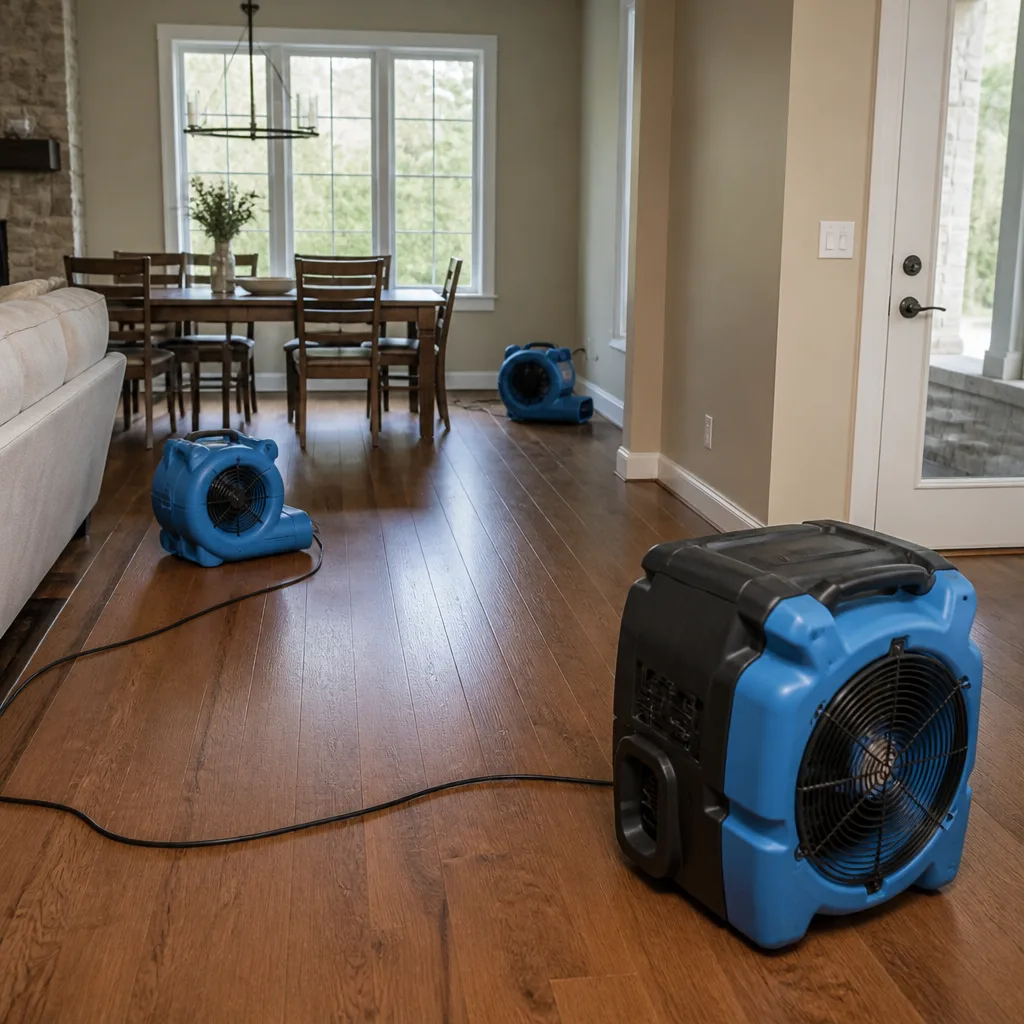
- “What is your drying protocol, and what equipment will you actually place in my home?” A real answer names specific equipment: Dri-Eaz dehumidifiers, Phoenix axial air movers, XPOWER air scrubbers. A vague answer like “industrial fans and dehumidifiers” tells you the contractor rents from Home Depot and hasn’t invested in commercial-grade systems.
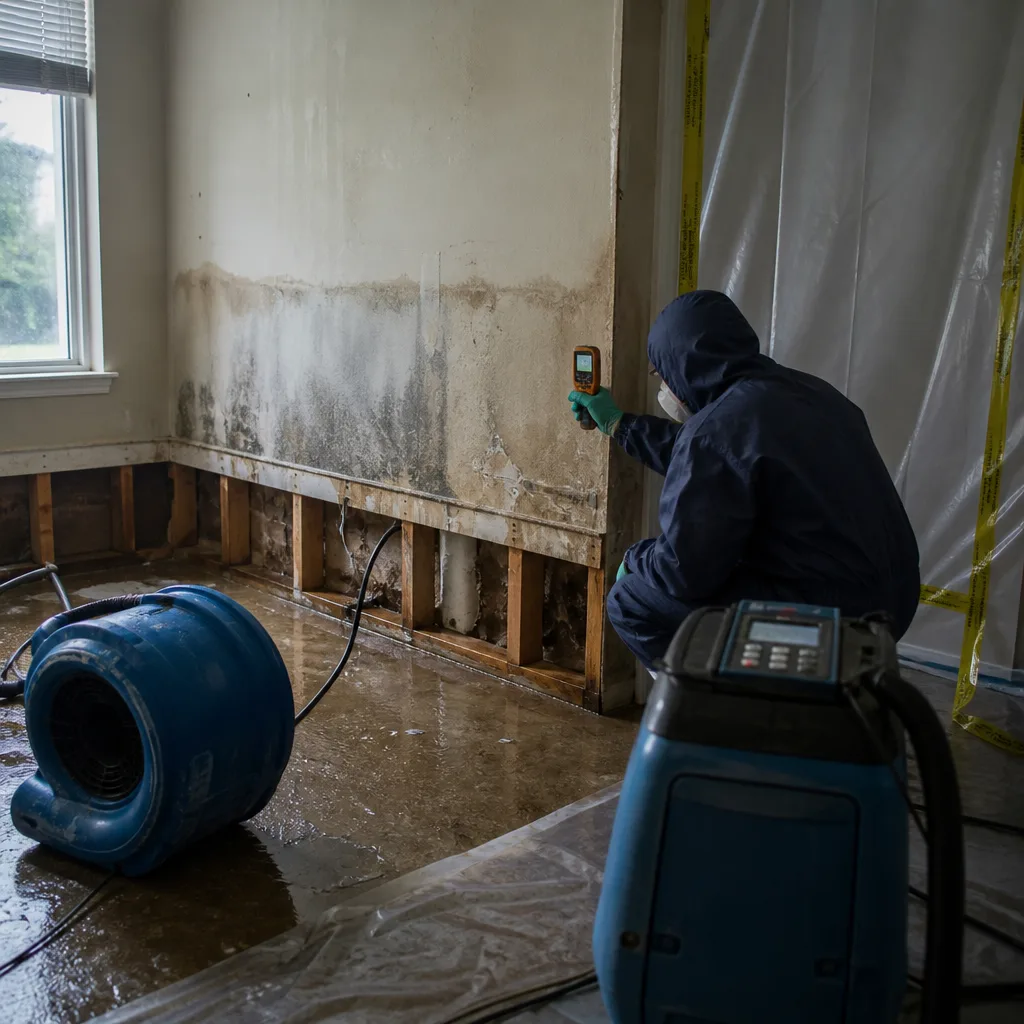
- “How will you verify the structure is actually dry, not just the visible surfaces?” The correct answer involves moisture meters, thermo-hygrometers, and documentation of readings in wall cavities and subfloors. The wrong answer is “we’ll check with our hands” or “it’ll feel dry.” We use Injectidry systems to force dry air directly into wall cavities and subfloors, with moisture readings documented at every checkpoint. If a contractor can’t explain how they verify hidden moisture, they can’t verify it.
- “Which IICRC standard applies to my situation, and how does your process align with it?” Water damage falls under S500. Mold remediation follows S520. Fire and smoke restoration uses S740. A contractor who can’t cite the standard is not a restoration professional. This question alone eliminates most generalist contractors in Pomona.
- “How do you handle the insurance claim process, and what documentation will I receive?” Look for a specific answer: timestamped photos, written scope, adjuster communication, electronic submission. Vague answers signal that your claim is not a priority, which means your payout isn’t either.
- “Who is actually performing the work: your employees or subcontractors?” Subcontractors aren’t automatically bad, but they must be disclosed. A company that sends its own trained technicians has quality control. A company that passes your project to an unknown third party has a margin, not a standard. This matters in Pomona, where a single storm can overwhelm local crews and trigger a wave of out-of-town subcontractors.
Ask these five questions to three different contractors and the differences will become obvious within ten minutes. That’s the point. Qualification audits are faster than regret.
How to Evaluate a Written Scope of Work
A written scope of work is your contract’s spine. It defines what will be done, with what equipment, to what standard. Vague scopes produce vague outcomes. Here’s what a legitimate restoration scope from a Pomona contractor must include, and what vague language signals corner-cutting.
Line items that must appear:
- Specific equipment by type and quantity: “Two Dri-Eaz LGR dehumidifiers, six Phoenix axial air movers, one XPOWER HEPA air scrubber” not “dehumidification equipment as needed.” Brand names signal professional-grade systems. Generic language signals rental equipment.
- Drying chamber boundaries: Exactly which rooms or areas are included, including wall cavities and subfloor spaces if water migrated. “Affected area” is not a boundary. It’s a guess.
- Moisture documentation protocol: What readings will be taken, where, how often, and what the dry standard is. The IICRC S500 dry standard typically means wood moisture content returns to within 2-4 percentage points of the dry unaffected baseline. If your scope doesn’t mention moisture readings, the contractor is not planning to take them.
- Demolition and material removal limits: Exactly what gets removed and what gets saved. A scope that says “remove damaged drywall as needed” without specifying linear feet or square footage is a blank check.
- Daily monitoring schedule: How often the crew returns to check equipment, take readings, and adjust the drying plan. Daily visits during the active drying phase are standard. Twice-a-week visits are not.
- Completion criteria: The specific readings or conditions that define “done.” This is where “verified pre-loss condition” lives. If the scope ends at “remove equipment,” keep looking.
Vague language that signals corner-cutting:
- “Dry as needed” or “dry to industry standards” without naming the standard.
- “Remove and replace damaged materials” without specifying which materials and how much.
- “Mold treatment as required” without a containment plan or clearance testing protocol.
- “Final walkthrough” without documentation deliverables.
The Injectidry system deserves specific mention here because it changes the scope conversation entirely. Traditional drying often requires cutting open walls to dry cavities. Injectidry forces dry air directly into wall cavities and subfloors through small access points, allowing structural drying without unnecessary demolition. A scope that includes Injectidry often means less drywall removed, faster drying, and lower rebuild costs. A contractor who doesn’t offer this technology will default to demolition because they don’t have a better option.
Pomona-Specific Red Flags: Storm Chasers and License Checks
Pomona sits in a unique position in the Los Angeles basin. When atmospheric rivers hit Southern California, the city catches runoff from the San Gabriel Mountains. Older neighborhoods, homes around Lincoln Park, Westmont, and the Garfield corridor, were built before modern waterproofing standards. That combination, aging housing stock plus periodic heavy rain, creates a target-rich environment for storm-chasing contractors who appear after every major rain event and vanish when it dries out. For year-round protection advice, see our Seasonal Damage Restoration Care for Pomona: Year-Round Homeowner’s Guide.
The storm chaser pattern is predictable: a crew shows up unsolicited, pressure-washes you with urgency (“this needs to be handled today”), offers a discount for signing immediately, and can’t produce a local license or local references. They’re working out of a truck with a magnetic sign. Your damage is their inventory.
Here’s the specific red flag list for Pomona:
- Out-of-area phone numbers or addresses. A contractor claiming to serve Pomona but operating from three counties away is a storm chaser unless proven otherwise. Verify the physical business address on their license.
- No Pomona or San Gabriel Valley references. A legitimate contractor who’s worked in Pomona can name neighborhoods, permit offices, and local building code quirks. A storm chaser can’t.
- Pressure to sign immediately with a “storm discount.” Legitimate restoration contractors in Pomona are busy after major storms, but they don’t need your signature in the next hour. Urgency that serves the contractor, not your home, is a red flag.
- Unwillingness to provide a license number for CSLB verification. This is an instant disqualification. No exceptions. In California, an unlicensed contractor performing work over $500 is breaking the law, and you have limited recourse if something goes wrong.
We’ve worked in Pomona long enough to know the difference between a contractor who’s part of the community and one who’s passing through. The difference shows up in the details: knowing that older Pomona homes often have plaster walls that react differently to moisture than drywall, understanding that the hot inland climate accelerates mold growth in ways coastal contractors don’t anticipate, and being accountable to a local address where you can walk in and ask questions.
Why Equipment Brands Tell You More Than Reviews
Online reviews tell you whether a contractor was polite. Equipment tells you whether they can actually do the job. A five-star review from a homeowner who doesn’t know what a moisture meter looks like tells you nothing about the quality of the restoration work. But a contractor’s equipment roster is a factual statement about their capabilities and their investment in restoration as a discipline, not a side business.
Professional restoration equipment is expensive. A single commercial-grade dehumidifier from Dri-Eaz or Phoenix costs several thousand dollars. A rack of XPOWER air movers represents real capital. A contractor who operates this equipment has made a financial commitment to restoration as their primary business. A contractor who rents hardware-store fans has not.
The equipment question also exposes technical depth. Different drying situations require different tools. A hardwood floor with water trapped beneath needs an Injectidry extraction mat, not just a fan blowing across the surface. A wall cavity with moisture behind tile needs an Injectidry injection port, not demolition. A contractor who can’t explain which equipment matches which situation is guessing.
Here’s what a professional-grade equipment roster looks like: Dri-Eaz dehumidifiers for low-grain refrigerant drying, Phoenix axial air movers for high-velocity air movement, XPOWER air scrubbers for HEPA filtration during mold remediation, B-Air systems for supplementary drying capacity, and Injectidry for non-invasive structural drying. That’s the equipment set we operate. It’s the same equipment used by top-tier restoration firms nationwide, and it’s what Pomona property owners should look for when evaluating any contractor.
If a contractor’s equipment answer is “industrial fans and dehumidifiers,” that’s not modesty. That’s a rental receipt. For water damage specifically, the difference between professional-grade equipment and rental equipment is the difference between a home that’s verified dry and a home that looks dry but isn’t. Learn more about what proper water damage restoration requires on our Water Damage Restoration in Pomona page.
The Hiring Process: A Step-by-Step Walkthrough
Here’s the complete hiring sequence we recommend for Pomona homeowners facing damage restoration. Follow these steps in order, and you’ll eliminate most bad contractors before they ever set foot in your home.
- Contain the immediate hazard. Shut off water to the affected area if safe. Turn off electricity to wet zones if the panel is accessible and dry. Move salvageable valuables to a dry area. Do not enter standing water in contact with electrical outlets. This is mitigation, not restoration, and it buys you time to hire properly.
- Document everything before calling contractors. Photos of every affected area, from multiple angles. Video if possible. This documentation matters for your insurance claim and for comparing contractor assessments. The more evidence you have before anyone touches anything, the stronger your position.
- Call your insurance company. File the claim first. Get a claim number. Ask your insurer what documentation they require and what the process looks like. This information will shape what you demand from any contractor you hire.
- Build a shortlist of three contractors. Look for IICRC alignment, local Pomona presence, and professional-grade equipment. The Clean Slate Water Damage home team should be one of your three calls. Ask the five questions from the section above to each candidate.
- Verify credentials for each contractor. Check the CSLB license. Request a COI from the contractor’s insurance carrier. Confirm IICRC alignment. Any contractor who can’t provide all three within one business day is eliminated. This step takes ten minutes and saves you from the most expensive mistakes.
- Get written scopes from each contractor. Compare the scopes side by side. Look for the line items discussed above: specific equipment, drying boundaries, moisture documentation, completion criteria. The cheapest scope is often the vaguest scope.
- Choose your contractor and sign the scope. Do not sign a contract that doesn’t incorporate the written scope by reference. If it’s not in the scope, it’s not part of the agreement. Confirm the start date and the monitoring schedule.
- Document the entire restoration process. Your contractor should be providing photo documentation at every stage. You should also take your own photos. If you see something that doesn’t match the scope, raise it immediately. A legitimate contractor welcomes scrutiny.
This process takes a day or two at most. That’s time well spent, especially in Pomona, where the difference between a properly documented restoration and a rushed job can be a five-figure insurance denial.
Common Mistakes to Avoid
- Hiring based on speed alone. The first contractor to show up is rarely the best. Restoration requires assessment, documentation, and planning. A contractor who starts demolition before taking moisture readings is creating evidence problems for your insurance claim. In Pomona’s older homes, that demolition often reveals hidden complications a rushed contractor won’t handle properly.
- Skipping the license verification. The CSLB website takes sixty seconds to check. Not checking is choosing to trust a stranger with your largest asset based on a handshake and a business card. Unlicensed contractors in Pomona are common after rain events, and when they disappear, your recourse disappears with them.
- Signing a contract without a written scope of work. A verbal agreement is worth the paper it’s printed on. If the scope isn’t written, it doesn’t exist. Contractors who resist written scopes are contractors who expect disputes.
- Paying the full amount upfront. Legitimate restoration contractors in Pomona work on a payment schedule tied to milestones, often coordinated with insurance payouts. A contractor demanding full payment before starting work is either undercapitalized or planning to disappear.
- Ignoring the documentation requirements of your insurance policy. Every insurance policy has specific documentation requirements. Failing to meet them because your contractor didn’t take photos or didn’t write a proper scope is your loss, not your contractor’s. Your insurer denies your claim. The contractor still gets paid.
- Choosing the cheapest bid without comparing scopes. A low bid with vague language is not a deal. It’s a deferred cost. The money you save on the front end shows up later as mold remediation, structural repair, or a denied insurance claim. In restoration, cheaper usually means undocumented.
When to Call a Professional
Some damage situations in Pomona can be handled with a Shop-Vac and patience. Most cannot. Call a professional restoration contractor immediately if you see water from a burst pipe or sewage backup affecting walls, floors, or ceilings; if you smell a musty odor that suggests hidden mold; if you see visible mold growth larger than a ten-square-foot patch; if a fire has left smoke residue on surfaces throughout the home; or if water has been standing for more than 24 hours. The dry Inland Empire climate can hide water damage, moisture migrates into wall cavities and subfloors where you can’t see it. By the time you see the stain on the ceiling, the damage above it is weeks old. Clean Slate Water Damage offers free estimates in Pomona, call (888) 508-8745 if you’re unsure whether your situation needs professional attention.
Frequently Asked Questions
Water damage restoration in Pomona typically ranges from $2,500 to $7,500 for a standard single-room water event, with whole-home flooding or sewage backups reaching $15,000 to $40,000 depending on the extent of structural damage and the need for mold remediation or rebuild work. The biggest cost variables are square footage affected, water category (clean, gray, or black water), and how long the water sat before extraction began. Call (888) 508-8745 for an exact quote, estimates are free.
A restoration contractor with local Pomona operations can typically arrive within 60 to 90 minutes of your call for water extraction and emergency mitigation. The first 24 to 48 hours are critical for water damage, and a contractor who can’t mobilize same-day for active water intrusion is not equipped for restoration work. Mold remediation and fire restoration are less time-sensitive and are scheduled based on scope.
Most homeowner’s insurance policies in California cover sudden and accidental water damage, like a burst pipe or appliance failure, but exclude gradual damage from unresolved leaks, flooding from exterior water intrusion without flood insurance, and mold that resulted from deferred maintenance. The determining factor is almost always documentation: a contractor who provides timestamped photos, moisture readings, and a written scope gives your adjuster the evidence to approve the claim. For a complete maintenance approach, review our Water Damage Restoration Maintenance Checklist for Pomona Homeowners. We coordinate directly with adjusters and submit documentation electronically for Pomona clients.
A restoration contractor specializes in returning a property to verified pre-loss condition, with IICRC-aligned processes, professional-grade drying equipment like Dri-Eaz and Phoenix systems, and documentation protocols designed for insurance claims. A general contractor builds and remodels; they typically lack the moisture mapping equipment, the mold containment training, and the insurance claim documentation experience that restoration requires. In Pomona, hiring a generalist for restoration work is the most common cause of incomplete drying and recurring mold problems.
Mold remediation is necessary when visible mold growth exceeds ten square feet, when mold is present inside wall cavities or HVAC systems, or when moisture damage has existed for more than 48 hours and mold testing indicates elevated spore counts. A legitimate mold remediation contractor in Pomona will perform containment, HEPA air filtration with equipment like XPOWER air scrubbers, removal of affected materials, and post-remediation verification. Learn more about our process on the Mold Remediation in Pomona page. If a contractor offers to “spray and paint” over mold without containment or removal, walk away and call (888) 508-8745 instead.
After a fire, secure the property, contact your insurance company, and do not attempt to clean smoke residue yourself because improper cleaning can permanently set smoke odor into surfaces and fabrics. Fire restoration requires specialized equipment and processes to address soot, smoke damage, and water damage from firefighting efforts. Our Fire Damage Restoration in Pomona page covers the full scope of what proper fire restoration involves, and our team can assess your property and provide a written restoration plan.
The Bottom Line
Hiring a restoration contractor in Pomona is a qualification audit, not a price-comparison exercise. Verify IICRC alignment, California licensing, and restoration-specific insurance before anything else. Demand a written scope with specific equipment, defined drying boundaries, and documented moisture readings. Ask the five questions that separate restoration professionals from generalists with fans. Avoid storm chasers who appear after rain events with no local accountability. And insist on the documentation that makes your insurance claim defensible. Do these things, and you’ll end up with a home restored to pre-loss condition, not just one that looks dry on the surface. Clean Slate Water Damage operates with professional-grade equipment, IICRC-aligned processes, and a single-team approach covering water, mold, and fire restoration in Pomona. If you’re facing damage, we’re one call away.
Contact Clean Slate Water Damage today at (888) 508-8745 for a free estimate. We’ll assess your damage, document everything, and give you a written scope of work before any equipment enters your home.
Written by the team at Clean Slate Water Damage, serving Pomona since 2018.
See the difference
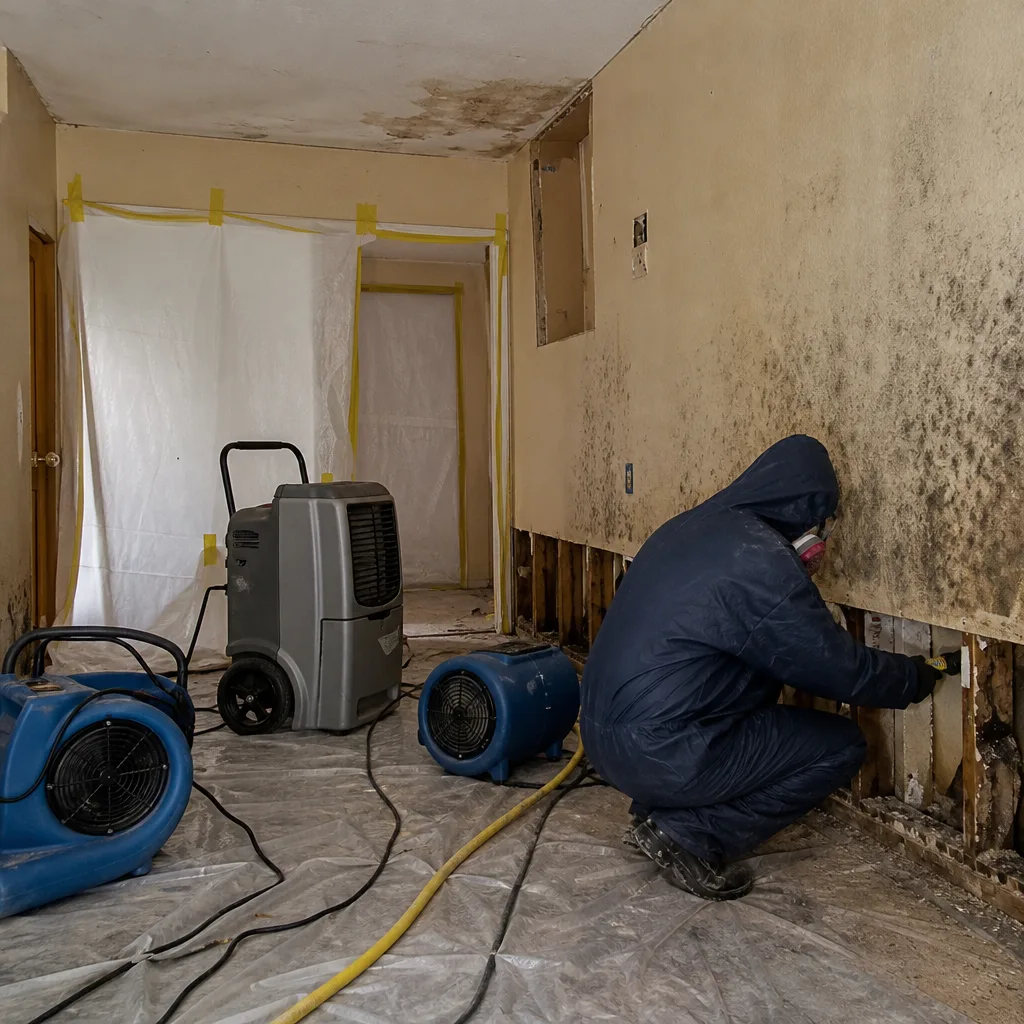 Before
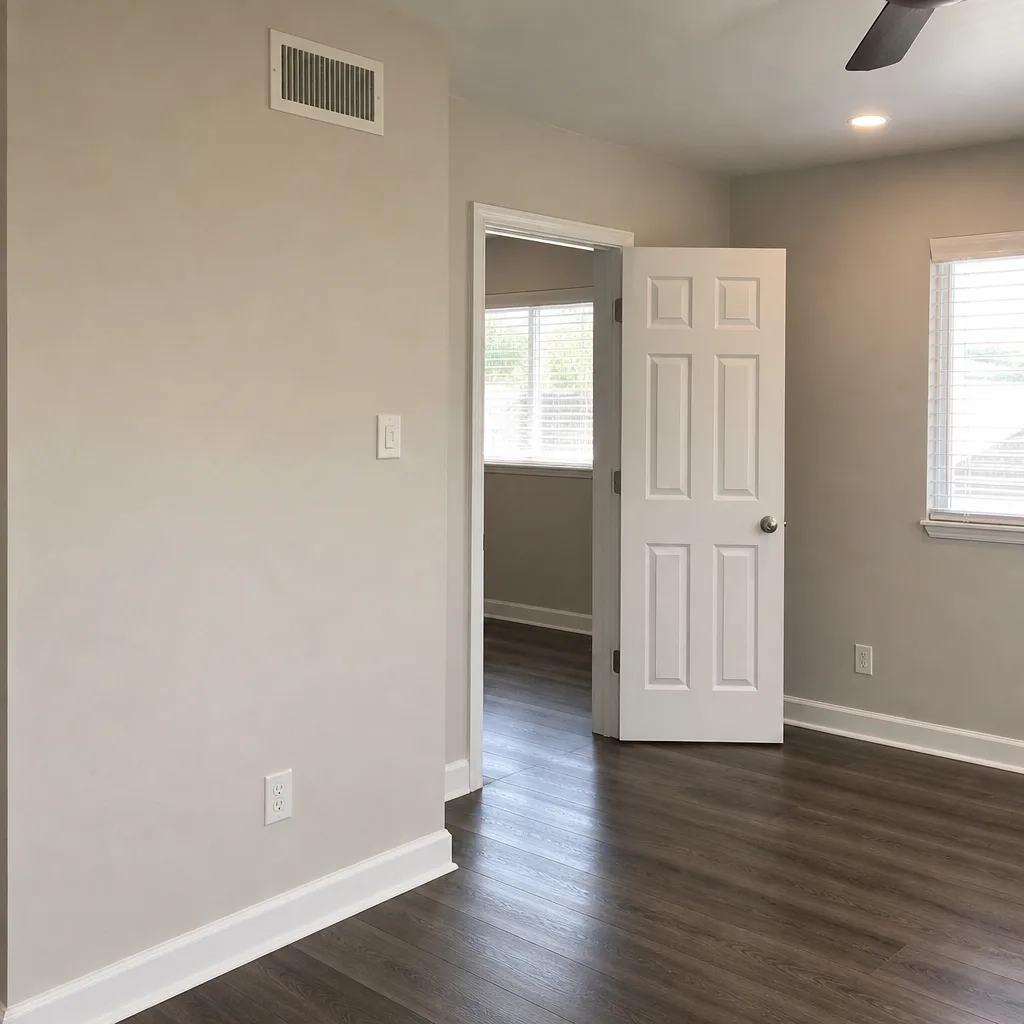 After
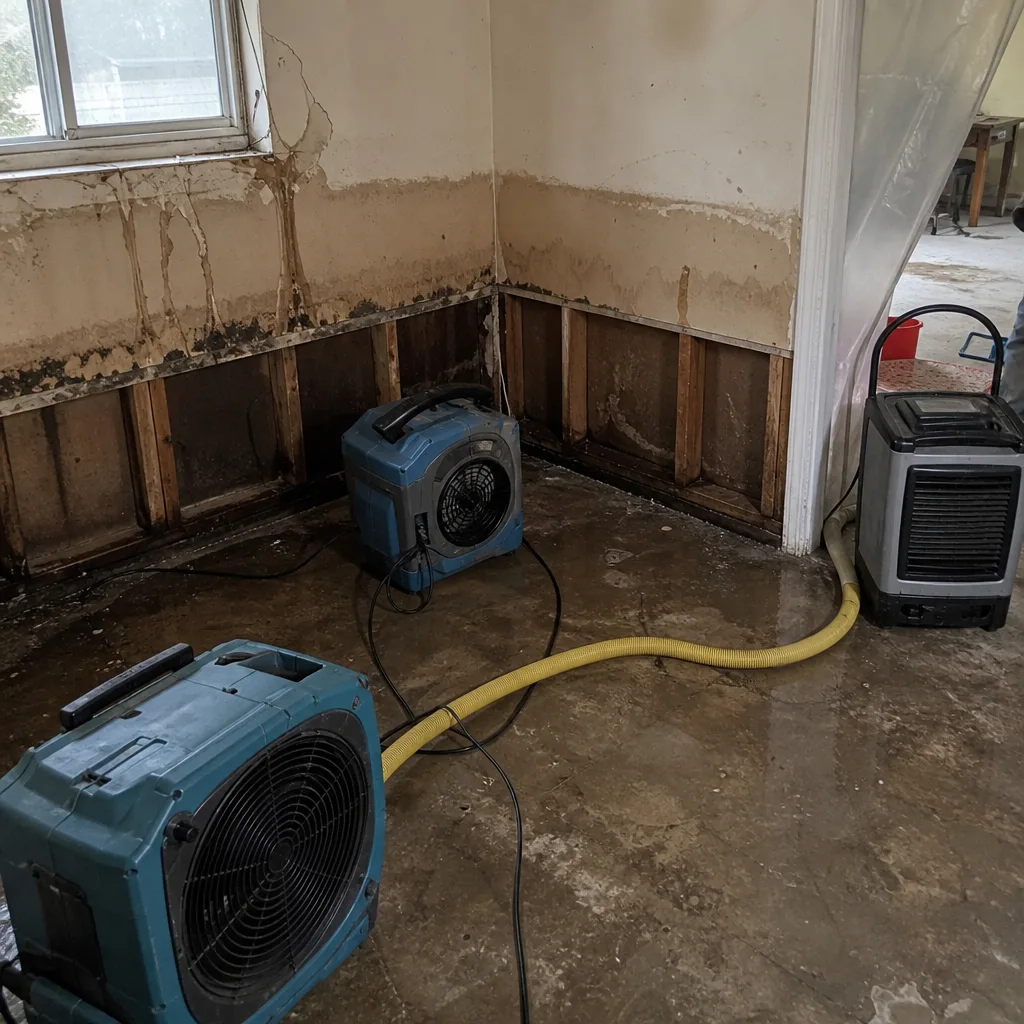 Before
 After
 Before
 After